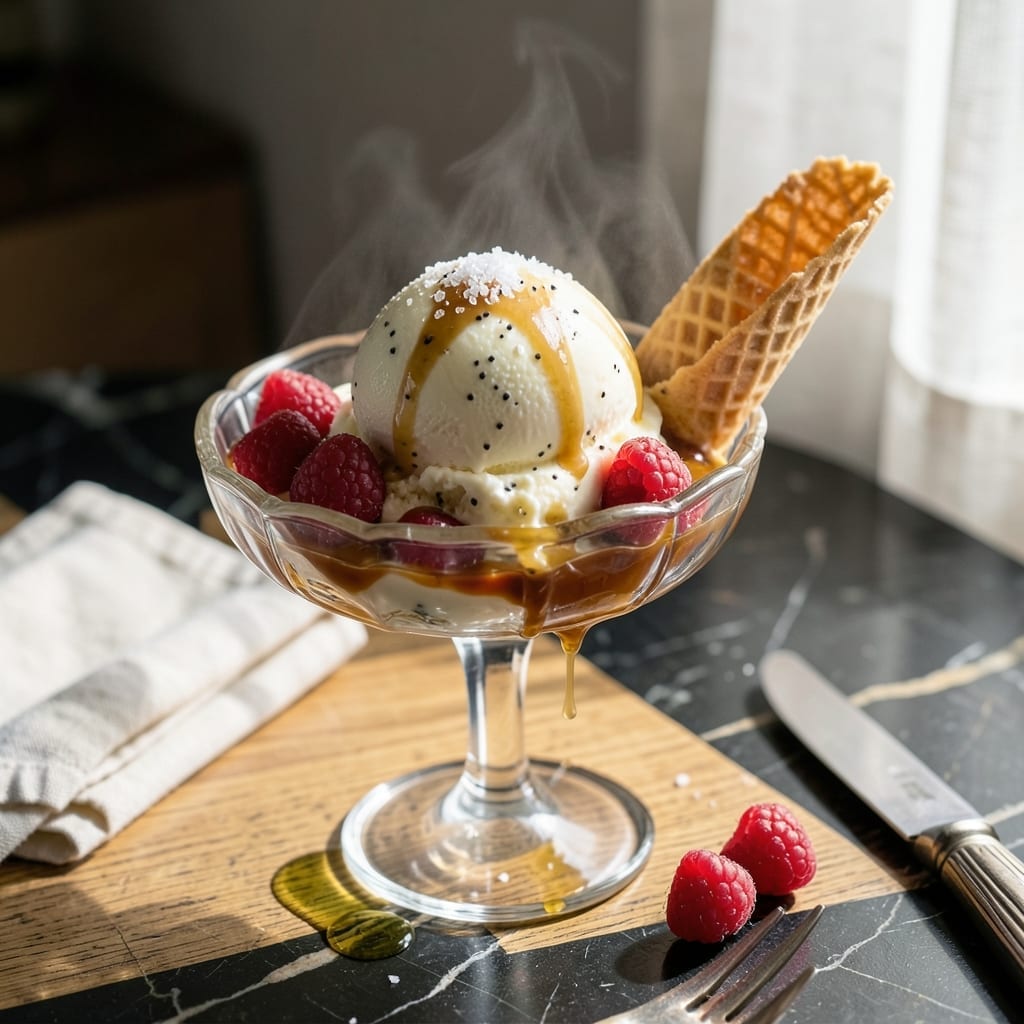
Homemade ice cream reaches new heights with a rich custard base made from egg yolks. This method creates an ultra-smooth texture that store-bought versions simply can’t match.
The egg yolks act as both thickener and emulsifier, binding the fat and liquid components together for a velvety result. My approach focuses on precise temperature control to avoid curdling while maximizing flavor development.
What emerges from your ice cream maker is a luxurious dessert with a depth of flavor that comes from the slow infusion of ingredients. The custard base provides a blank canvas for endless variations while maintaining that signature creamy consistency.
This technique requires attention to detail but rewards you with professional-quality results. The proof comes in that first scoop, where the texture speaks for itself.
Ingredients for Ice Cream Recipe Egg Yolks
Precision ingredients for professional-quality custard base ice cream with ultra-smooth texture results.
| Ingredient | Amount | Notes |
|---|---|---|
| Heavy Cream 🥛 | 2 cups | Full-fat for richest texture |
| Whole Milk 🥛 | 1 cup | Prefer organic for purity |
| Granulated Sugar 🍚 | ¾ cup | Fine grain for smooth dissolution |
| Large Egg Yolks 🥚 | 6 pieces | Fresh, room temperature |
| Pure Vanilla Extract 🌿 | 2 tsp | High-quality for depth |
| Fine Sea Salt 🧂 | ¼ tsp | Balances sweetness precisely |
| Unsalted Butter 🧈 | 2 tbsp | For custard infusion |
| Vanilla Bean 🌱 | 1 whole | Scraped seeds only |
| Light Corn Syrup 💧 | 2 tbsp | Prevents ice crystals |
| Whole Egg 🥚 | 1 whole | For structure stability |
| Alcohol 🍶 | 1 tbsp | Vodka or rum preferred |
[recipe_ingredient_scaler]
The custard base demands premium dairy. Heavy cream with 40% fat content yields the most luxurious mouthfeel, while organic whole milk ensures clean flavor. Egg yolks must be fresh—older yolks lose emulsifying power. For vanilla, Nielsen-Massey extract at specialty stores provides superior depth, though most supermarkets carry acceptable alternatives.
No vanilla bean? Double the extract to compensate. Substitute half the sugar with honey for complexity, but expect slight texture differences. The corn syrup can be replaced with glucose syrup at equal volume. For alcohol, neutral spirits work best—avoid flavored varieties that could overpower the delicate custard flavor.
Custard base keeps 3 days refrigerated before churning. Freeze finished ice cream in airtight containers for up to 2 months. Always temper eggs before combining with hot dairy to prevent curdling (worth the extra minute).
Why You’ll Love This Recipe
- No Fuss Custard: I just whisk the egg yolks with sugar, heat the cream and milk, then combine—no fancy steps.
- Rich Vanilla Dream: The egg yolks and vanilla make it so creamy and deep, it tastes like a premium scoop shop.
- Freezer Stash Hero: Honestly, I always keep a batch ready for impromptu dessert nights.
- Zero Waste Win: I use up extra egg yolks from baking, so nothing goes to waste.
Step-by-Step Instructions for Ice Cream Custard Base
Master the technique for silky-smooth custard that transforms into luxurious ice cream.
Step 1: Infuse the Dairy with Vanilla
Split the vanilla bean lengthwise and scrape out the seeds. In a medium saucepan, combine the 2 cups Heavy Cream, 1 cup Whole Milk, scraped vanilla seeds, and the vanilla bean pod. Heat over medium heat until the mixture just begins to simmer at the edges—small bubbles will form around the pan’s perimeter.
Remove from heat, cover, and let steep for 15 minutes to infuse the dairy with vanilla flavor. This slow infusion ensures maximum flavor extraction without scorching the milk. Discard the vanilla pod before proceeding.
Step 2: Temper the Eggs and Create the Custard
In a large bowl, whisk together the 0.75 cup Granulated Sugar, 6 pieces Large Egg Yolks, and 1 whole Whole Egg until the mixture is pale, thick, and ribbons form when the whisk is lifted. This process, called “ribboning,” indicates the eggs are properly aerated.
Slowly pour about 1 cup of the warm cream mixture into the egg mixture while whisking constantly to temper the eggs. Pour the tempered egg mixture back into the saucepan with the remaining cream. Add the 0.25 tsp Fine Sea Salt and 2 tbsp Unsalted Butter.
Return to medium-low heat and cook, stirring constantly with a wooden spoon, until the custard thickens enough to coat the back of the spoon and leaves a clear path when you run your finger through it—about 8-10 minutes. Do not let it boil.
Step 3: Strain and Add Final Flavorings
Immediately strain the custard through a fine-mesh sieve into a clean bowl to remove any cooked egg bits, ensuring a perfectly smooth texture. Stir in the 2 tsp Pure Vanilla Extract, 2 tbsp Light Corn Syrup, and 1 tbsp Alcohol until fully combined.
The alcohol enhances flavor and keeps the ice cream scoopable, while the corn syrup prevents ice crystals from forming. Press plastic wrap directly onto the surface of the custard to prevent a skin from forming.
Step 4: Chill Thoroughly Before Churning
Refrigerate the custard for at least 4 hours, or preferably overnight, until completely chilled to 40°F or below. This step is crucial—churning warm custard results in icy, grainy ice cream.
Once chilled, pour the custard into your ice cream maker and churn according to the manufacturer’s instructions, typically 20-25 minutes. The mixture should resemble soft-serve ice cream when done.
Transfer to a lidded container and freeze for at least 4 hours until firm. The result will be an ultra-smooth, rich ice cream with a velvety texture that melts beautifully on the tongue.
Pro Tips For Making Ice Cream Recipe Egg Yolks
- Temper the Yolks: Slowly drizzle about 1 cup of the hot cream mixture into the egg yolks while whisking constantly—this prevents scrambled eggs and guarantees a smooth custard base. I learned this the hard way after ruining two batches by adding the yolks too fast.
- Use Full-Fat Dairy: Skip the low-fat milk or cream substitutes; the high fat content in whole milk and heavy cream is what gives this ice cream its rich, creamy texture. After trying a “healthier” version, I went right back to full-fat.
- Don’t Boil the Custard: Heat the custard just until it thickens enough to coat the back of a spoon—around 170-175°F. Boiling it will curdle the yolks, and you’ll end up with a grainy mess instead of silky ice cream.
- Strain the Base: Always pour the custard through a fine-mesh strainer before chilling to remove any cooked bits of egg or lumps. Sounds tedious, but it makes a real difference in the final texture.
Pro Cooking Tips for This Recipe
Temperature Control
Precision is everything with this custard base. Heat your dairy mixture to just 180°F before tempering—I use a ThermoWorks instant-read thermometer for accuracy. This prevents scorching while ensuring proper infusion of flavors. 🌡️
Tempering Technique
When adding hot cream to your egg yolks, do it in a slow, steady stream while whisking constantly. I add about 1 cup of hot liquid first, then incorporate the rest. This gradual approach prevents curdling.
For extra insurance, place your egg bowl in a shallow ice bath while tempering. This keeps the mixture cool enough to avoid cooking the eggs prematurely.
Custard Thickness Test
The custard is ready when it coats the back of a wooden spoon and your finger leaves a clean path when drawn through it. This happens at about 170-175°F. If it’s not thick enough after 10 minutes, keep cooking but lower the heat.
Straining Matters
Always strain your custard through a fine-mesh sieve after cooking. This removes any stray cooked egg bits that could affect texture. I use a stainless steel strainer for durability and easy cleaning. 💡
Chilling Time
Don’t rush the chilling process. I recommend overnight refrigeration for the smoothest texture, but 4 hours minimum is essential. The custard should be 40°F or below before churning to prevent ice crystals.
Nutrition Facts
Frequently Asked Questions
Why use only yolks instead of whole eggs?
Yolks contain all the fat and emulsifiers needed for ultra-creamy texture. Whole eggs add extra protein that can make ice cream icy. The 6 yolks create richness without heaviness.
Can I make this without an ice cream maker?
Yes, but stir vigorously every 30 minutes during freezing. This breaks up ice crystals for smoother results. Expect a slightly denser texture than machine-churned.
What if my custard curdles?
Immediately strain through a fine-mesh sieve and whisk in 1 tbsp cold cream. Prevent it by keeping heat at medium-low and stirring constantly.

Trained in classic French technique but raised on slow-cooked ribs and spicy rubs, she blends culinary skill with smoke and soul.
- Best Smoked Oxtail Recipe: Deep-Rich Flavor After Low-and-Slow Cooking - October 14, 2026
- Pit Boss Smoked Prime Rib Roast Recipe: Bark-to-Bone Crispness in 4 Hours - October 14, 2026
- Smoked Tuna Steak Recipe: Seared Crust Meets Silky Centers - October 14, 2026