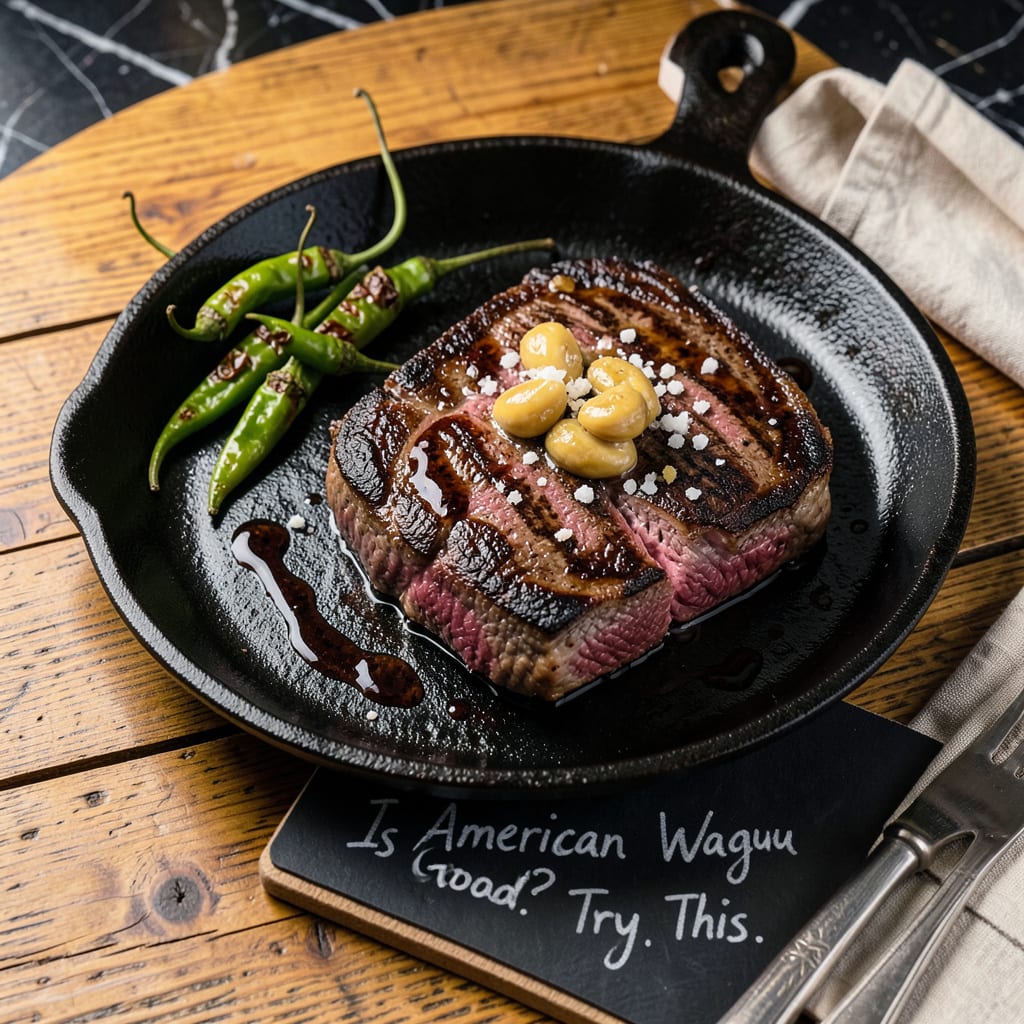
American Wagyu delivers exceptional marbling, rich buttery flavor, and tender texture, though it’s typically less intense than Japanese Wagyu. Its quality rivals prime-grade beef, making it a premium choice for steak lovers who want luxury without the import price.
I’ve cooked with both domestic and imported Wagyu, and what stands out about the American version is its accessibility without sacrificing quality. The crossbreeding with Angus cattle gives it a familiar beefy backbone while maintaining that signature melt-in-your-mouth experience. 🔥 For home cooks, this means you can achieve restaurant-quality results without needing specialized techniques—just proper seasoning and careful temperature control.
What really impresses me is how it performs across different cooking methods. Whether you’re searing a ribeye in a cast-iron skillet or slow-smoking a brisket, the fat renders beautifully at lower temperatures than conventional beef. This makes it incredibly forgiving for beginners while still offering depth for experienced cooks to explore.
💡 In This Article
- How American Wagyu Compares to Japanese Wagyu in Quality
- Best Ways to Cook American Wagyu for Maximum Flavor
How American Wagyu Compares to Japanese Wagyu in Quality
The secret lies in the genetics and grading. Japanese Wagyu comes from purebred cattle with centuries of selective breeding, while American Wagyu is typically crossbred with Angus (about 50/50). This creates a beef that maintains incredible marbling—often scoring BMS 6-8—while adding the robust beefiness of Angus.
The fat composition differs too: Japanese Wagyu has more monounsaturated fats (like olive oil), while American versions incorporate more saturated fats from the Angus side.
Here’s what that means for your plate: Japanese A5 might melt at room temperature with its 40-50% fat content, while American Wagyu usually sits at 30-35%. That difference gives American cuts better structural integrity when cooked—you can actually sear them without losing all the fat.
The USDA grading system also plays a role: American Wagyu often hits Prime++ status, exceeding standard Prime grade with marbling scores that would qualify as A4 in Japan.
I’ve noticed the flavor profile leans more balanced. Japanese Wagyu can be almost overwhelmingly rich, while American versions offer that signature buttery quality with a familiar beefy finish. The fat renders at lower temperatures (120-130°F internal) compared to conventional beef, creating a wider window for perfect doneness.
This makes it more approachable for home cooks who might overcook pure Japanese Wagyu by accident.
The breeding practices create another distinction. Japanese cattle often receive beer or sake mash in their diet, while American Wagyu typically follows standard grain finishing. This results in a cleaner, more neutral fat profile in American versions—ideal when you want the beef flavor to shine through rather than competing with complex umami notes.
The price difference reflects this: American Wagyu runs about $50-80/lb versus $100-200/lb for imported Japanese.
What most people don’t realize is how the grading systems differ. Japan uses a 1-5 scale for yield and 1-5 for quality (with A5 being perfect), while USDA uses marbling scores (400-1200). A piece of American Wagyu scoring 800+ would be considered A4 in Japan—still exceptional, but with slightly less fat coverage.
This makes American Wagyu more versatile for different cooking methods where you want some texture rather than pure fat dissolution.
The aging process adds another layer. Japanese Wagyu is often wet-aged for shorter periods (14-21 days), while American producers frequently use dry-aging (30-60 days) to develop more complex flavors. This creates a nuttier, more concentrated beef experience that pairs beautifully with the natural sweetness of the fat.
The result is a steak that offers both luxury and familiarity in each bite.
For me as a pitmaster, the real advantage shows in smoking applications. The fat renders slowly and consistently at 225°F, creating a self-basting effect that keeps the meat moist for hours. I’ve smoked American Wagyu brisket that literally glistened with rendered fat while maintaining perfect sliceability—something you’d never achieve with leaner cuts.
The crossbreeding gives you the best of both worlds: Japanese tenderness with American beef character.

Trained in classic French technique but raised on slow-cooked ribs and spicy rubs, she blends culinary skill with smoke and soul.
- Recipe for Boneless Pork Chops in Cast Iron Skillet: Sear and Baste to Juicy Perfection - October 3, 2026
- Recipe for Boneless Cross Rib Roast: Slow-Roasted Beef with Herb Crust - October 3, 2026
- Hamburgers in Sauce Recipe Crock Pot: Slow-Cooked Savory Delight - October 3, 2026