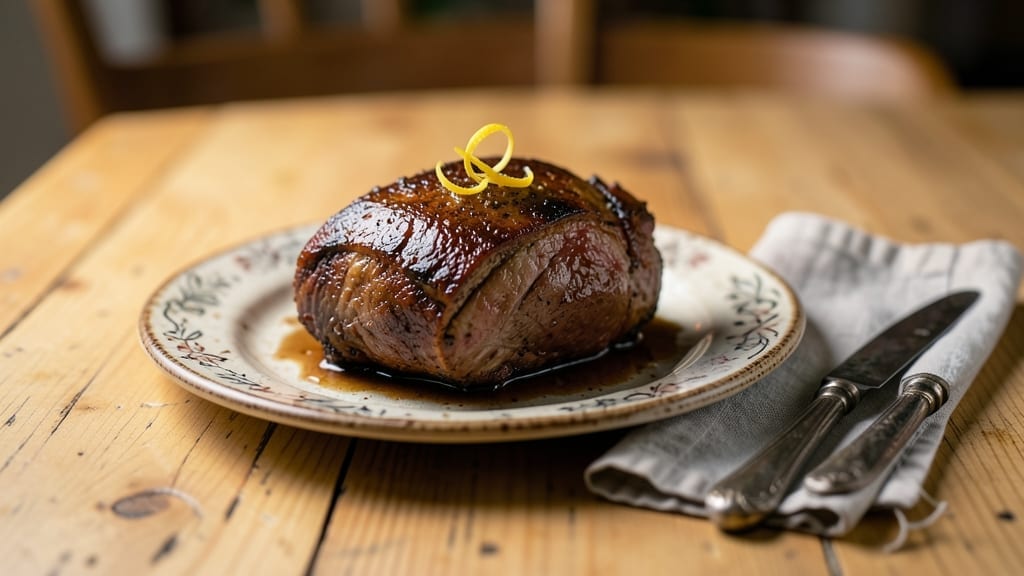
This Jewish brisket pot roast recipe transforms a tough cut into melt-in-your-mouth perfection through slow braising—a technique rooted in tradition and proven to deliver restaurant-quality results. The key lies in searing the meat first to lock in flavors, then letting it simmer for hours until tender enough to shred.
I’ve perfected this method over years of Shabbat dinners, where the rich aroma of garlic, onions, and spices fills the kitchen long before the meal is ready.
The beauty of this recipe is its simplicity: just a few pantry staples and 3-4 hours of hands-off cooking time. You’ll start with a well-trimmed brisket, seasoned with black peppercorns, bay leaves, and a splash of red wine for depth.
As it braises, the meat becomes so tender it falls apart at the touch, while the liquid reduces into a flavorful gravy that ties everything together. This is comfort food at its finest—substantial, hearty, and deeply satisfying.
By the time you serve it, your brisket will be fork-tender, with a crust that’s crisp enough to hold its shape while the inside melts like butter. Pair it with mashed potatoes, roasted carrots, or crusty bread to soak up every last drop of that rich sauce.
The leftovers? Even better the next day, making this the ultimate meal for feeding a crowd or meal prepping for the week.
Whether you’re preparing for Shabbat or a weekend family dinner, this recipe delivers perfection with minimal effort. The secret is patience—letting the slow cook do the work while you focus on the sides. Here’s how to make it happen without a hitch.
Ingredients for jewish brisket pot roast
Traditional flavors meet slow-cooked perfection for this hearty Jewish brisket pot roast.
| Ingredient | Amount | Notes |
|---|---|---|
| Beef Brisket 🥩 | 4 lb | Flat cut, trimmed of fat |
| Yellow Onions 🧅 | 3 whole | Thinly sliced, caramelized |
| Garlic Cloves 🧄 | 8 cloves | Minced, aromatic |
| Dried Black Peppercorns 🌶️ | 2 tbsp | Whole, freshly ground |
| Bay Leaves 🌿 | 4 whole | Dried, aromatic |
| Dried Thyme 🍃 | 1 tbsp | Mexican oregano if available |
| Dried Rosemary 🌿 | 1 tbsp | Fresh if available, dried works |
| Red Wine 🍷 | 1 cup | Dry, bold variety |
| Beef Broth 💧 | 4 cups | Low-sodium preferred |
| Tomato Paste 🍅 | ¼ cup | Smooth, no lumps |
| Salt 🧂 | 1 tsp | Kosher or sea salt |
| Olive Oil 🫒 | ¼ cup | Extra-virgin for richness |
| Carrots 🥕 | 2 whole | Large, peeled and chopped |
[recipe_ingredient_scaler]
The brisket is everything here. Flat cut, trimmed of excess fat cooks more evenly and stays juicy. I always buy mine from local butchers—they know how to select the right cut. Look for good marbling; it’s the secret to that melt-in-your-mouth texture. If you’re short on time, pre-sliced brisket from Costco works too, just trim it yourself. Don’t skip the fat trim—it burns and makes the dish greasy. A sharp knife makes this step quick and clean.
Red wine is non-negotiable for depth, but no bottle? Beef broth with a splash of balsamic gets you close. Dried thyme and rosemary are your friends—use Mexican oregano if you can’t find thyme, it’s got that same earthy kick. Carrots can be baby carrots if that’s what you’ve got, just chop them into chunks. The tomato paste might seem like overkill, but it’s what gives the sauce that rich, deep color. Trader Joe’s tomato paste in a tube is my go-to—no waste, and it lasts forever.
This dish tastes even better the next day, so make extra. Store it in an airtight container in the fridge for 5-6 days—the flavors deepen overnight. Freeze portions for up to 3 months if you’re meal prepping. The broth can be used for gravy or even soups later. Just reheat on the stovetop with a splash of water to loosen it up. The brisket reheats beautifully, so it’s perfect for feeding a crowd or prepping lunches for the week.
Why You’ll Love This Recipe
- One-Pot Weeknight Win: I’ll admit, I used to avoid brisket because it sounded like a project. But this recipe? Just toss that 4 lb brisket in the pot, sear it golden (8-10 minutes max), and let the oven do the heavy lifting. The onions caramelize while you’re at work, the garlic and herbs toast like magic, and by the time you get home, you’ve got a pot roast that practically cooks itself.
- That Crust + Creamy Center: Here’s what sold me—the deep mahogany crust from searing, paired with the fork-tender meat inside. The 1 cup of red wine and ¼ cup tomato paste create a sauce so rich it coats your spoon, while the bay leaves and rosemary add layers of warmth. It’s not just tender; it’s dangerously addictive.
- Fridge Goldmine: Between us, this brisket gets better the next day. Store it for 5-6 days, and each serving tastes even deeper. Freeze portions for up to 3 months, and suddenly your freezer is stocked with a budget-friendly meal that costs less than takeout. My go-to for lazy Sundays or when I’m feeding a crowd without the stress.
- Budget Beef Hack: A 4 lb brisket is cheaper than you’d think, especially when you’re using every bit of it—sliced for sandwiches, shredded for tacos, or reheated with mashed potatoes. The dried herbs and red wine (1 cup) keep costs low while delivering restaurant-quality flavor. It’s the kind of dish that makes you feel fancy without breaking the bank.
Step-by-step instructions for Shabbat-style braised brisket
Here’s how to transform tough brisket into melt-in-your-mouth perfection with rich, aromatic flavors.
Sear the Brisket for Deep Flavor
Heat a large Dutch oven over medium-high heat and add the olive oil. Once shimmering, place the 4 lb beef brisket fat-side down and sear for 8-10 minutes until deeply browned on all sides. I press down gently on the brisket during the first minute—this prevents it from curling and ensures even contact with the pan.
Flip the brisket and continue searing until both sides develop a rich mahogany crust. Remove the brisket and set it aside on a plate. The searing creates the foundation for that beautiful crust that’ll develop during braising, while also locking in juices. Don’t rush this step—the deeper the brown, the more flavor you’ll extract later.
Build the Aromatic Base
In the same Dutch oven, add the 3 yellow onions and cook for 5 minutes until softened. Add the 8 minced garlic cloves and cook for another 30 seconds until fragrant. Here’s where it gets aromatic—stir in the 2 tbsp dried black peppercorns, 4 bay leaves, 1 tbsp dried thyme, and 1 tbsp dried rosemary, letting them toast for 1 minute to release their essential oils.
Pour in the 1 cup red wine and scrape up all the browned bits from the bottom of the pan. This deglazing step captures all that concentrated flavor that would otherwise burn. Let the wine simmer for 3-4 minutes until reduced by half. The alcohol will cook off, leaving behind deeper wine flavors that’ll infuse the brisket during braising.
Braise with Vegetables and Liquid
Add the 2 peeled and chopped carrots, ¼ cup tomato paste, and 1 tsp salt to the Dutch oven. Stir everything together, then return the brisket to the pot fat-side up. Pour in the 4 cups beef broth, making sure it comes about halfway up the sides of the brisket. The liquid should cover about 2/3 of the meat—this ensures proper braising without making the meat too mushy.
Bring the liquid to a simmer, then cover the Dutch oven with a tight-fitting lid. Transfer to the oven preheated to 325°F and braise for 3 hours. The key here is patience—the low temperature and long cooking time break down the tough connective tissue, transforming it into tender, fork-pull-apart meat. I like to check the brisket after 2 hours to ensure the liquid isn’t evaporating too quickly, adding a splash of water if needed.
Finish and Rest for Maximum Tenderness
After 3 hours, remove the lid and increase the oven temperature to 375°F. Return the brisket to the oven uncovered for 20-30 minutes, until the braising liquid reduces slightly and the top develops a golden crust. This final step concentrates the flavors and creates that beautiful caramelized surface that makes restaurant-quality brisket look so impressive.
When done, remove the brisket and transfer it to a cutting board. Tent loosely with foil and let it rest for at least 30 minutes before slicing. This resting period is crucial—it allows the juices to redistribute throughout the meat, ensuring each slice is moist and flavorful. The brisket should be fork-tender with a rich, mahogany crust and a sauce that coats the back of a spoon when you spoon it over the meat.
Pro Tips For Making Jewish Brisket Pot Roast
- Press That Brisket: I learned this the hard way—don’t just drop the brisket in the pan. Press down gently during the first minute of searing to keep it flat and make that crust. The recipe says 8-10 minutes, but if your brisket curls, it’ll steam instead of brown, and you’ll end up with uneven texture. A wooden spoon works—just don’t mash it like you’re angry.
- Caramelize Onions Properly: The recipe says 5 minutes for the onions, but if you’re impatient like me, you’ll skip straight to garlic. Don’t. Let those onions turn golden and sweet—almost jammy—before adding garlic. That’s when they’ll actually contribute to the sauce, not just sit there as bland filler. (Yes, even if you’re in a hurry.)
- Deglaze Aggressively: Scraping up browned bits with the wine isn’t just for show—it’s where half the flavor hides. Use a wooden spoon and get into those corners. I used to rush this step, and the sauce always tasted thin. Take the extra 30 seconds to scrape like you’re cleaning the pan, and your brisket will taste richer.
- Check Liquid Early: The recipe says 3 hours at 325°F, but ovens vary. After 2 hours, peek under that lid—if the liquid’s evaporated too much, add a splash of water or broth. I’ve had brisket turn dry because I ignored this, and no one wants shoe-leather meat. Better to check once than regret it later.
Wine and beer pairings for these flavors
Rich Red Wine Pairings
The bold, earthy flavors of this Jewish brisket pot roast pair beautifully with dry red wines that can stand up to its richness. I reach for a Cabernet Sauvignon like Apothic Red Blend—its dark fruit notes and velvety tannins complement the meat’s depth without overpowering it.
The 12-14% alcohol content helps cut through the fat while enhancing the spices. For a more traditional option, Chianti Classico from Tuscany adds a touch of acidity that balances the dish’s heartiness. 🍷
Beer Complements
A malty amber ale like Samuel Adams Boston Lager provides the perfect contrast—its caramel sweetness and moderate bitterness cleanse your palate between bites.
For craft beer lovers, I recommend a Belgian-style dubbel such as Westmalle Trappist, which offers rich maltiness and spiced notes that harmonize with the thyme and rosemary. Both beers add complexity without competing with the brisket’s flavors.
Light White Wine Option
If you prefer white wine, opt for a bold Chardonnay with oak aging, like Kendall-Jackson Vintner’s Reserve. The buttery notes and subtle vanilla undertones mirror the tomato paste’s richness while the acidity brightens the dish’s savory profile.
This pairing works especially well if you serve it with mashed potatoes or crusty bread. 💫
Non-Alcoholic Pairing
For a refreshing non-alcoholic option, try a ginger-spiced sparkling water infused with a splash of pomegranate juice. The ginger’s zing cuts through the richness, while the tartness of the pomegranate echoes the wine’s fruitiness.
I mix ½ cup ginger beer with ¼ cup pomegranate juice and a squeeze of lime for a crowd-pleasing alternative that still feels festive.
Regional Drink Tradition
In many Jewish communities, this dish is traditionally served with challah bread and a simple apple cider or sparkling grape juice for those avoiding alcohol. The natural sweetness of the cider balances the savory spices, creating a comforting contrast that feels nostalgic and familiar.
It’s a perfect pairing for family gatherings, especially during Shabbat. 🍎
Nutrition facts
Frequently asked questions
Why does this recipe call for red wine instead of just broth?
The red wine adds depth and complexity that broth alone can’t match! The alcohol cooks off, leaving behind rich, fruity notes that infuse the meat and create a more nuanced sauce. It’s a traditional touch that makes this dish feel special—plus, it balances the earthy spices like thyme and rosemary beautifully.
How do I know when the brisket is done without cutting into it?
Check for doneness by gently pressing the thickest part of the brisket with a fork—it should easily shred or pull apart. The internal temperature should reach around 195-203°F when measured in the thickest part. The liquid should also be reduced and coat the back of a spoon like a thick gravy. Patience is key—this isn’t a race!
Can I use a slow cooker instead of the oven?
Yes, but with adjustments! Transfer everything to a slow cooker after searing and braising steps, then cook on low for 8-10 hours or high for 5-6 hours. The key is ensuring the liquid level stays high enough to cover the brisket. Just check occasionally to add broth if needed. The texture will be slightly different but still tender and delicious.
What’s the best way to serve the leftovers?
Leftover brisket reheats beautifully! Slice it thinly and serve over mashed potatoes or with crusty bread to soak up the rich sauce. You can also shred it for sandwiches or tacos. The flavors actually improve overnight, so it’s perfect for meal prep. Store in an airtight container for up to 5-6 days or freeze portions for 3 months.

Trained in classic French technique but raised on slow-cooked ribs and spicy rubs, she blends culinary skill with smoke and soul.
- Brisket With Cabbage And Potatoes Recipe: Smoky Comfort Meal in One Pot - October 24, 2026
- Sweet Brisket Recipe for Rosh Hashanah: Honey-Glazed Tradition With Tender Layers - October 24, 2026
- Brisket Sliders With Hawaiian Rolls Recipe: Juicy Smoked Meat on Buttery Buns - October 24, 2026