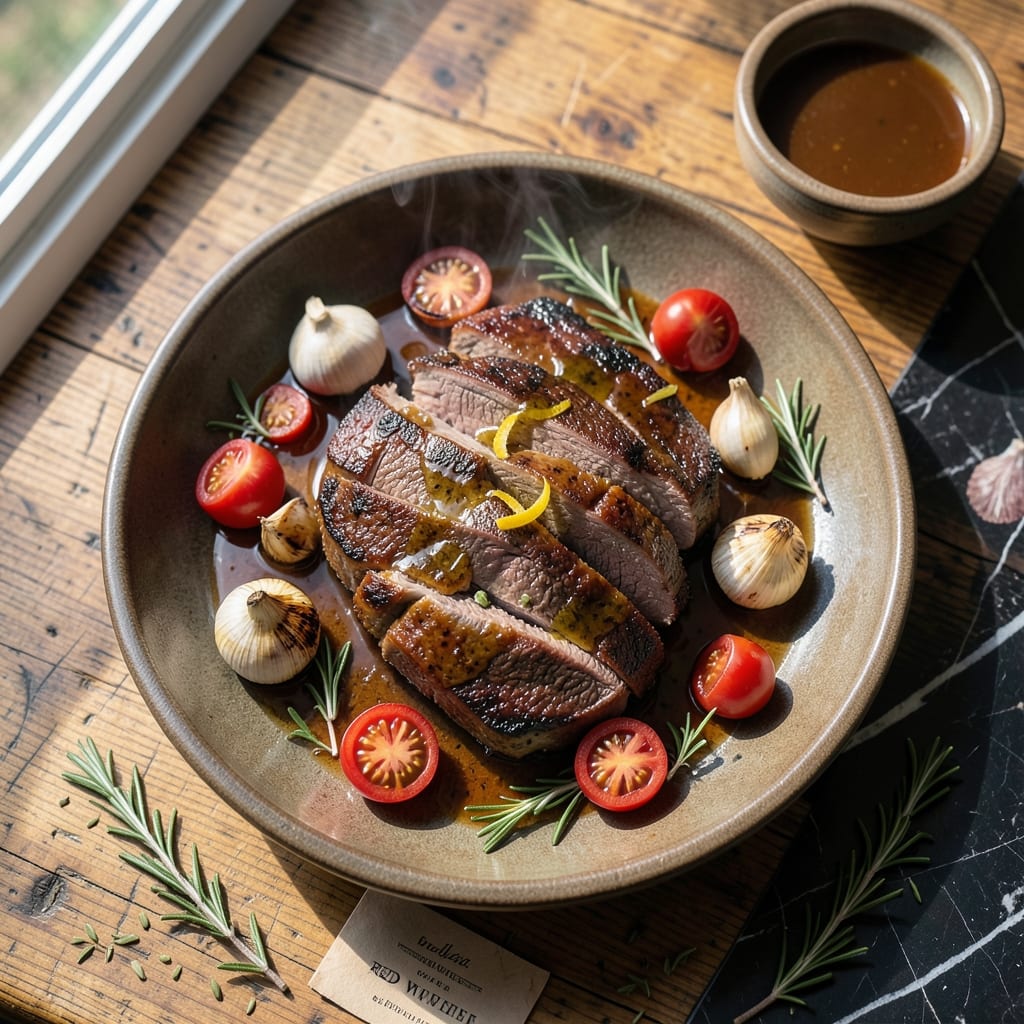
I developed this oven-roasted beef after one too many dry Sunday dinners in my Boston kitchen. The marinade transforms even tougher cuts into tender, juicy perfection with minimal effort.
The secret lies in the balance of acid, oil, and herbs. A 12-hour marinade allows flavors to penetrate deeply while tenderizing the meat. The high-heat sear before roasting creates that coveted caramelized crust.
What emerges is beef with a golden exterior and blush-pink center, sliced to reveal moist, herb-infused layers. The aroma alone will draw a crowd to your kitchen.
This method works for everything from weeknight suppers to holiday centerpieces. The oven does most of the work while you enjoy the process.
Ingredients for Marinated Roast Beef Recipe Oven
Transform tough cuts into tender, herb-infused perfection with these quality ingredients.
| Ingredient | Amount | Notes |
|---|---|---|
| Beef Chuck Roast 🥩 | 3 lb | Well-marbled, trimmed of excess fat |
| Extra-Virgin Olive Oil 🫒 | ½ cup | Divided for marinade and searing |
| Red Wine Vinegar 🍷 | ¼ cup | For acidity in marinade |
| Soy Sauce 🥫 | ¼ cup | Low-sodium preferred |
| Worcestershire Sauce 🍶 | 2 tbsp | Adds umami depth |
| Fresh Garlic Cloves 🧄 | 6 cloves | Minced for marinade |
| Fresh Rosemary Sprigs 🌿 | 3 pieces | Stems removed, chopped |
| Fresh Thyme Sprigs 🍃 | 4 pieces | Leaves stripped from stems |
| Dijon Mustard 🟡 | 2 tbsp | Smooth, not whole grain |
| Kosher Salt 🧂 | 2 tsp | Diamond Crystal preferred |
| Black Peppercorns 🌶️ | 1 tsp | Freshly cracked |
| Crushed Red Pepper Flakes 🔥 | ½ tsp | Optional for heat |
| Fresh Parsley 🌿 | ¼ cup | Chopped, for garnish |
| Beef Broth 🥫 | 1 cup | Low-sodium, for roasting pan |
[recipe_ingredient_scaler]
The beef is everything here. Chuck roast is ideal—marbling ensures that juicy finish even after long cooking. Look for pieces labeled ‘chuck shoulder’ at Whole Foods or Costco; they often have well-trimmed options. Avoid pre-cut stew meat (too lean). If using a different cut, like round, expect slightly less tenderness but still great flavor.
No red wine vinegar? Apple cider vinegar works in a pinch (slightly sweeter). Balsamic vinegar adds depth but darkens the marinade. Swap soy sauce for tamari (gluten-free) or coconut aminos (lower sodium). Fresh herbs are non-negotiable here—dried won’t infuse the same way. If you’re missing rosemary or thyme, fresh sage makes a great substitute.
Marinate the beef in a sealed bag or container for up to 24 hours—longer is better. Roast leftovers keep 4-5 days in the fridge, or freeze for 3 months (slice before freezing for easy portions). Bring to room temperature before reheating to preserve moisture.
Why You’ll Love This Recipe
- Set It & Forget: The marinade does all the work—just toss the beef chuck with olive oil, vinegar, soy, and Worcestershire the night before.
- Umami Bomb: That combo of soy and Worcestershire gives it this deep, savory richness I can’t resist.
- Feeds My Crew: I make a big roast Sunday and we’re eating leftovers in sandwiches, tacos, or over rice all week.
- Budget Hero: Chuck roast is cheap, and stretching it over meals makes my grocery bill happy.
Step-by-Step Instructions for Marinated Roast Beef Oven
Transform simple ingredients into a showstopping roast with this foolproof process.
Step 1: Create the Herb-Infused Marinade
In a large bowl, whisk together the 0.5 cup Extra-Virgin Olive Oil, 0.25 cup Red Wine Vinegar, 0.25 cup Soy Sauce, 2 tbsp Worcestershire Sauce, and 2 tbsp Dijon Mustard until fully emulsified. The vinegar and mustard will create a tangy base that tenderizes the beef while adding depth.
Add the 6 cloves Fresh Garlic Cloves (minced), stripped leaves from the 4 pieces Fresh Thyme Sprigs, chopped 3 pieces Fresh Rosemary Sprigs, 2 tsp Kosher Salt, 1 tsp Black Peppercorns (freshly cracked), and 0.5 tsp Crushed Red Pepper Flakes. Stir until the herbs and spices are evenly distributed throughout the liquid.
Step 2: Marinate the Beef for Maximum Flavor
Place the 3 lb Beef Chuck Roast in a large resealable bag or shallow dish. Pour the marinade over the beef, ensuring it’s completely coated. Massage the marinade into the meat for 1-2 minutes to ensure full coverage, especially in any crevices.
Seal and refrigerate for at least 4 hours, preferably overnight. This extended marinating time allows the acidic components to break down the muscle fibers while the herbs infuse the meat with robust flavor. Flip the beef halfway through the marinating period to ensure even distribution.
Step 3: Sear and Roast to Perfection
Preheat your oven to 325°F. Remove the beef from the marinade (reserve the marinade) and pat it dry with paper towels. This step is crucial for achieving a good sear. Heat a large oven-safe pot or Dutch oven over medium-high heat with 2 tbsp of the reserved marinade oil.
Sear the beef on all sides for 3-4 minutes per side until deeply browned. The fond created here will enhance the final sauce. Pour in the 1 cup Beef Broth and the remaining marinade, scraping up any browned bits from the bottom of the pot.
Step 4: Slow-Roast for Tenderness
Cover the pot and transfer it to the preheated oven. Roast for 3 to 3.5 hours, turning the beef every 45 minutes to ensure even cooking and basting. The beef is done when it’s fork-tender and an instant-read thermometer inserted into the thickest part registers 195-200°F.
During the last 30 minutes of roasting, uncover the pot to allow the liquid to reduce slightly and the top to caramelize. This creates a beautiful crust while concentrating the flavors in the cooking liquid.
Step 5: Rest and Serve with Pan Sauce
Transfer the beef to a cutting board and tent loosely with foil. Let it rest for 20-30 minutes before slicing. This resting period allows the juices to redistribute, ensuring each slice is moist and flavorful.
Skimming excess fat from the cooking liquid if desired, then simmer the remaining liquid on the stovetop for 5 minutes to thicken slightly. Slice the beef against the grain and serve with the pan sauce spooned over the top. Garnish with the 0.25 cup Fresh Parsley for a fresh finish.
Pro Tips For Making Marinated Roast Beef Recipe Oven
- Sear Before Roasting: Always sear the beef chuck roast in a hot pan with a little olive oil before transferring to the oven—it locks in juices and adds a deep flavor base that the marinade will build on.
- Marinate Overnight: I learned this the hard way—give the beef at least 8 hours (ideally overnight) in the red wine vinegar, soy, and Worcestershire mix so the flavors actually penetrate the meat, not just sit on the surface.
- Don’t Skip the Rest: After roasting, let the beef rest under foil for at least 15 minutes—yes, even if you’re starving—so the juices redistribute and don’t spill out when you slice it.
- Use a Meat Thermometer: Skip guessing and pull the roast at 130-135°F for medium-rare; the temperature will rise another 5-10 degrees while resting, and you’ll avoid the dreaded dry, overcooked chuck.
Essential Equipment for This Dish
Dutch Oven Essentials
A heavy 5-7 quart Dutch oven is non-negotiable for even heat distribution and retention. I swear by my Lodge enameled cast iron—it’s what Nonna would’ve used if she had the counter space. The tight-fitting lid traps moisture for that fall-apart tenderness.
Thermometer Matters
Don’t guess with beef this good. A instant-read thermometer (I use ThermoWorks ThermoPop) lets you nail the 195-200°F sweet spot. Check multiple spots—the thickest part tells the real story. 🌡️
Marinade Container
Use a gallon-sized zip-top bag or shallow glass dish for marinating. The bag saves space in my tiny Boston kitchen and ensures every inch of the 3 lb roast gets coated. Flip it halfway through for even flavor.
Searing Surface
A stainless steel skillet or the Dutch oven itself works for searing. Get it screamingly hot—medium-high heat—to develop that deep brown crust. Pat the beef very dry first, or it’ll steam instead of sear.
Resting Setup
After roasting, transfer the beef to a wooden cutting board and tent with foil. This old-school method keeps it warm while the juices settle. I learned this trick after that pot pie disaster—no more dry meat! 💡
Carving Knife
A long, sharp slicing knife (my 8-inch Victorinox is perfect) makes clean cuts against the grain. Wipe the blade between slices for presentation-worthy pieces. The parsley garnish hides any imperfections beautifully.
Nutrition Facts
Frequently Asked Questions
How long should I marinate the beef for the best flavor?
For maximum flavor and tenderness, marinate the beef for 12-24 hours. The longer it marinates, the deeper the flavors penetrate. At minimum, allow 4 hours if you’re short on time.
Can I use a different cut of beef for this recipe?
Yes, but chuck roast is ideal for its marbling. For a leaner option, try bottom round or brisket, though they may need slightly longer cooking. Avoid very lean cuts like eye of round.
Why is my roast tough instead of fall-apart tender?
This usually means it didn’t cook long enough. The beef needs to reach 195-200°F internally to break down the connective tissue. Also, ensure you’re slicing against the grain.

Trained in classic French technique but raised on slow-cooked ribs and spicy rubs, she blends culinary skill with smoke and soul.
- Recipe for Boneless Pork Chops in Cast Iron Skillet: Sear and Baste to Juicy Perfection - October 3, 2026
- Recipe for Boneless Cross Rib Roast: Slow-Roasted Beef with Herb Crust - October 3, 2026
- Hamburgers in Sauce Recipe Crock Pot: Slow-Cooked Savory Delight - October 3, 2026