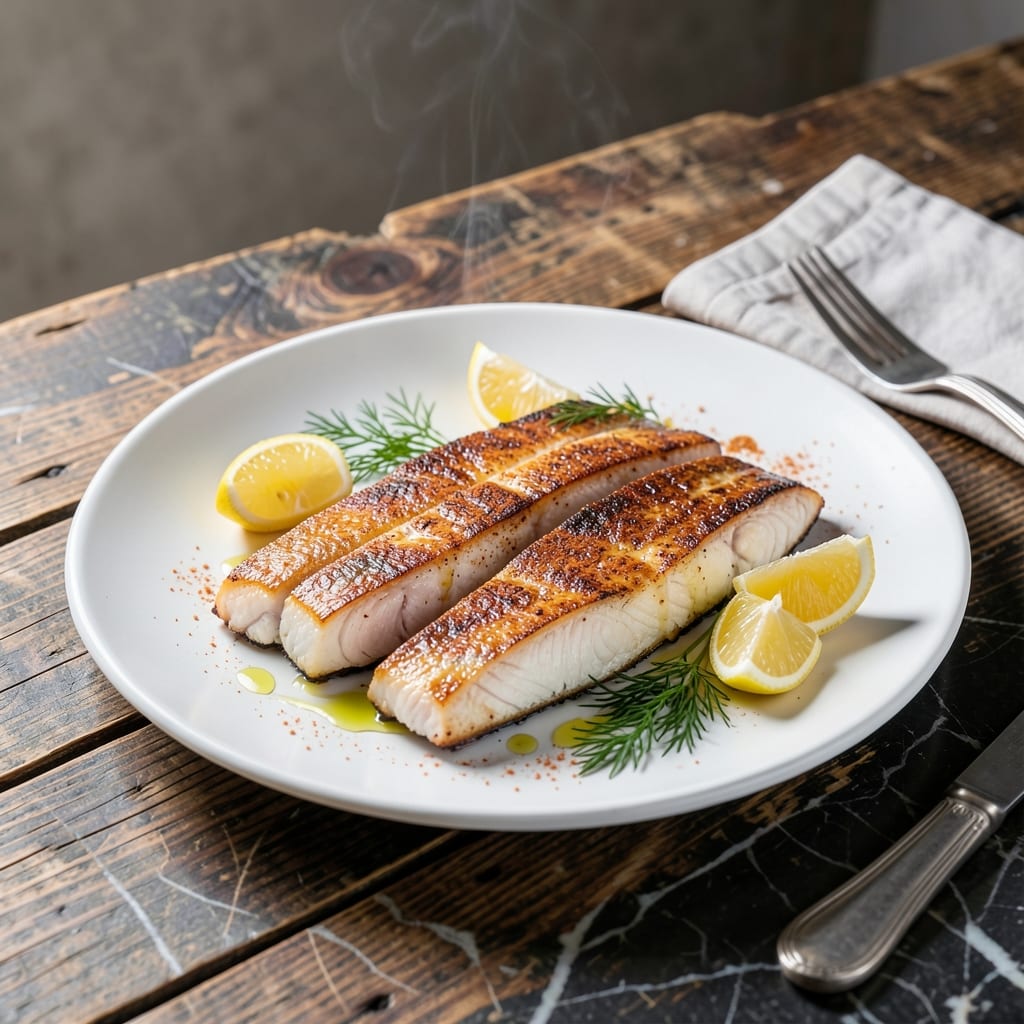
There’s a special satisfaction in cooking Hawaiian opakapaka, a prized pink snapper with delicate, sweet flesh that deserves careful handling.
Pan-frying this fish requires precision to achieve golden crisp skin while keeping the interior moist and tender. The key is patience and proper heat control.
I developed this method after testing various techniques to honor the fish’s natural flavor without overpowering it. The result is a dish that highlights the snapper’s delicate sweetness.
With just a few simple ingredients and attention to detail, you’ll create a restaurant-worthy entrée that celebrates this Pacific treasure.
Ingredients for Opakapaka Recipe Pan Fried
Hawaiian pink snapper needs just a handful of quality ingredients to shine with its natural sweetness.
| Ingredient | Amount | Notes |
|---|---|---|
| Opakapaka Fillets 🐟 | 1 ½ lb | Skin-on, about 1-inch thick |
| All-Purpose Flour 🌾 | ½ cup | For light dredging |
| Kosher Salt 🧂 | 1 ½ tsp | Divided for seasoning |
| Freshly Ground Black Pepper 🌶️ | ½ tsp | Coarse grind preferred |
| Paprika 🌶️ | 1 tsp | Sweet or smoked variety |
| Neutral Oil 🫒 | ¼ cup | High smoke point like avocado or grapeseed |
| Unsalted Butter 🧈 | 2 tbsp | For basting skin |
| Garlic Cloves 🧄 | 3 cloves | Minced for aromatics |
| Fresh Thyme Sprigs 🌿 | 4 sprigs | Leaves stripped, stems discarded |
| Lemon 🍋 | 1 whole | Zest and juice for finishing |
| Fresh Parsley 🌿 | ¼ cup | Chopped for garnish |
[recipe_ingredient_scaler]
Opakapaka is the star here—source it from a reputable fishmonger like Whole Foods or a trusted local purveyor. The fillets should be skin-on, about 1-inch thick, and smell like the ocean (never fishy). For the flour, King Arthur all-purpose is reliable for that light, crisp dredge. The butter must be unsalted to control seasoning precisely. High-smoke-point oil is non-negotiable for achieving that golden crisp skin without burning.
No fresh thyme? Dried thyme at one-third the amount works, but fresh delivers brighter flavor. Swap paprika for cayenne if you want subtle heat, or omit entirely for a milder profile. Avocado oil can replace the neutral oil if that’s what you have. For the lemon, bottled juice works in a pinch, but fresh zest is essential for that vibrant finish. The parsley can be swapped for cilantro if you prefer a different herbal note.
Cook the opakapaka immediately after purchasing for peak freshness. Leftovers keep for 1-2 days in the fridge but are best enjoyed fresh. The fillets can be prepped (seasoned, floured) up to 30 minutes ahead—just refrigerate until ready to cook. Never freeze previously frozen fish.
Why You’ll Love This Recipe
- One Pan Magic: Honestly, it’s just flour, salt, pepper, and paprika—then straight into the pan. No fuss, no extra bowls, just crispy opakapaka in minutes.
- Crispy, Spiced Perfection: That paprika-kissed crust on the opakapaka? Ridiculously good. Tender inside, with just the right kick of pepper and salt.
- Dinner or Lunch: I’ll serve it with rice for dinner or toss the leftovers into a wrap the next day. Versatile doesn’t even cover it.
- Budget-Friendly Luxury: Opakapaka feels fancy, but it’s affordable and cooks fast. Feeds my family without breaking the bank or my schedule.
Step-by-Step Instructions for Pan Fried Opakapaka
Master this technique and you’ll achieve perfectly crisp skin and flaky, moist flesh every time.
Step 1: Season and Dredge the Opakapaka Fillets
Pat the 1.5 lb Opakapaka Fillets completely dry with paper towels—this is essential for achieving crispy skin. Season both sides evenly with 1 tsp of the Kosher Salt, the 0.5 tsp Freshly Ground Black Pepper, and the 1 tsp Paprika.
Lightly dredge each fillet in the 0.5 cup All-Purpose Flour, shaking off any excess. The flour creates a delicate crust that enhances the crispiness without overpowering the natural flavor of the fish. Set the dredged fillets aside on a clean plate while you prepare the pan.
Step 2: Sear the Fillets Skin-Side Down
Heat the 0.25 cup Neutral Oil in a large skillet over medium-high heat until it shimmers but does not smoke. Carefully place the fillets skin-side down in the hot oil, pressing gently with a fish spatula for 10 seconds to prevent curling.
Cook undisturbed for 4-5 minutes until the skin is deep golden brown and crisp. Resist the urge to move the fillets—this ensures even browning and a perfectly crisp texture. The edges should appear opaque about halfway up the sides when ready to flip.
Step 3: Flip and Baste with Aromatics
Flip the fillets and immediately reduce heat to medium. Add the 2 tbsp Unsalted Butter, the 3 cloves Garlic Cloves, and the stripped leaves from the 4 sprigs Fresh Thyme Sprigs to the pan.
Tilt the skillet slightly and use a spoon to baste the fillets with the foaming butter, garlic, and thyme for 2-3 minutes until the fish is cooked through and flakes easily with a fork. The butter should turn a light nutty brown, and the garlic should be fragrant but not burnt.
Step 4: Finish and Garnish
Transfer the fillets to a serving platter. Squeeze the juice from ½ of the Lemon over the fish, then zest a bit of the peel for brightness. Sprinkle with the remaining 0.5 tsp Kosher Salt if needed.
Garnish with the 0.25 cup Fresh Parsley and serve immediately with the remaining lemon wedges on the side. The skin should be crisp enough to hear when cut, while the flesh remains tender and moist.
Pro Tips For Making Opakapaka Recipe Pan Fried
- Pat Fillets Dry: I learned this the hard way—moisture on the opakapaka fillets makes the flour coating clump and steam instead of crisp. Press between paper towels until completely dry before seasoning.
- Hot Pan, Hot Oil: After burning three batches, I finally figured out opakapaka needs a screaming-hot pan with about 2 tablespoons of oil shimmering before the fillets hit the pan. Anything less and they’ll stick.
- Season Flour Generously: Mix 1 teaspoon kosher salt, ½ teaspoon black pepper, and ½ teaspoon paprika into the flour before dredging. Sounds simple, but it actually changes the outcome more than you’d expect.
- Skip the Crowding: Resist the urge to cook all fillets at once—give each piece at least an inch of space in the pan. Crowding drops the oil temp fast, and you’ll end up with soggy fish instead of that perfect crust.
Common Mistakes When Making Perfect Results
Overcrowding the Pan
Never cook more than 2 fillets at once in a 12-inch skillet—this drops oil temperature, causing soggy skin. I learned this the hard way when my first batch steamed instead of crisped. Use multiple batches if needed.
Skipping the Dry Pat
Moisture is the enemy of crispy skin. Always pat fillets completely dry with paper towels before seasoning. Even 1 tsp of water can create steam, ruining that golden crust you’re working so hard to achieve. 💡
Moving Fillets Too Soon
Let the fish cook undisturbed for the full 4-5 minutes skin-side down. Peeking or poking releases it prematurely. The skin will naturally release when it’s ready—you’ll see the edges turning opaque.
High Heat Mistakes
If your oil starts smoking, it’s too hot. Remove pan from heat for 30 seconds to cool slightly. Burning oil gives bitter flavor and can ruin the delicate opakapaka. Medium-high heat is your sweet spot.
Under-Seasoning
Don’t be shy with the Kosher Salt—this fish needs 1.5 tsp total for 1.5 lb. I taste the raw fillet first (if fresh) to gauge needed seasoning. The flour dredge also needs salt to enhance flavor.
Ignoring Carryover Cooking
Remove fillets when they’re just shy of done—they’ll continue cooking off heat. For 1-inch thick fillets, this means pulling them when the center still looks slightly translucent. Rest 2-3 minutes before serving. 🔥
Nutrition Facts
Frequently Asked Questions
What oil works best for pan-frying?
Use a neutral oil with a high smoke point like avocado or grapeseed. These handle the medium-high heat needed for crisp skin without burning. Avoid olive oil—its low smoke point can create bitter flavors.
How do I know when it’s done?
The flesh should flake easily with a fork and reach 145°F internally. For 1-inch thick fillets, cook 4-5 minutes skin-side down, then 2-3 minutes after flipping. The center may still look slightly translucent when done.
Can I use a different fish?
Yes! Try this method with red snapper, cod, or halibut. Adjust cooking time for thickness—thinner fillets need 1-2 minutes less per side. The technique works for any firm, mild white fish.
Why did my skin stick to the pan?
The pan wasn’t hot enough or the fish wasn’t dry. Heat oil until shimmering, and always pat fillets completely dry. Use a nonstick or well-seasoned cast iron skillet for best results.

Trained in classic French technique but raised on slow-cooked ribs and spicy rubs, she blends culinary skill with smoke and soul.
- Best Passover Beef Brisket Recipe: Molasses-Spiced Slow-Cooked Masterpiece - October 15, 2026
- Jamie Oliver’s Fast and Simple Brisket Recipe: Smoky-Sweet One-Pan Magic - October 15, 2026
- Best Smoked Oxtail Recipe: Deep-Rich Flavor After Low-and-Slow Cooking - October 14, 2026