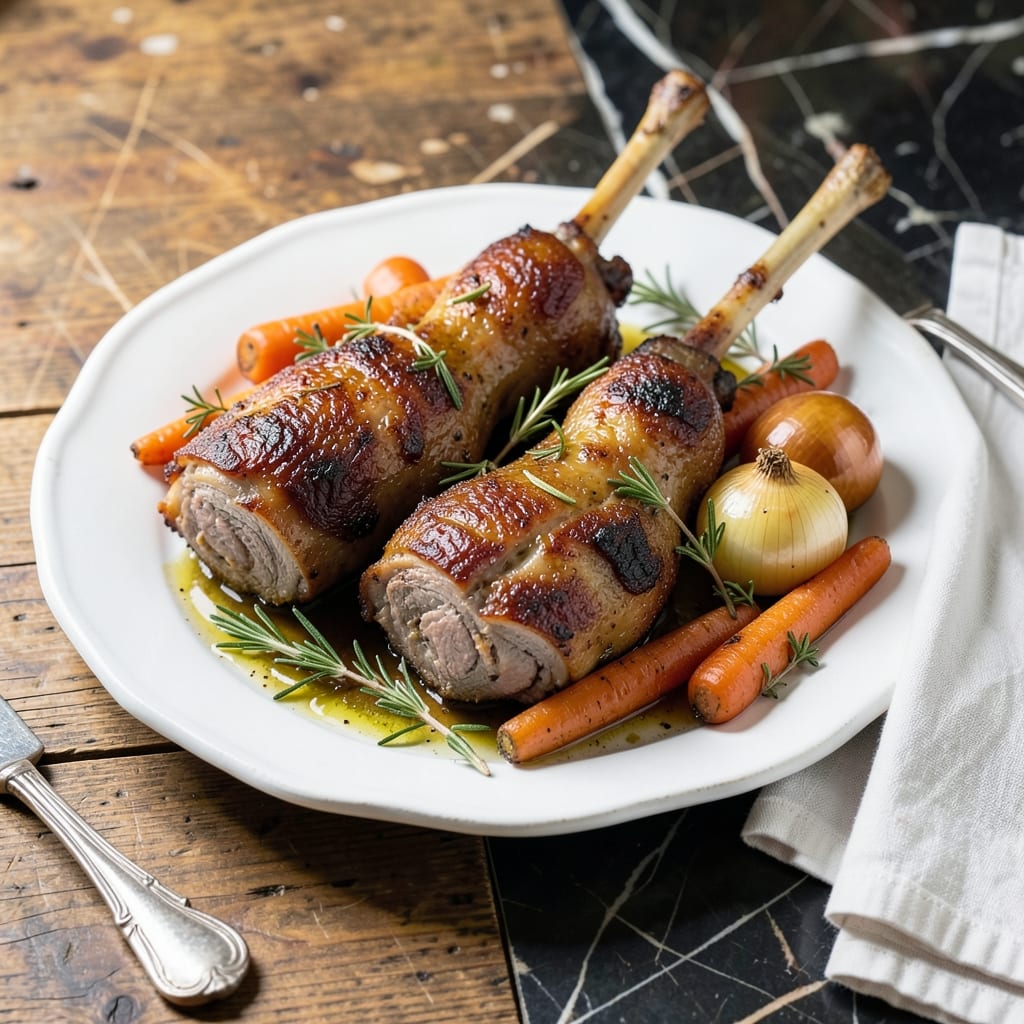
I spent years testing pork recipes before perfecting this oven-braised shank method. The key is low, slow cooking to transform tough meat into fall-off-the-bone tenderness while the herb crust develops a rich, golden brown exterior.
This technique uses a two-step process: first searing the shank to lock in juices, then braising with aromatics until the collagen melts into silky perfection. The herb crust adds layers of flavor without overpowering the natural pork richness.
What emerges from the oven is meat so tender it nearly collapses at the touch of a fork, with a crispy herb coating that contrasts beautifully with the moist interior. The braising liquid reduces into a velvety sauce that begs to be soaked up.
Perfect for Sunday dinners or special occasions, this dish delivers restaurant-quality results with minimal active time. The oven does most of the work while you prepare the sides.
Ingredients for Recipe for Pork Shank Roast
Quality ingredients elevate this oven-braised pork shank to restaurant-level perfection with minimal effort.
| Ingredient | Amount | Notes |
|---|---|---|
| Pork Shanks 🍖 | 4 whole | Bone-in, about 1.5 lb each |
| Kosher Salt 🧂 | 2 tbsp | Diamond Crystal preferred |
| Black Peppercorns 🌶️ | 1 tbsp | Freshly cracked |
| Olive Oil 🫒 | 3 tbsp | Extra-virgin, for searing |
| Fresh Rosemary 🌿 | ¼ cup | Finely chopped, stems discarded |
| Fresh Thyme 🌿 | ¼ cup | Leaves stripped from stems |
| Garlic Cloves 🧄 | 8 cloves | Minced into paste |
| Dijon Mustard 🟡 | 3 tbsp | Whole grain preferred |
| Dry White Wine 🍷 | 1 cup | Sauvignon Blanc or Pinot Grigio |
| Chicken Stock 🥣 | 2 cups | Low-sodium preferred |
| Yellow Onion 🧅 | 1 whole | Large, roughly chopped |
| Carrots 🥕 | 3 whole | Peeled, cut into chunks |
| Celery Stalks 🥬 | 3 pieces | Cut into large pieces |
| Bay Leaves 🍃 | 2 pieces | Dried, whole |
| Tomato Paste 🍅 | 2 tbsp | Double-concentrated preferred |
[recipe_ingredient_scaler]
The pork shanks are the foundation—source bone-in cuts from a reputable butcher or Whole Foods market. Look for pieces with good marbling and skin-on for optimal texture. The weight is critical: 1.5 lb per shank ensures even cooking. For the herb crust, fresh rosemary and thyme are non-negotiable; dried herbs lack the volatile oils that develop the golden-brown exterior during roasting.
No white wine? Dry vermouth at equal volume works, or substitute additional chicken stock with 1 tbsp lemon juice. For the Dijon, whole-grain mustard adds visual appeal, though smooth works too. If pork shanks are unavailable, pork shoulder cut into thick slices can substitute (reduce cooking time by half). The tomato paste can be omitted, but it adds depth to the braising liquid.
The shanks can be prepped 1 day ahead—pat dry, season, and refrigerate uncovered to dry the surface. Braised pork keeps 4 days refrigerated or 3 months frozen in its liquid. Reheat gently in the braising liquid to maintain moisture. The herb crust is best applied just before roasting for maximum crispness.
Why You’ll Love This Recipe
- Set It and Forget It: Between us, this is the closest thing to hands-off cooking I’ve found—just rub the shanks with salt, pepper, and rosemary, then let the oven do the heavy lifting.
- Rosemary-Kissed Crisp: That fresh rosemary and black pepper crust? It forms this ridiculous crunchy bark while the meat inside turns fork-tender.
- Sunday or Tuesday: Honestly, I’ve served this for fancy Sunday suppers and also just because it was Tuesday and we needed comfort food.
- Feeds Twice: One roast makes enough for dinner plus next-day sandwiches—shred the leftovers and pile them on crusty bread with a drizzle of olive oil.
Step-by-Step Instructions for Pork Shank Roast
Master the technique for fall-off-the-bone tenderness with a rich herb crust.
Step 1: Season and Sear the Pork Shanks
Pat the 4 whole Pork Shanks dry with paper towels, then season generously with 2 tbsp Kosher Salt and 1 tbsp Black Peppercorns, freshly cracked. This step ensures the rub adheres properly and the meat develops a deep flavor.
Heat 3 tbsp Olive Oil in a large Dutch oven over medium-high heat. Sear the pork shanks in batches for 4-5 minutes per side until deeply browned. You’ll know they’re ready to flip when they release easily from the pan. Remove and set aside.
Step 2: Build the Aromatic Base
In the same pot, add the 1 whole Yellow Onion, 3 whole Carrots, and 3 pieces Celery Stalks. Sauté for 5-6 minutes until the vegetables begin to soften and brown slightly. The fond from the pork will deepen the flavor of your base.
Stir in the 0.25 cup Fresh Rosemary, 0.25 cup Fresh Thyme, 8 cloves Garlic Cloves (minced into paste), and 2 tbsp Tomato Paste. Cook for 2 minutes until the tomato paste darkens slightly and the herbs release their fragrance.
Step 3: Deglaze and Braise
Pour in the 1 cup Dry White Wine and scrape up any browned bits from the bottom of the pot. Let it simmer for 3-4 minutes until reduced by half. This step captures all the caramelized flavors and builds depth in your braising liquid.
Return the pork shanks to the pot and add the 2 cups Chicken Stock and 2 pieces Bay Leaves. The liquid should come about halfway up the shanks. Bring to a simmer, then cover and transfer to a preheated 325°F oven.
Step 4: Slow-Braise to Perfection
Braise for 2.5 to 3 hours, turning the shanks halfway through, until the meat is fork-tender and nearly falling off the bone. The cooking time may vary depending on the size of your shanks, so begin checking at the 2-hour mark.
You’ll know it’s done when the meat pulls away from the bone with minimal resistance. The braising liquid should be rich and slightly reduced, coating the back of a spoon.
Step 5: Finish with Mustard Glaze
Remove the pork shanks from the pot and set aside. Skim any excess fat from the surface of the braising liquid, then stir in the 3 tbsp Dijon Mustard. Simmer for 2-3 minutes until the sauce thickens slightly.
Return the shanks to the pot, spooning the sauce over them to coat evenly. The mustard adds a tangy depth that balances the richness of the pork. Serve hot, garnished with fresh herbs if desired.
Pro Tips For Making Recipe For Pork Shank Roast
- Score the Skin: Use a sharp knife to cut 1/4-inch slits in the pork shank skin before seasoning. I learned this the hard way—without scoring, the salt and rosemary can’t penetrate, and you miss out on that crispy, flavorful crust.
- Low and Slow: Roast at 275°F for 3-4 hours, not higher. After burning two batches trying to rush it, I finally accepted that patience is what turns the collagen into that melt-in-your-mouth texture.
- Dry the Meat: Pat the shanks completely dry with paper towels before seasoning—about 2 minutes of thorough drying. Sounds tedious, but it’s the only way to get that golden-brown sear when you start the roast.
- Crush the Peppercorns: Lightly crush the black peppercorns with the flat of your knife before sprinkling. My grandmother swore by this, and she was right: it releases the oils and gives the roast a deeper, more aromatic kick.
Perfect Pairings for These Flavors
Starchy Sides
I love serving this with creamy polenta—it soaks up the braising liquid beautifully. Cook 1 cup polenta in 4 cups chicken stock for 25-30 minutes, stirring occasionally, then finish with butter and Parmesan. 💛
Roasted Vegetables
Try root vegetables like parsnips and potatoes tossed with olive oil, salt, and rosemary. Roast at 400°F for 35-40 minutes until caramelized. The earthy flavors pair perfectly with the pork’s richness.
Fresh Green Salad
A simple arugula salad with lemon vinaigrette cuts through the dish’s richness. Toss 4 cups arugula with 2 tbsp olive oil, 1 tbsp lemon juice, and shaved Parmesan. The peppery bite balances the slow-cooked meat.
Wine Pairings
For wine, I recommend a medium-bodied Chianti or Sangiovese—their acidity and cherry notes complement the pork’s depth. A Pinot Noir from Oregon also works beautifully with its earthy undertones. 🍷
Bread Options
Crusty sourdough or ciabatta is ideal for soaking up the sauce. Warm slices in the oven for 5 minutes before serving. I often rub the bread with a garlic clove for extra flavor.
Simple Garnish
Finish with fresh parsley or gremolata (lemon zest, garlic, parsley) for brightness. The citrus lift enhances the dish’s depth without overpowering it. Honestly, it makes all the difference.
Nutrition Facts
Frequently Asked Questions
What’s the ideal internal temperature for pork shank?
Cook until the meat reaches 195-200°F internally. This higher temperature ensures collagen melts into tender gelatin, creating that fall-off-the-bone texture. Use a meat thermometer for accuracy.
Can I use a slow cooker instead of an oven?
Yes! Sear the shanks first, then transfer to a slow cooker with all ingredients. Cook on low for 6-8 hours or high for 4-5 hours. The result will be just as tender, though you’ll miss the oven’s crispy exterior.
Why did my herb crust burn?
This happens when the crust is exposed to direct heat too long. Tent with foil if it browns before the meat is done. Also, ensure your oven isn’t running hotter than 325°F.
How do I store leftovers?
Keep shanks submerged in their braising liquid in an airtight container. They’ll stay fresh for 4 days in the fridge or 3 months frozen. Reheat gently in the liquid.

Trained in classic French technique but raised on slow-cooked ribs and spicy rubs, she blends culinary skill with smoke and soul.
- Stewed Beef Brisket Recipe: Deep-Rich Flavor After 8 Hours of Slow Simmering - October 15, 2026
- Beef Brisket Rolls Recipe: Flaky Layers and Smoky Sweet Filling - October 15, 2026
- Masterbuilt Smoker Beef Brisket Recipe: Bark-To-Meat Ratio Hack for Unmatched Flavor - October 15, 2026