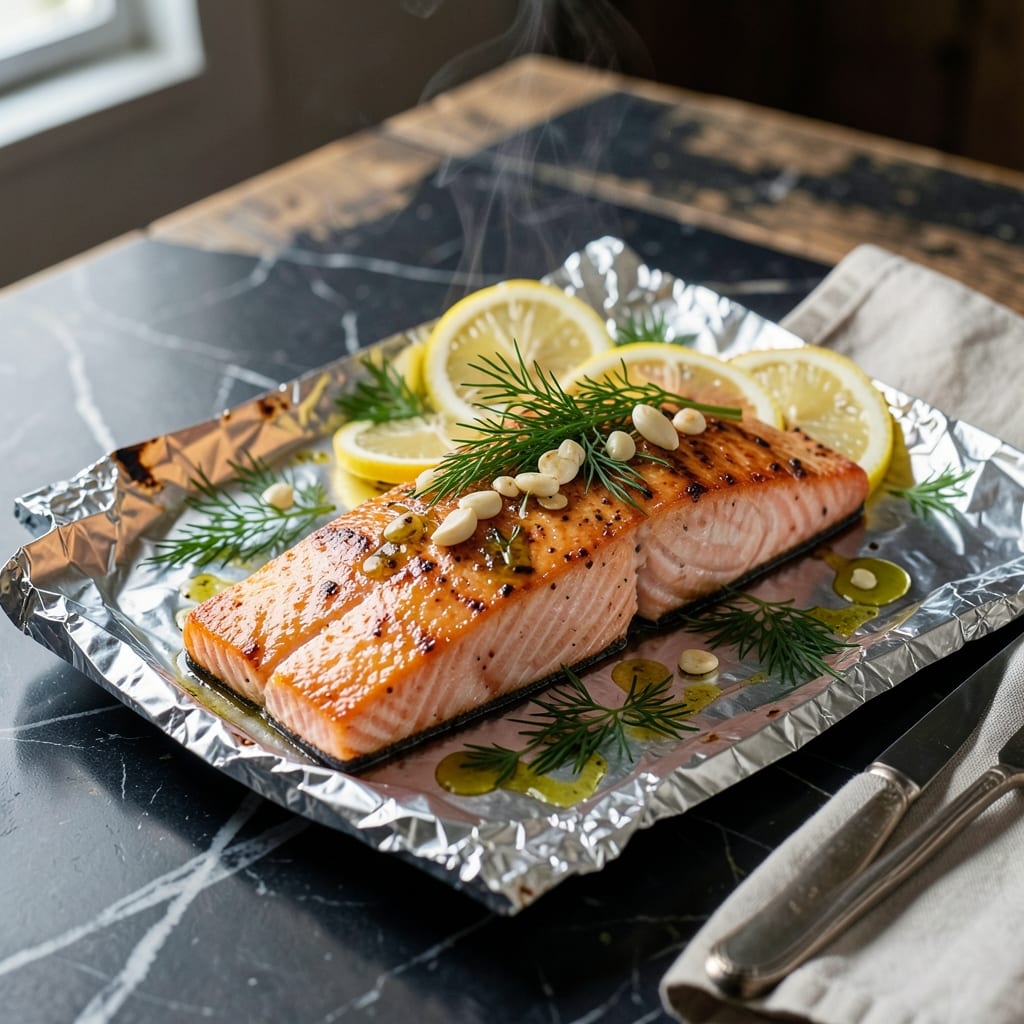
This foolproof method for baking salmon in foil guarantees perfectly flaky results every time. The sealed packet locks in moisture while allowing the fish to cook gently, preserving its natural tenderness and rich flavor.
With just a few simple ingredients—fresh salmon, lemon, and herbs—you can create a restaurant-quality dish in under 20 minutes. The foil technique eliminates the risk of overcooking and makes cleanup effortless.
What emerges from the oven is moist, buttery salmon with bright citrus notes and aromatic herbs. The fish flakes apart with the slightest touch of a fork, revealing its ideal doneness.
Pair with roasted vegetables or a crisp green salad for a complete meal that feels special without the fuss.
Ingredients for Recipe Baked Salmon Fillet in Foil
Fresh salmon, bright lemon, and aromatic herbs create this elegant yet effortless dish.
| Ingredient | Amount | Notes |
|---|---|---|
| Salmon Fillets 🐟 | 1 ½ lb | Skin-on or skinless, fresh preferred |
| Lemon 🍋 | 1 whole | Zested and juiced, about 2 tbsp juice |
| Fresh Dill 🌿 | ¼ cup | Chopped, stems removed |
| Fresh Parsley 🍃 | ¼ cup | Chopped, flat-leaf preferred |
| Garlic Cloves 🧄 | 3 cloves | Minced or thinly sliced |
| Olive Oil 🫒 | 2 tbsp | Extra-virgin for best flavor |
| Unsalted Butter 🧈 | 2 tbsp | Melted, or substitute olive oil |
| Salt 🧂 | ½ tsp | Kosher or sea salt preferred |
| Black Pepper 🌶️ | ½ tsp | Freshly ground for best flavor |
| Dijon Mustard 🟡 | 1 tbsp | Optional, for depth of flavor |
| White Wine 🍷 | ¼ cup | Dry variety like Sauvignon Blanc |
| Aluminum Foil 📜 | 1 sheet | Heavy-duty for durability |
[recipe_ingredient_scaler]
The salmon quality is paramount for this preparation. Wild-caught sockeye or king salmon from a reputable fishmonger or Whole Foods seafood counter delivers superior flavor and texture. Look for fillets with vibrant color and a mild, fresh scent—avoid any with a fishy odor. If purchasing pre-portioned fillets, ensure they are of even thickness for consistent cooking. Freshness is non-negotiable for optimal results.
No fresh dill? Dried dill at one-third the amount works in a pinch, though the flavor will be more concentrated. Tarragon can substitute for dill if you prefer a slightly anise-like note. For the wine, chicken or vegetable broth with a squeeze of lemon provides a non-alcoholic alternative. The Dijon mustard is optional but adds a subtle tang that complements the salmon beautifully.
Prepare the foil packets just before baking to maintain freshness. Cooked salmon keeps in the refrigerator for 2-3 days but is best enjoyed immediately. For reheating, gently warm in a covered skillet over low heat to preserve moisture. Leftovers can be flaked into salads or pasta dishes for another day’s meal.
Why You’ll Love This Recipe
- Minimal Cleanup: I love how the foil does all the work—just fold, bake, and toss it.
- Bright & Zesty: The lemon and fresh dill make every bite taste like a restaurant dish.
- Weeknight Hero: Honestly, it’s my go-to for busy evenings when I need dinner fast.
- Budget-Friendly Luxury: Salmon feels fancy, but this method keeps it simple and affordable.
Step-by-Step Instructions for Baked Salmon Fillet in Foil
Here’s the method. Straightforward, tested, works every time.
Step 1: Prepare and Season the Salmon
Preheat your oven to 400°F. Lay the 1 sheet Aluminum Foil on a flat surface and place the 1.5 lb Salmon Fillets in the center. Drizzle with 2 tbsp Olive Oil and 2 tbsp Unsalted Butter, ensuring even coverage.
Sprinkle the 0.5 tsp Salt and 0.5 tsp Black Pepper evenly over the salmon. Add the 1 tbsp Dijon Mustard and spread it in a thin layer across the top. This step ensures the salmon stays moist and absorbs all the bold flavors.
Step 2: Add Aromatics and Herbs
Zest the 1 whole Lemon directly over the salmon, then slice it and place the slices on top. Sprinkle the 0.25 cup Fresh Dill and 0.25 cup Fresh Parsley evenly, pressing them lightly so they adhere.
Scatter the 3 cloves Garlic Cloves over the fillets. These aromatics infuse the salmon with bright, fresh flavors while it cooks. The lemon juice will also help tenderize the fish slightly, enhancing its natural flakiness.
Step 3: Seal and Bake to Flaky Perfection
Fold the 1 sheet Aluminum Foil over the salmon, crimping the edges tightly to create a sealed packet. This traps steam inside, ensuring the salmon cooks gently and evenly without drying out.
Place the packet on a baking sheet and bake for 15-18 minutes. The salmon is done when it reaches an internal temperature of 145°F and flakes easily with a fork. Avoid overcooking, as this will compromise the tender texture.
Step 4: Finish with White Wine for Depth
Carefully open the foil packet and pour in the 0.25 cup White Wine. Return the salmon to the oven, uncovered, for an additional 2-3 minutes to let the wine reduce slightly and meld with the existing juices.
This final step adds a subtle acidity that balances the richness of the salmon and butter. The wine also deglazes the foil, incorporating any caramelized bits into the sauce.
Pro Tips For Making Recipe Baked Salmon Fillet In Foil
- Seal Tightly: Fold the foil edges tightly—no gaps—to trap steam, or your salmon will dry out. I learned this the hard way after my first attempt came out more like fish jerky.
- Pat Dry First: Always blot the salmon fillets with a paper towel before seasoning. Sounds tedious, but it makes a real difference in getting that perfect flaky texture instead of a soggy mess.
- Skip Overcooking: Pull the salmon out at 130°F internal temp—it’ll keep cooking off the heat. After burning three batches, I finally figured out the timing.
- Slice Lemon Thin: Cut the lemon into thin slices, not wedges, so they lay flat and infuse flavor evenly. My grandmother swore by this, and she was right: it actually changes the outcome.
Common Mistakes When Making recipe baked salmon fillet in foil
Overcooking the Salmon
Salmon continues cooking after it leaves the oven, so pull it out at 140-142°F internal temperature—it’ll reach 145°F while resting. I learned this the hard way with a batch of dry, rubbery fillets that ruined a dinner party. 🌡️
Poor Foil Sealing
If the foil isn’t crimped tightly, steam escapes and the fish dries out. Press the edges firmly together, folding twice for a secure seal. I use heavy-duty foil to prevent tears. Test by gently shaking the packet—no steam should leak.
Skipping the Rest
Let the salmon rest in its foil packet for 5-10 minutes after baking. This lets juices redistribute for maximum moisture. I once sliced right into mine and watched all the flavor pool on the plate instead of staying in the fish.
Uneven Fillet Thickness
Fold thicker ends of fillets under to create even thickness. This ensures uniform cooking. If one piece is thicker, it’ll need 2-3 extra minutes—check with a thermometer to be sure.
Ignoring Freshness
Use salmon within 1-2 days of purchase or freeze it immediately. Older fish develops a mushy texture. I always ask my fishmonger when the salmon was delivered and choose the freshest option available.
Overloading the Packet
Leave room for steam circulation—crowding leads to uneven cooking. A single layer with space between fillets works best. I use separate packets for larger batches to maintain quality.
Nutrition Facts
Frequently Asked Questions
What temperature should the oven be?
Preheat to 400°F for even cooking. This high heat ensures the salmon cooks quickly while staying moist inside the foil packet.
How long should I bake it?
Bake for 15-18 minutes until the internal temperature reaches 145°F. The fish will continue cooking slightly after removal.
Can I use parchment paper instead of foil?
Yes, but foil traps steam more effectively. If using parchment, crimp edges tightly and add 1-2 minutes to cooking time.
What if my salmon is frozen?
Thaw completely in the fridge overnight first. Baking from frozen can lead to uneven cooking and a watery texture.

Trained in classic French technique but raised on slow-cooked ribs and spicy rubs, she blends culinary skill with smoke and soul.
- Stewed Beef Brisket Recipe: Deep-Rich Flavor After 8 Hours of Slow Simmering - October 15, 2026
- Beef Brisket Rolls Recipe: Flaky Layers and Smoky Sweet Filling - October 15, 2026
- Masterbuilt Smoker Beef Brisket Recipe: Bark-To-Meat Ratio Hack for Unmatched Flavor - October 15, 2026