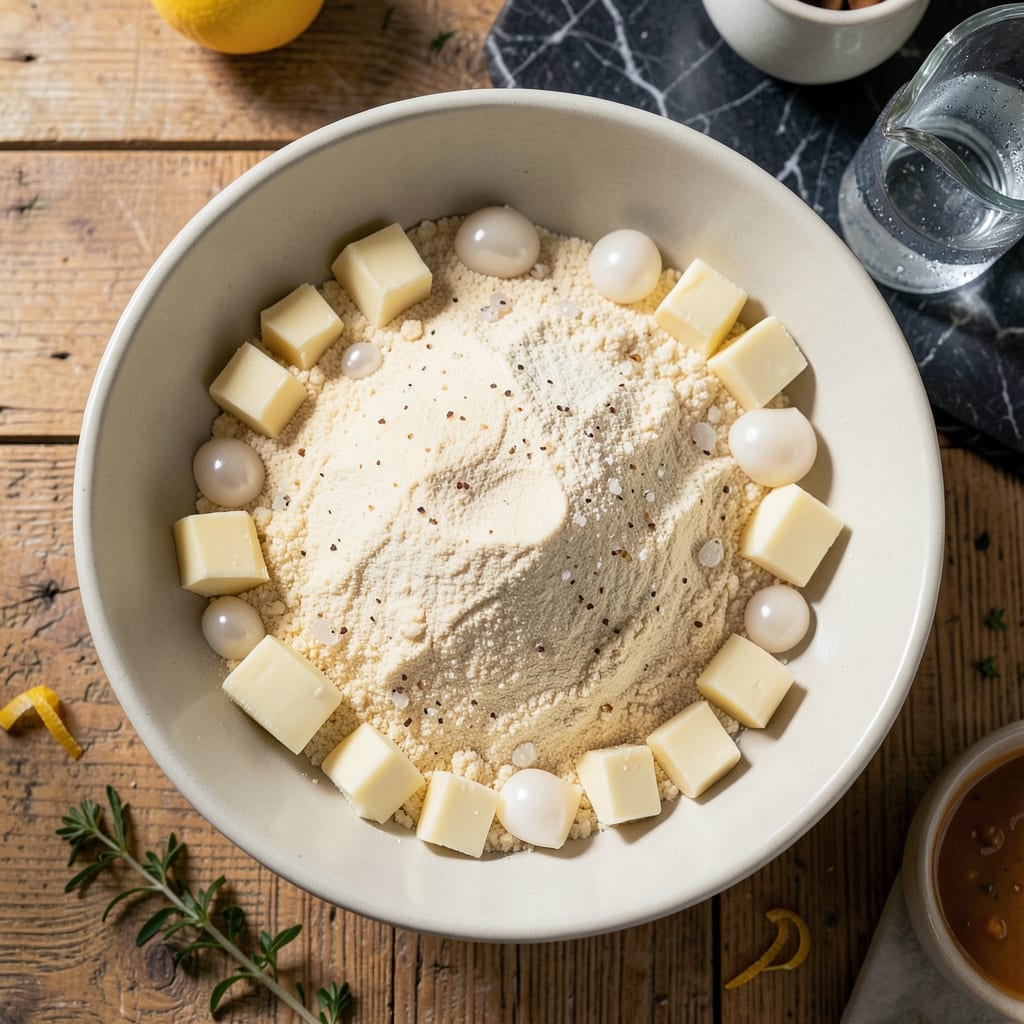
Achieving flaky layers in pie crust comes down to two fundamental principles: cold fat and minimal handling.
This method ensures each bite delivers that coveted tender, layered texture that separates good pie from great. The key is working quickly to prevent the fat from melting before baking.
You’ll use standard pantry ingredients with precise measurements to create a crust that bakes to golden perfection. The process is straightforward yet yields professional results every time.
The final product will be a pie crust that holds its shape while delivering that signature crisp, flaky structure that makes the perfect base for any filling.
Ingredients for Pie Crust Recipe Betty Crocker
Standard pantry ingredients transform into a golden, flaky foundation for any filling.
| Ingredient | Amount | Notes |
|---|---|---|
| All-Purpose Flour 🌾 | 2 ½ cups | Plus extra for dusting surface |
| Unsalted Butter 🧈 | 1 cup | Chilled and cubed small |
| Vegetable Shortening 🧈 | ¼ cup | Chilled, for extra flakiness |
| Ice Water 💧 | ⅓ cup | Plus 1 tbsp as needed |
| Granulated Sugar 🍚 | 1 tsp | Optional, for sweet crusts |
| Salt 🧂 | 1 tsp | Fine sea salt preferred |
| Apple Cider Vinegar 🍏 | 1 tbsp | Tenderizes the dough |
| Large Egg Yolk 🥚 | 1 whole | Optional, for richer crust |
[recipe_ingredient_scaler]
The fat is critical here. Land O’Lakes unsalted butter and Crisco all-vegetable shortening give the best texture. Butter provides flavor while shortening adds flakiness—don’t skip either. Keep both ice-cold until use (freeze the cubed butter for 15 minutes if your kitchen is warm). For the flour, King Arthur or Gold Medal all-purpose work perfectly. Avoid self-rising or cake flour.
Need to swap? Lard at a 1:1 ratio works for shortening, though it’s less common these days. No vinegar? Lemon juice at the same amount does the trick. For a vegan crust, use coconut oil instead of butter and skip the egg yolk. The water amount can vary—start with 1/3 cup and add more by the tablespoon if the dough seems dry.
The dough keeps 2-3 days wrapped in plastic in the fridge, or freeze for up to 3 months. Let chilled dough sit at room temperature for 10 minutes before rolling to prevent cracking. Baked crusts stay crisp for 2 days at room temperature in an airtight container.
Why You’ll Love This Recipe
- One Bowl Wonder: I mix the flour, butter, and shortening right in the bowl—no fancy tools, just my hands and a fork.
- Buttery Flake Magic: The combo of cold butter and shortening gives that perfect tender crunch with every bite.
- Any Pie’s Best Friend: Sweet or savory, this crust works for apple pie one day and pot pie the next.
- Freezer Ready: I always double the batch and stash the extra dough in the freezer for last-minute baking.
Step-by-Step Instructions for Pie Crust
Master the technique for creating perfectly flaky layers with this time-tested method.
Step 1: Combine Dry Ingredients for Optimal Structure
In a large mixing bowl, whisk together the 2.5 cups All-Purpose Flour, 1 tsp Granulated Sugar, and 1 tsp Salt until evenly distributed. This initial dry mix ensures uniform flavor distribution and creates the structural foundation for your crust.
The sugar adds subtle sweetness while the salt enhances all flavors. I use fine sea salt as it dissolves more evenly throughout the dough. Make sure to break up any lumps in the flour for the smoothest possible texture.
Step 2: Cut in Chilled Fats for Maximum Flakiness
Add the 1 cup Unsalted Butter (cubed small and chilled) and 0.25 cup Vegetable Shortening (also chilled) to the dry ingredients. Using a pastry cutter or your fingertips, work the fats into the flour until the mixture resembles coarse crumbs with pea-sized pieces of fat visible.
This step is crucial for flakiness—the visible fat pieces will melt during baking, creating those coveted layers. Keep the fats as cold as possible throughout this process. If the mixture starts to warm, chill it for 10 minutes before continuing.
Step 3: Bind the Dough with Liquid Components
In a small bowl, combine the 0.33 cup Ice Water, 1 tbsp Apple Cider Vinegar, and 1 whole Large Egg Yolk. The vinegar tenderizes the gluten while the egg yolk adds richness and binding power.
Create a well in the center of your flour-fat mixture and gradually add the liquid, mixing gently with a fork until the dough just comes together. You may need an additional 1 tbsp of ice water if the mixture appears too dry. The dough should hold when pressed but not be sticky.
Step 4: Chill and Rest the Dough
Divide the dough into two equal portions and shape each into a disk about 1 inch thick. Wrap tightly in plastic wrap and refrigerate for at least 1 hour or up to 2 days.
This resting period allows the gluten to relax and the fats to rechill, making the dough easier to roll out and preventing shrinkage during baking. The apple cider vinegar continues to work its magic during this time, ensuring a tender finished product.
Step 5: Roll and Shape for Baking
On a lightly floured surface using some of the extra all-purpose flour, roll one disk of dough to a 12-inch circle, about ⅛-inch thick. For a perfect fit, roll from the center outward, turning the dough occasionally to prevent sticking.
Transfer to a pie dish, press gently into the bottom and sides, then trim the edges leaving a ½-inch overhang. Fold the overhang under and crimp decoratively. Chill the crust for 30 minutes before baking to prevent shrinking. Repeat with the second disk if making a double-crust pie.
Pro Tips For Making Pie Crust Recipe Betty Crocker
- Chill the Fat: Keep your butter and shortening ice-cold until the last second—cut them into the flour quickly so they stay in small, visible pieces. I learned this the hard way after ending up with a tough, greasy crust more than once.
- Use Ice Water: Fill a glass with water and ice cubes, then measure from that—never just cold tap water. About 1 tablespoon at a time is all you need to bring the dough together without overworking it.
- Skip the Overmixing: Stop mixing as soon as the dough holds together when pressed. After burning three batches to crispy frustration, I finally realized overworking the gluten was the culprit.
- Rest Before Rolling: Wrap the dough and refrigerate for at least 30 minutes before rolling. My grandmother swore by this, and she was right—it relaxes the gluten and makes the crust easier to handle.
Best Sauces and Condiments for This Dish
Sweet Pairings
For fruit pies, a warm vanilla custard sauce drizzled over individual slices adds luxury. I whisk 1 cup whole milk with 2 egg yolks and 2 tbsp sugar for a quick stovetop version. 💛
Savory Options
Quiche or pot pie crusts shine with a tangy herb-infused gravy. Simmer 1 cup chicken broth with 1 tsp thyme and 1 tbsp butter for a perfect match. The acidity cuts through richness beautifully.
Classic Toppings
Freshly whipped cream sweetened with 1 tbsp powdered sugar and flavored with ½ tsp vanilla complements any fruit filling. I use Land O’Lakes Heavy Cream for reliable results every time.
Ice Cream Pairing
A scoop of vanilla bean ice cream melts deliciously over warm pie. The contrast of hot and cold textures creates an unforgettable experience. Ben & Jerry’s makes my go-to version for this. ✨
Drizzle Sauces
For apple or pear pies, a salted caramel drizzle elevates the dessert. Heat ½ cup caramel sauce with ¼ tsp sea salt until just warm. The sweet-salty combination is irresistible.
Citrus Accents
A light orange zest glaze brightens berry pies. Mix 1 cup powdered sugar with 2 tbsp orange juice and 1 tsp zest. Drizzle over cooled slices for a fresh finish.
Nutrition Facts
Frequently Asked Questions
Can I make this ahead of time?
Yes! The dough can be prepared and refrigerated for 2-3 days or frozen for up to 3 months. Let it warm slightly before rolling to prevent cracking.
Why use both butter and shortening?
Butter adds rich flavor while shortening creates extra flaky layers. The combo gives you the best texture and taste in every bite.
What if my crust shrinks while baking?
This usually happens if the dough wasn’t chilled long enough. Always rest it for 1 hour before rolling and 30 minutes after shaping.
Can I use a food processor?
Pulse the dry ingredients with cold fats until crumbly, then add liquids. Be careful not to overwork the dough.

Trained in classic French technique but raised on slow-cooked ribs and spicy rubs, she blends culinary skill with smoke and soul.
- Recipe for Boneless Pork Chops in Cast Iron Skillet: Sear and Baste to Juicy Perfection - October 3, 2026
- Recipe for Boneless Cross Rib Roast: Slow-Roasted Beef with Herb Crust - October 3, 2026
- Hamburgers in Sauce Recipe Crock Pot: Slow-Cooked Savory Delight - October 3, 2026