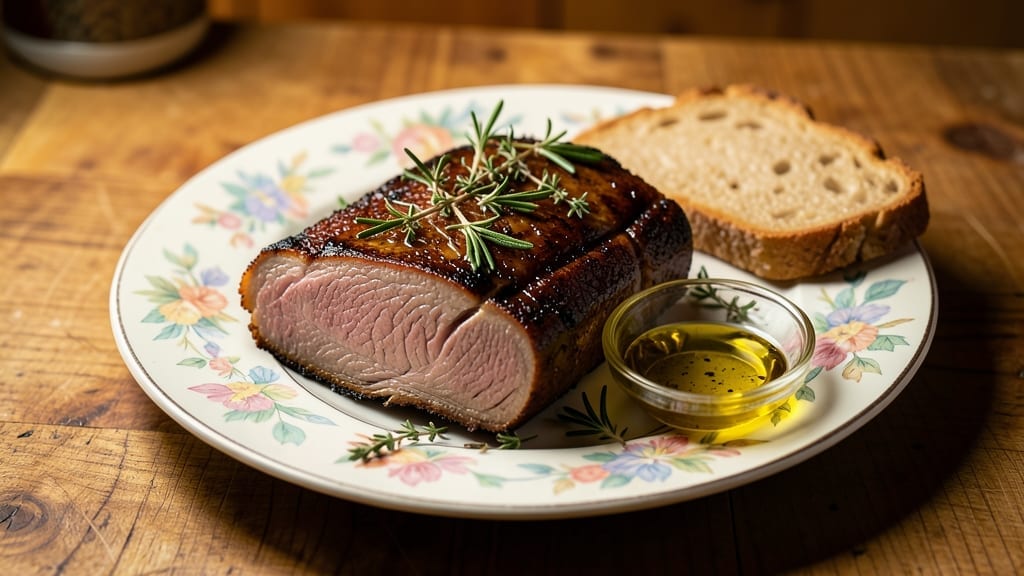
Mastering smoked pork loin on your Pit Boss smoker transforms a simple cut into tender, juicy perfection that rivals any competition-style BBQ. Growing up in small-town Georgia, I learned pork isn’t just meat—it’s the heart of family gatherings, and this recipe preserves that tradition with precision.
The key lies in low-and-slow smoking at 225°F, where the Pit Boss’s consistent pellet feed ensures even heat without fluctuations that can dry out the meat.
What sets this recipe apart is the foolproof method of reverse-searing: starting the loin at room temperature and monitoring internal temps with your Pit Boss probe.
A 3-hour smoke using hickory pellets develops that signature bark while keeping the interior moist, and a final 10-minute sear at 350°F creates a caramelized crust. The secret? Patience—rushing this step ruins everything, and I’ve learned that lesson the hard way.
By the time you pull it from the smoker, you’ll have a pork loin so tender it nearly falls apart at the touch, with a smoky aroma that fills your kitchen. The internal temperature should reach 145°F, verified with an instant-read thermometer.
Resting for 15 minutes before slicing ensures every bite stays juicy, and serving it with a tangy apple cider glaze elevates it from weeknight dinner to showstopper.
This recipe scales beautifully—whether you’re feeding a crowd or prepping for meal prep. The Pit Boss’s digital controls make it beginner-friendly, but the results are undeniably professional. Let’s get smoking.
Ingredients for pit boss smoker pork loin
Just the right mix of smoky wood and sweet tang for that perfect Pit Boss pork loin.
| Ingredient | Amount | Notes |
|---|---|---|
| Boneless Pork Loin 🍖 | 3 ½ lb | Center-cut, 1.5-inch thick |
| Hickory Wood Pellets 🌳 | 2 cups | Pit Boss brand preferred |
| Apple Cider Vinegar 🍎 | ¼ cup | For rub and glaze base |
| Brown Sugar 🍚 | ¼ cup | Light or dark, packed |
| Smoked Paprika 🌶️ | 2 tbsp | For deep smoky flavor |
| Garlic Powder 🧄 | 1 tbsp | Freshly ground preferred |
| Onion Powder 🧅 | 1 tbsp | For balanced seasoning |
| Ground Black Pepper 🌶️ | 1 tbsp | Freshly cracked |
| Kosher Salt 🧂 | 1 ½ tbsp | Diamond Crystal preferred |
| Mustard Powder 🍯 | 1 tsp | For subtle tang |
| Apple Cider 🍎 | 1 cup | Unfiltered for glaze |
| Honey 🍯 | ¼ cup | Wildflower preferred |
| Olive Oil 🫒 | 2 tbsp | For searing crust |
| Fresh Rosemary 🌿 | ¼ cup | Chopped, for finishing |
[recipe_ingredient_scaler]
The pork loin is non-negotiable—center-cut, 1.5-inch thick is ideal for even cooking. Costco or local butchers usually carry this cut, but if you’re stuck with a thinner loin, don’t panic—just increase the smoking time by 30 minutes. For the wood pellets, Pit Boss hickory is the gold standard, but Traeger or Lumberjack work too. The key is consistency—no mixed batches. I always buy extra pellets (you’ll use them up fast) and store them in a sealed container away from moisture. Freshness matters here—pellets older than 6 months lose their punch.
No hickory pellets? Oak or cherry will work, though the flavor profile shifts slightly. The apple cider vinegar can be swapped for white vinegar or lemon juice, but the tang is crucial for balancing the sweetness. For the rub, smoked paprika is a must—it’s what gives that competition-style bark. If you’re out of mustard powder, Dijon mustard at half the amount works in a pinch. The honey should be wildflower or clover—avoid the overly processed stuff. For the sear, avocado oil has a higher smoke point than olive oil if you’re worried about burning.
This recipe reheats beautifully—350°F for 15 minutes with a splash of apple cider keeps it moist. The glaze thickens as it cools, so reheat gently if you want it pourable. Leftovers keep 4-5 days in the fridge or 3 months frozen. I always slice it against the grain for maximum tenderness, and the rosemary garnish adds a fresh finish. For meal prep, portion the slices with the glaze on the side—it reheats best separately. The Pit Boss probe is your best friend here—don’t guess the internal temp.
Why You’ll Love This Recipe
- I’ll be honest: I always make extra. Reheats like a dream with just apple cider and 350°F for 15 minutes, and it keeps for weeks in the freezer. Perfect for lazy Sundays or when company drops by unannounced.
- No-Fuss Smoking: I’ve never met a pork loin I couldn’t handle, but this one’s unfussy—just rub, smoke, and forget. The Pit Boss does all the heavy lifting while I sip coffee, and the only prep work is mixing that dry rub (which takes less time than microwaving leftovers).
- Caramelized Magic: That glaze—apple cider, honey, and vinegar—turns ordinary pork into something dangerously addictive. The smoked paprika and rosemary finish? Chef’s kiss. It’s the kind of flavor that makes people ask, “What’d you put in it?” (Spoiler: It’s all the good stuff.)
- Leftovers That Win: I’ll be honest: I always make extra. Reheats like a dream with just apple cider and 350°F for 15 minutes, and it keeps for weeks in the freezer. Perfect for lazy Sundays or when company drops by unannounced.
Step-by-step instructions for smoked pork loin
Here’s the method that delivers tender, deeply flavorful pork every time—no guesswork involved.
Prepare the Dry Rub and Prep the Pork
In a small bowl, combine the ¼ cup brown sugar, 2 tablespoons smoked paprika, 1 tablespoon garlic powder, 1 tablespoon onion powder, 1 tablespoon ground black pepper, 1½ tablespoons kosher salt, and 1 teaspoon mustard powder. Mix thoroughly until the spices are evenly distributed and the sugar breaks down slightly.
Pat the 3½ lb boneless pork loin dry with paper towels—this step is critical for crispy bark. Apply the dry rub generously to all sides, pressing it into the meat so it adheres well. Let the pork sit at room temperature for 30 minutes before smoking. This ensures even cooking and maximum flavor penetration.
Set Up the Pit Boss Smoker
Fill the Pit Boss smoker with 2 cups hickory wood pellets and preheat to 225°F. Use a water pan in the smoker to maintain moisture and prevent the pork from drying out. Once the smoker reaches temperature and you see steady, thin blue smoke, place the pork loin directly on the grill grates, fat-side up if applicable.
Close the lid and resist the urge to open it during the cook. Every time you peek, you lose heat and extend cook time. Let the pork smoke undisturbed for 2 hours, or until the internal temperature reaches 145°F. The bark should be deep mahogany and slightly crispy, but the meat should still feel firm to the touch.
Apply the Glaze and Finish Smoking
In a small saucepan, combine 1 cup apple cider, ¼ cup honey, and ¼ cup apple cider vinegar over medium heat. Simmer for 5 minutes until slightly reduced and thickened. Remove from heat and let cool for 5 minutes. Brush 2 tablespoons olive oil over the pork to help the glaze adhere.
Apply the glaze generously to all sides of the pork, letting it sit for 2 minutes to caramelize slightly. Return the pork to the smoker and continue cooking until the internal temperature reaches 160°F, about 1 hour. The glaze should be sticky and glossy, indicating it’s caramelizing properly.
Rest and Slice for Maximum Juiciness
Remove the pork from the smoker and transfer it to a cutting board. Tent loosely with aluminum foil and let it rest for 15 minutes. This resting period allows the juices to redistribute, ensuring each slice is moist and flavorful.
Slice the pork loin against the grain into ½-inch thick slices. Garnish each serving with ¼ cup chopped fresh rosemary for a bright, aromatic finish. Serve immediately with pan sauces or your favorite sides—every bite should be tender, smoky, and perfectly juicy.
Pro Tips For Making Pit Boss Smoker Pork Loin
- Press That Rub Hard: Don’t just sprinkle—dig your fingers into the pork and work the spices into every crevice. I used to slap it on and wonder why my bark kept falling off. This isn’t a dusting job; it’s a flavor massage.
- Glaze Twice, Not Once: After the first coat of glaze, let it sit for those 2 minutes—it’ll caramelize faster than you think. Then wipe off any excess with a paper towel before the second application. Trust me, the difference between sticky and perfectly sticky is in the cleanup.
- Don’t Rush the Rest: Fifteen minutes feels like an eternity when you’re starving, but cutting into that pork too soon means dry, stringy slices. Tent it loosely and walk away—your patience will pay off in every juicy bite.
- Use Unfiltered Apple Cider: The sediment in unfiltered cider adds depth to the glaze—skip the filtered version, even if it’s pricier. I learned this after making two batches with clear cider that tasted flat. The extra effort makes the glaze sing.
Dietary considerations for this recipe
Gluten-Free Adaptation
This recipe is naturally gluten-free, which is great news for those avoiding wheat! The dry rub uses only spices and sugar, while the glaze relies on apple cider, honey, and vinegar—no gluten-containing ingredients here.
Just double-check your kosher salt and smoked paprika brands to ensure they’re processed in gluten-free facilities, as cross-contamination can occur. 💪
Lower-Sodium Option
If you’re watching your sodium intake, reduce the kosher salt in the rub from 1½ tablespoons to just 1 tablespoon. The pork itself provides natural sodium, so this adjustment keeps things flavorful without excess.
For extra seasoning, add a pinch of freshly cracked black pepper or a dash of garlic powder to compensate.
Dairy-Free Considerations
This recipe is already dairy-free, but if you’re serving it alongside sides like coleslaw or macaroni and cheese, opt for dairy-free versions of those dishes. The pork itself contains no dairy, and the glaze is made with fruit-based ingredients.
Just ensure any garnishes, like butter in mashed potatoes, are swapped for dairy-free alternatives.
Keto-Friendly Adjustments
To make this keto-friendly, skip the brown sugar in the rub and replace it with erythritol or monk fruit sweetener in equal measure. The honey in the glaze can be omitted entirely or swapped for stevia or allulose.
Keep an eye on carb counts—even natural sugars add up! The pork itself is low-carb, so this adaptation keeps the dish compliant while maintaining flavor. 💫
Allergy-Friendly Swaps
For those with nut allergies, ensure your honey is nut-free, as some brands process honey in facilities that handle tree nuts. If you’re avoiding mustard, skip the mustard powder in the rub and add an extra ½ teaspoon of smoked paprika for depth.
Always check labels on spices and sweeteners to avoid hidden allergens.
Nutrition facts
Frequently asked questions
Why does my Pit Boss smoker pork loin turn out dry?
Dry pork loin often happens when you open the smoker lid too often or don’t use a water pan. Keep the lid closed during the 2-hour smoke at 225°F and add a water pan to maintain moisture. Also, ensure the pork reaches 145°F internally before glazing—overcooking dries it out. The 15-minute rest after smoking is also critical for juiciness.
Can I use a different wood pellet besides hickory?
Yes, but the flavor changes! Hickory gives classic smokiness, but oak or cherry work well too. Avoid fruitwoods like apple or pecan—they’ll overpower the pork’s natural taste. Stick with 2 cups of your chosen pellets for consistent results.
How do I know when the pork is done without a thermometer?
Check for a deep mahogany bark and firm texture, but the only reliable method is monitoring internal temp. Use your Pit Boss probe to confirm 145°F before glazing. If unsure, cut into the thickest part—it should be slightly pink but juicy, not dry. Patience here prevents overcooking!
Can I make this recipe ahead of time?
Slice the pork against the grain and store glazed slices separately in an airtight container for up to 4-5 days. Reheat at 350°F for 15 minutes with a splash of apple cider to restore moisture. The glaze reheats beautifully, too.
What’s the best way to slice smoked pork loin?
Slice against the grain into ½-inch thick pieces for maximum tenderness. Use a sharp knife to avoid tearing the meat. After slicing, garnish with chopped rosemary for freshness—this step elevates the presentation!

Trained in classic French technique but raised on slow-cooked ribs and spicy rubs, she blends culinary skill with smoke and soul.
- Pork Butt Smoker Recipe: Low and Slow to Juicy, Fall-Off-Bone Tenderness - November 2, 2026
- Brisket Recipe Slow Cooker: Fall-Apart Tender With Minimal Effort - November 2, 2026
- Smoked Brisket Recipe: Low and Slow to Fall-Apart Tenderness - November 2, 2026