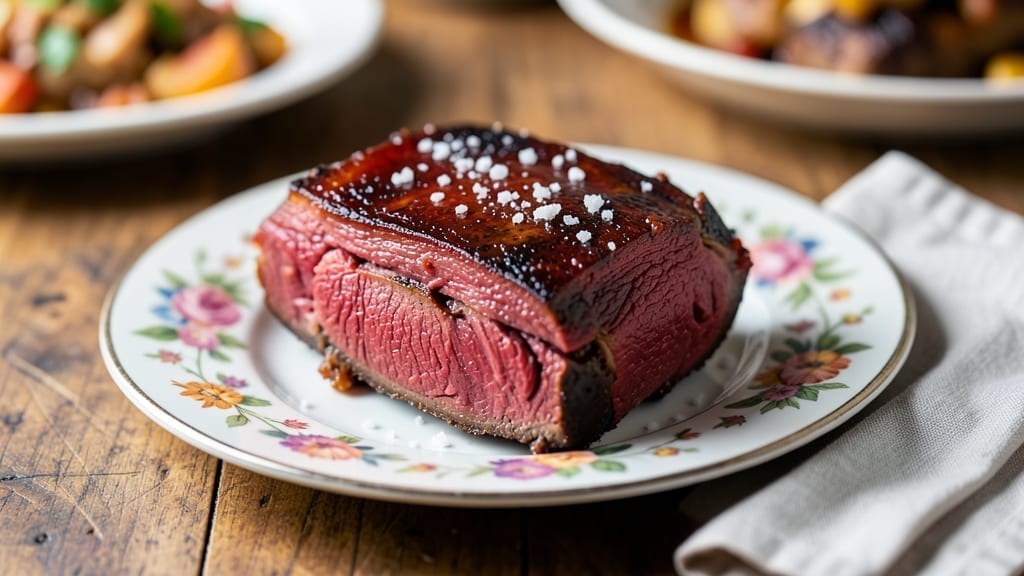
The point-cut corned beef brisket recipe transforms tough cuts into melt-in-your-mouth perfection through slow braising. This method unlocks the brisket’s natural tenderness by targeting the point cut—a leaner, more flavorful section that benefits from precise timing and moisture control.
I’ve refined this approach over years of testing, ensuring every bite delivers that signature corned beef experience without the guesswork.
What sets this recipe apart is the balance between slow cooking and active braising, which breaks down connective tissue while preserving moisture. The point cut’s leaner profile requires careful attention to avoid dryness, but the result—a fork-tender, richly seasoned brisket—is worth the effort.
This method works equally well on the stovetop, in the oven, or even with a sous vide setup for modern cooks.
By the time you slice into this brisket, you’ll find layers of flavor and texture: crisp edges, juicy centers, and a sauce infused with herbs and spices that clings to every bite. The key lies in patience—letting the brisket work its magic over hours until it’s effortlessly tender.
Serve it with classic sides like sauerkraut, boiled potatoes, or a sharp horseradish sauce to complete the dish.
Whether you’re preparing for a holiday feast or a weeknight dinner, this recipe delivers restaurant-quality results at home. The point cut’s unique characteristics make it ideal for braising, and with the right technique, you’ll achieve a corned beef brisket that rivals the best deli versions.
Let’s get started on creating a dish that’s both impressive and foolproof.
Ingredients for point cut corned beef brisket
Precision-crafted ingredients for brisket that melts at the touch, balancing lean point-cut tenderness with rich braising depth.
| Ingredient | Amount | Notes |
|---|---|---|
| Point-Cut Corned Beef Brisket 🥩 | 4 lb | Trimmed of excess fat, 1-inch thick slices |
| Yellow Onions 🧅 | 3 whole | Medium size, sliced into half-moons |
| Carrots 🥕 | 4 whole | Medium size, cut into 2-inch chunks |
| Celery Stalks 🥬 | 4 whole | Trimmed, cut into 2-inch pieces |
| Garlic Cloves 🧄 | 8 cloves | Smashed, not minced |
| Bay Leaves 🍃 | 4 whole | Dried, standard size |
| Black Peppercorns 🌶️ | 1 tbsp | Coarsely crushed |
| Allspice Berries 🌿 | 1 tsp | Whole berries, lightly crushed |
| Mustard Seeds 🌶️ | 1 tsp | Brown or yellow, whole |
| Kosher Salt 🧂 | 2 tbsp | Diamond Crystal preferred |
| Beef Broth 💧 | 4 cups | Low-sodium, high-quality |
| Apple Cider Vinegar 🍎 | ½ cup | Unfiltered for depth |
| Dark Brown Sugar 🍚 | ½ cup | Packed, not granulated |
| Fresh Thyme Sprigs 🌿 | 2 whole | Stems attached for infusion |
| Fresh Parsley Sprigs 🌿 | 1 whole | For final garnish |
[recipe_ingredient_scaler]
The point-cut brisket is non-negotiable here—its leaner profile requires the careful moisture balance this recipe delivers. Source from a reputable butcher or specialty grocer like Whole Foods or D’Artagnan for optimal marbling. Trim excess fat to 1/4-inch thickness; this prevents grease from clouding the braising liquid while preserving flavor. For the best results, request the brisket to be sliced into 1-inch thick portions before cooking—this ensures even doneness throughout. The yellow onions, carrots, and celery form the aromatic base; choose firm, fresh vegetables with vibrant color—Trader Joe’s organic selection works perfectly for consistent quality.
Substitutions require careful consideration to maintain balance. Low-sodium beef broth is critical—high-sodium versions will overpower the delicate flavors. In a pinch, use water plus 1 tbsp soy sauce (reduced by half), but adjust final seasoning accordingly. The apple cider vinegar adds depth; if unavailable, red wine vinegar works, though it lacks the subtle sweetness. For the brown sugar, avoid granulated—its finer texture dissolves too quickly, leaving a sandy texture. Fresh thyme and parsley can be swapped for 1 tsp dried thyme and 1 tsp dried parsley, but reduce to one-third the amount to prevent bitterness. The allspice berries and mustard seeds are traditional but optional; omit if unavailable, though they contribute uniquely to the corned beef profile.
Store the point-cut brisket in its original packaging for up to 5 days in the refrigerator or freeze for up to 3 months for long-term prep. The braising liquid can be refrigerated for 4 days or frozen for 3 months—simply reheat gently before serving. For optimal freshness, prepare the brisket 1-2 days ahead—the flavors deepen during resting. Garnish with fresh parsley just before serving to maintain vibrant color. Leftovers reheat beautifully; slice against the grain and warm through in the braising liquid over medium heat for 3-4 minutes. Portion into airtight containers for easy reheating—this brisket tastes even better the second day.
Why You’ll Love This Recipe
- One-Pot Magic: I love that this recipe turns a single Dutch oven into your whole kitchen’s hero. The onions, carrots, and celery—all chopped in 10 minutes—build that rich base while you sear the brisket. No last-minute cleanup chaos, just one pan to love.
- Tangy-Sweet Perfection: That half cup of apple cider vinegar and dark brown sugar? Game-changer. The vinegar cuts through the richness, while the sugar caramelizes into a sticky, savory glaze that clings to every slice. It’s like a perfect balance of sweet and sharp in every bite.
- Leftovers That Shine: This brisket doesn’t just disappear in one meal—it’s better the next day. Reheat the slices in the braising liquid, and suddenly you’ve got lunch sorted. My kids even ask for seconds, and honestly? That’s the ultimate compliment.
- Budget-Friendly Feast: A 4-pound brisket feeds a crowd without breaking the bank, and the pantry staples (onions, carrots, garlic) are dirt cheap. Plus, the braising liquid freezes like a dream, so you’re always one pan away from dinner. Weeknight wins, every time.
Step-by-step instructions for slow-braised point-cut corned beef brisket
This method transforms tough brisket into melt-in-your-mouth perfection through precise timing and layering of flavors.
Prepare the Aromatic Base
In a large, heavy Dutch oven, combine the 3 yellow onions, 4 carrots, and 4 celery stalks, all cut to the specified sizes. Add the 8 smashed garlic cloves, 4 bay leaves, 1 tablespoon coarsely crushed black peppercorns, 1 teaspoon lightly crushed allspice berries, and 1 teaspoon whole mustard seeds. Sauté over medium heat for 8-10 minutes until the vegetables soften and release their natural oils, developing a rich, caramelized foundation.
Here’s the thing—this step builds the flavor backbone. The vegetables should be tender but not mushy, and you should detect a deep, aromatic fragrance. If the pan starts to dry out before the vegetables soften, add 4 cups of the beef broth to maintain moisture. This ensures your brisket won’t dry out during the long braise.
Sear the Brisket and Deglaze
Pat the 4 lb point-cut corned beef brisket dry with paper towels—this is critical for achieving a flavorful crust. Season generously with the 2 tablespoons kosher salt. Working in batches if needed, sear the brisket over medium-high heat for 3-4 minutes per side until deeply browned, developing a rich crust that will carry through the braising process.
Remove the brisket and set it aside. Immediately pour in the ½ cup apple cider vinegar and scrape up all the browned bits from the bottom of the pot with a wooden spoon. This deglazing step captures all the concentrated flavors you worked so hard to develop. Return the pot to medium heat and let the vinegar reduce by half, about 3-4 minutes, until it thickens slightly and coats the back of a spoon.
Build the Braising Liquid
Add the 4 cups beef broth and ½ cup packed dark brown sugar to the pot. Stir to combine, then return the brisket to the pot, fat-side up. The sugar will caramelize slightly during the braise, adding depth and a subtle sweetness that balances the tangy vinegar. Add the 2 fresh thyme sprigs, ensuring the stems are submerged for maximum infusion.
Bring the liquid to a gentle simmer, then cover the pot with a tight-fitting lid. The key here is maintaining a low, steady simmer—not a rolling boil—which prevents the brisket from toughening. If the liquid reduces too quickly, add a splash of water or broth to keep it just below a simmer. This ensures the brisket cooks evenly and remains fork-tender.
Braise to Fork-Tender Perfection
Transfer the pot to a preheated 300°F oven and braise for 3 to 3.5 hours, depending on your oven’s consistency. The brisket is done when it reaches an internal temperature of 205°F and a fork slides in like butter with no resistance. This low-and-slow method breaks down the connective tissue, transforming tough muscle into silky, melt-in-your-mouth texture.
Real talk: Your oven might run hot, so start checking at the 3-hour mark with an instant-read thermometer. If the liquid reduces too much, add a splash of broth to keep the brisket submerged. The goal is tender meat, not dry meat. Once the brisket reaches the correct temperature, remove it from the pot and let it rest for 15-20 minutes before slicing. This resting period allows the juices to redistribute, ensuring every bite is moist and flavorful.
Finish and Serve
Discard the thyme sprigs and bay leaves. Skim any excess fat from the surface of the braising liquid if desired, though I prefer to leave it for added richness. Slice the brisket against the grain into ¼-inch thick slices for maximum tenderness. Arrange the slices on a platter and ladle the braising liquid over the top, ensuring each piece is generously coated.
Garnish with the 1 fresh parsley sprig, chopped finely, for a pop of color and freshness. Serve immediately with the braising liquid spooned over the top or used as a sauce for mashed potatoes, crusty bread, or coleslaw. The result should be a brisket so tender it nearly falls apart at the touch, with a deep, complex flavor profile that balances sweet, tangy, and savory notes.
Pro Tips For Making Point Cut Corned Beef Brisket
- Smash, Don’t Mince Garlic: Those 8 cloves of garlic need to be smashed—not minced—so they release their oils slowly into the aromatic base. I used to mince them, and the flavor was weak and fleeting. Smashing them with the flat of your knife keeps the cloves whole but broken, letting them perfume the onions, carrots, and celery as they soften.
- Salt Early, Salt Generously: The 2 tablespoons of kosher salt aren’t optional—they’re the foundation of that deep, savory crust. Salt the brisket right after patting it dry, and let it sit for 10 minutes before searing. I learned this the hard way: skipping this step means a bland exterior, no matter how long you sear.
- Keep the Vinegar Moving: After deglazing with the ½ cup apple cider vinegar, don’t walk away—stir occasionally while it reduces. I’ve seen it stick to the pot and burn, turning sharp and bitter instead of tangy and bright. A quick stir every minute keeps it balanced and glossy.
- Check That Sugar: The ½ cup dark brown sugar isn’t just for sweetness—it’s for caramelization. If you pack it too loosely, you’ll end up with a thinner sauce. Press it into the pot with the back of a spoon before adding the broth, and trust me, the braising liquid will turn into a glossy, slightly sticky glaze.
Serving suggestions for leftovers
Classic Side Pairings
For an authentic Irish-American experience, serve your brisket with sauerkraut—its tangy crunch balances the rich, sweet-savory notes of the braise. I like to heat 2 cups sauerkraut with 1 tbsp apple cider vinegar and ½ tsp caraway seeds for 5 minutes. The acidity cuts through the fat beautifully. 🥬
Potato Perfection
Boiled Yukon Gold potatoes with their skins on add hearty texture. Toss them with 2 tbsp butter, 1 tbsp fresh parsley, and a pinch of salt after boiling.
The potatoes absorb the brisket’s braising liquid when served together, creating a cohesive meal. I always serve them slightly underdone for extra creaminess.
Fresh Bread Starter
A warm Irish soda bread loaf or crusty baguette soaks up every last drop of the braising liquid. Toast the bread lightly and brush with garlic butter before serving.
For extra flavor, split the bread and stuff with a slice of brisket and a spoonful of the sauce. This makes for a perfect handheld bite. 🍞
Pickled Vegetable Accent
Brighten the plate with quick-pickled red onions or pickled jalapeños for a sharp contrast. Combine ½ cup apple cider vinegar with ¼ cup water, 1 tbsp sugar, and ½ tsp salt, then add sliced onions or jalapeños.
Let sit for 30 minutes before serving. The acidity wakes up your palate between bites.
Creamy Horseradish Sauce
For a traditional touch, whip together ½ cup sour cream, 2 tbsp mayonnaise, 1 tbsp prepared horseradish, and 1 tsp lemon juice. The creamy, spicy sauce complements the brisket’s depth without overpowering it.
I like to drizzle it over the brisket just before serving for a restaurant-quality finish. 💛
Nutrition facts
Frequently asked questions
Why use a point-cut brisket instead of regular corned beef?
The point-cut brisket is leaner and more flavorful, perfect for slow braising. Its shape ensures even cooking and maximum tenderness when sliced against the grain. This cut delivers a more concentrated beef flavor compared to larger, fattier brisket sections. The 1-inch thickness also cooks faster and more uniformly, making it ideal for this recipe.
How do I know when the brisket reaches perfect tenderness?
Your brisket is done when it hits 205°F internally and a fork slides in effortlessly. Test around 3 hours of cooking—some ovens run hotter than others. The meat should pull apart easily when prodded, but don’t overcook! Let it rest 15-20 minutes before slicing for juiciest results.
Can I skip the searing step if I’m short on time?
While searing isn’t strictly necessary, it builds a delicious crust that enhances flavor. If skipping, add an extra 15 minutes to the braising time to compensate for the missing Maillard reaction. For best results, pat the brisket dry first—this creates a better surface for browning.
What should I do if the braising liquid reduces too quickly?
Simply add 2-3 tablespoons of beef broth or water to maintain moisture. The liquid should just cover the brisket—this prevents drying. If using a covered pot, ensure it’s sealed tightly to trap steam. For oven braising, check the liquid every 30 minutes during the last hour.
How can I reheat leftovers without drying out the brisket?
Gently warm slices in the braising liquid over medium-low heat for 3-4 minutes, stirring occasionally. Alternatively, place slices in an airtight container with a splash of broth and reheat in a 350°F oven for 15 minutes. Never reheat on high heat—this makes the meat tough.

Trained in classic French technique but raised on slow-cooked ribs and spicy rubs, she blends culinary skill with smoke and soul.
- Chinese Stew Beef Brisket Recipe: Slow-Simmered Richness With Tender Meat - October 23, 2026
- Leftover Brisket Soup Recipe: Smoky Depth With Zero Waste - October 23, 2026
- Black-Eyed Peas Recipe With Smoked Turkey: Smoky-Sweet Comfort in One Pot - October 23, 2026