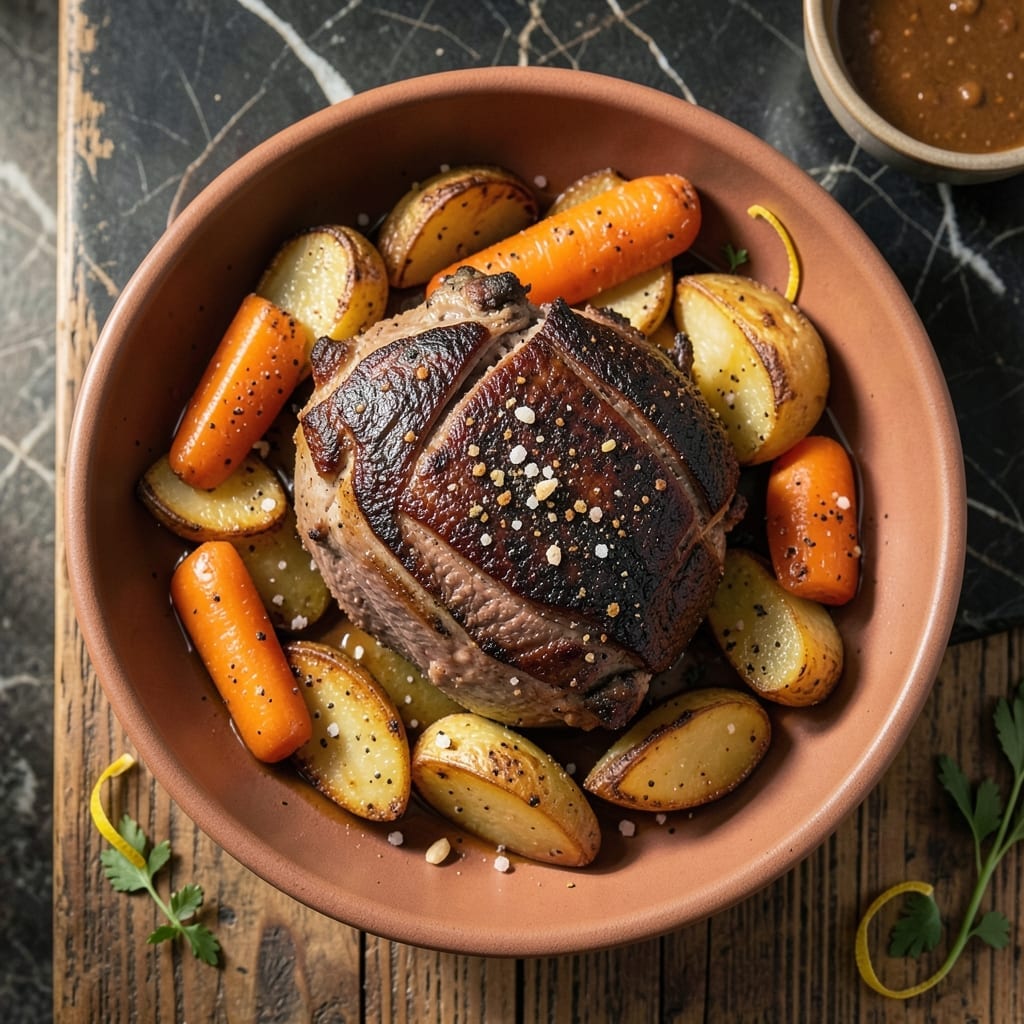
This pot roast recipe proves that incredible flavor doesn’t require liquid. A bold dry rub transforms tough cuts into tender, succulent meat with a caramelized crust.
The method relies on low, slow heat to break down the beef naturally. Without broth, the meat roasts in its own juices, creating concentrated, rich flavors that traditional methods can’t match.
You’ll achieve a fall-apart texture with a deeply seasoned exterior. The result is a dish that’s just as moist and flavorful as any braised version, with minimal effort.
Perfect for a hearty family dinner or special occasion. Here’s how to make it right every time.
Ingredients for Pot Roast Recipe No Broth
A bold dry rub and slow heat transform humble ingredients into an extraordinary meal.
| Ingredient | Amount | Notes |
|---|---|---|
| Beef Chuck Roast 🥩 | 3 lb | Well-marbled, boneless preferred |
| Kosher Salt 🧂 | 2 tbsp | Diamond Crystal preferred for even coating |
| Black Pepper 🌶️ | 1 tbsp | Freshly ground, coarse |
| Garlic Powder 🧄 | 2 tsp | Not garlic salt |
| Onion Powder 🧅 | 2 tsp | Fresh ground for potency |
| Smoked Paprika 🌶️ | 1 ½ tsp | Sweet or hot variety acceptable |
| Dried Thyme 🍃 | 1 ½ tsp | Rubbed between fingers to release oils |
| Dried Rosemary 🌿 | 1 ½ tsp | Crushed to activate flavor |
| Mustard Powder 🟡 | 1 tsp | Optional for tangy depth |
| Brown Sugar 🟤 | 1 tbsp | Light or dark, for caramelization |
| Olive Oil 🫒 | 2 tbsp | For searing roast |
| Yellow Onion 🧅 | 1 whole | Large, quartered for roasting |
| Carrots 🥕 | 4 whole | Peeled, cut into 3-inch pieces |
| Celery Stalks 🌿 | 3 pieces | Cut into large chunks |
| Bay Leaves 🍃 | 2 pieces | Dried, whole |
[recipe_ingredient_scaler]
The beef is paramount for this preparation. Chuck roast with abundant marbling yields the most tender results—avoid lean cuts like sirloin which dry out. Source from Whole Foods or Costco for consistent quality. For the dry rub, Diamond Crystal kosher salt provides the ideal texture for adhesion and even seasoning distribution.
Short on smoked paprika? Regular paprika with a pinch of cayenne approximates the smokiness. Fresh herbs can substitute dried at one-third the quantity, though dried work better for the crust. The brown sugar may be replaced with maple syrup (use 1.5 tbsp), but powdered sugar won’t caramelize properly. Avocado oil stands in for olive oil if preferred.
The dry rub can be prepared 1 day ahead and stored in an airtight container. Once applied to the beef, roast immediately for best results. Leftovers (if any exist) keep 4-5 days refrigerated or 3 months frozen. Always bring chilled meat to room temperature before slow cooking.
Why You’ll Love This Recipe
- 5-Ingredient Magic: I just rub the chuck roast with salt, pepper, garlic and onion powders—no chopping, no broth, no fuss.
- Rich and Savory: Honestly, the beef soaks up those dry spices and roasts into the most flavorful, fall-apart tender bite.
- Weeknight Rescue: Between us, this is my go-to for busy Tuesdays when I need dinner ready with almost zero prep.
- Leftovers for Days: One roast feeds us for two meals, and the meat only tastes better the next day in sandwiches or tacos.
Step-by-Step Instructions for Pot Roast No Broth
This dry-rub method creates incredibly tender beef with deep, concentrated flavors without any added liquid.
Step 1: Create the Dry Rub and Season the Roast
In a small bowl, combine the 2 tbsp Kosher Salt, 1 tbsp Black Pepper, 2 tsp Garlic Powder, 2 tsp Onion Powder, 1.5 tsp Smoked Paprika, 1.5 tsp Dried Thyme, 1.5 tsp Dried Rosemary, 1 tsp Mustard Powder, and 1 tbsp Brown Sugar. I rub the dried herbs between my fingers to release their essential oils as I mix.
Pat the 3 lb Beef Chuck Roast completely dry with paper towels—this ensures the rub adheres properly and promotes better browning. Apply the spice mixture evenly over all surfaces of the beef, pressing firmly to create a crust. Let the seasoned roast sit at room temperature for 30-45 minutes while you prepare the vegetables.
Step 2: Prepare the Aromatic Vegetable Base
Peel and quarter the 1 whole Yellow Onion. Peel the 4 whole Carrots and cut them into 3-inch pieces. Cut the 3 pieces Celery Stalks into large chunks. This size ensures the vegetables won’t burn during the long cooking process while still infusing the dish with flavor.
Arrange the vegetables in the bottom of a heavy Dutch oven or roasting pan. The vegetables will create a natural rack for the beef, allowing heat to circulate evenly. Add the 2 pieces Bay Leaves to the vegetables—they’ll perfume the entire dish as it cooks.
Step 3: Sear the Roast for Maximum Flavor
Place the Dutch oven over medium-high heat and add the 2 tbsp Olive Oil. When the oil shimmers and is just beginning to smoke, carefully add the seasoned beef chuck roast. Sear for 4-5 minutes per side until deeply browned and a crust has formed.
This searing step is critical—it develops the Maillard reaction, creating complex flavors that will carry through the entire cooking process. Don’t rush this step; the roast should release easily from the pan when it’s properly browned. If it sticks, let it cook longer until a deep, golden-brown crust forms.
Step 4: Slow Roast to Perfection
Once the roast is seared on all sides, place it on top of the vegetables in the Dutch oven. Cover tightly with a lid and transfer to a preheated 325°F oven. The low and slow cooking method is what makes this dry-roasted pot roast so tender.
Roast for 3-3.5 hours, checking occasionally to ensure the vegetables aren’t burning. You’ll know it’s done when the beef is fork-tender and easily pulls apart with a gentle tug. The internal temperature should reach 195-200°F for optimal tenderness.
Step 5: Rest and Serve
Carefully remove the Dutch oven from the oven and transfer the beef to a cutting board. Tent loosely with foil and let it rest for 15-20 minutes before slicing. This resting period allows the juices to redistribute throughout the meat.
The vegetables will have caramelized beautifully and absorbed all the beef’s rich flavors. Serve the sliced pot roast with the roasted vegetables and any accumulated juices from the pan. The result is incredibly moist, flavorful beef with a concentrated, savory crust that only dry-roasting can achieve.
Pro Tips For Making Pot Roast Recipe No Broth
- Sear the Chuck: I learned this the hard way—always sear the beef chuck roast on high heat in a little oil until deeply browned on all sides, about 3-4 minutes per side. It builds flavor without broth.
- Season Generously: Sounds weird, but it works: coat the roast with more kosher salt than you think you need, plus a heavy hand with black pepper, garlic powder, and onion powder. The dry rub replaces broth’s seasoning.
- Cover Tightly: After browning, cover the pot with a tight lid or foil to trap steam—this keeps the meat tender even without added liquid. I skip this when I’m lazy, but the dish is noticeably better when I don’t.
- Low and Slow: My grandmother swore by this, and she was right: cook it at 275°F in the oven for at least 3 hours, or until it shreds with a fork. No peek—resist the urge to open the lid.
Common Mistakes When Making This Recipe
Skipping the Sear
Never bypass searing the roast—this step creates the Maillard reaction that builds deep, complex flavors. Without it, your dish will taste flat. Use medium-high heat and 2 tbsp Olive Oil for 4-5 minutes per side
Incorrect Oven Temperature
Avoid cooking at high heat to speed things up. Stick to 325°F for the full 3-3.5 hours. Higher temps will dry out the meat before the collagen breaks down into that desirable tenderness. 🔥
I learned this the hard way—my first attempt at 400°F resulted in a tough, chewy mess.
Not Using Enough Spice
This method relies on a bold dry rub. Don’t skimp on the 2 tbsp Kosher Salt or 1 tbsp Black Pepper. The spices create the crust that locks in moisture. Timid seasoning leads to bland results.
Overcrowding the Pan
Give the roast space in your Dutch oven. Crowding with too many vegetables prevents proper browning and steams the meat instead of roasting it. Stick to 1 onion, 4 carrots, and 3 celery stalks as specified.
Skipping the Rest
Always let the roast rest for 15-20 minutes after cooking. Cutting too soon causes all those precious juices to spill out onto the cutting board. The meat reabsorbs its own moisture during this time.
I tent mine loosely with foil—this keeps it warm while resting.
Nutrition Facts
Frequently Asked Questions
Why does this method work without liquid?
The beef releases its own juices during slow cooking. The dry rub helps form a crust that locks in moisture while the low 325°F heat breaks down collagen for tenderness.
Can I add water if it looks dry?
No, resist the urge! Adding liquid will steam the meat instead of roasting it. The natural juices are sufficient. Trust the process for 3-3.5 hours.
What if my roast isn’t falling apart?
It likely needs more time. Check the internal temp—it should reach 195-200°F. If not, return it to the oven for another 30 minutes.
Can I use a different cut of beef?
Stick with well-marbled cuts like chuck. Lean cuts such as sirloin won’t work as well—they’ll dry out during the long cooking time.

Trained in classic French technique but raised on slow-cooked ribs and spicy rubs, she blends culinary skill with smoke and soul.
- Octopus Recipe Pan Fried: Crispy Edges With Tender Bites - October 3, 2026
- Recipe For Fried Pork Chops In An Iron Skillet: Crispy Crust With Juicy Centers - October 3, 2026
- Recipe for Fully Cooked Spiral Ham: Sweet Glaze and Effortless Elegance - October 3, 2026