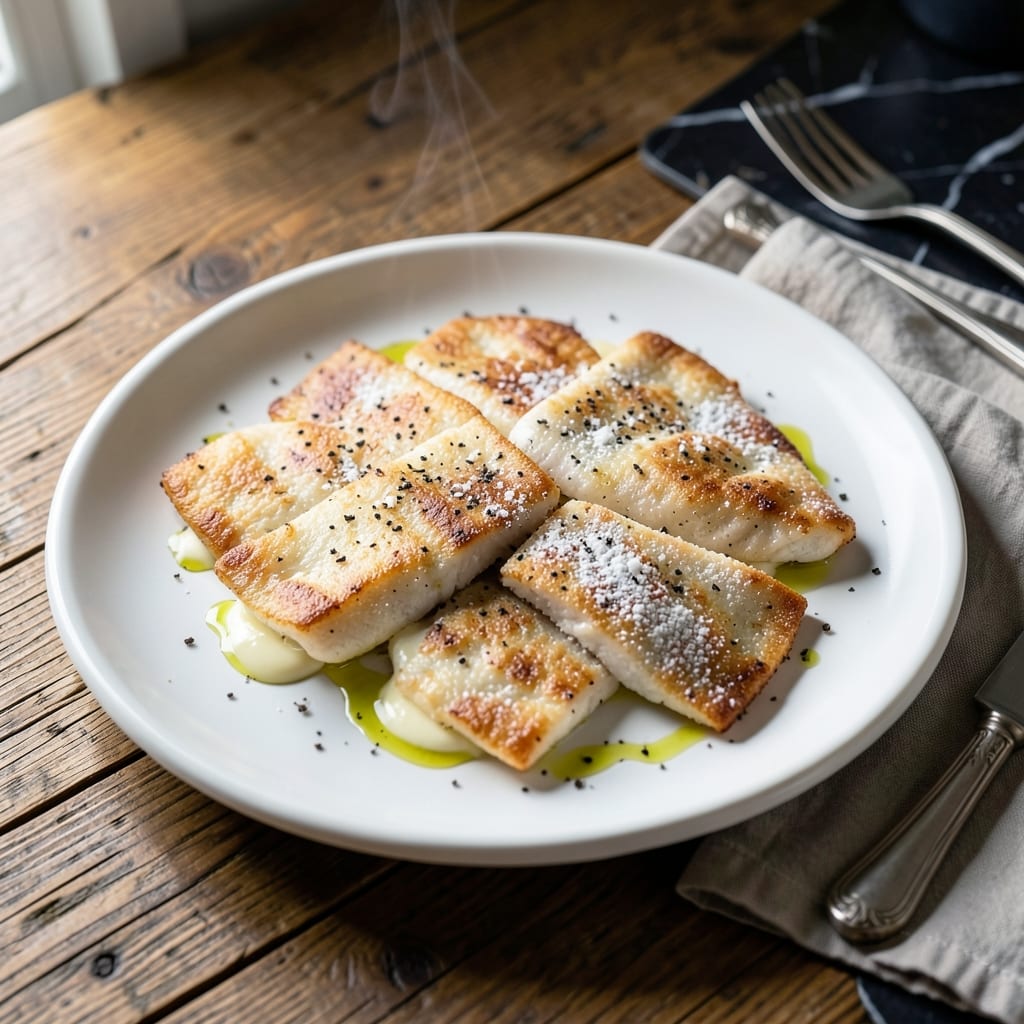
This flounder francese delivers perfect results with a delicate balance of lightness and bright citrus flavor. The technique transforms simple ingredients into an elegant dish that feels restaurant-worthy.
I rely on a precise method of dredging the fish in flour, then pan-frying until golden before finishing with a lemon-butter sauce. The sauce comes together in minutes, creating a silky coating that complements the tender flounder without overpowering it.
What emerges is flaky, moist fish with a crisp exterior, all bathed in a tangy, aromatic sauce. The dish proves that sophisticated flavors don’t require complicated preparations.
Serve immediately with a sprinkle of fresh parsley for a meal that impresses without effort.
Ingredients for Recipe for Flounder Francese
Elegant simplicity with flounder fillets, bright citrus, and a silky lemon-butter finish.
| Ingredient | Amount | Notes |
|---|---|---|
| Flounder Fillets 🐟 | 1 ½ lb | Skinless, bone-in or boneless |
| All-Purpose Flour 🌾 | ¾ cup | For dredging fish |
| Salt 🧂 | 1 tsp | Fine sea salt preferred |
| Black Pepper 🌶️ | ½ tsp | Freshly ground for best flavor |
| Unsalted Butter 🧈 | 6 tbsp | Divided for frying and sauce |
| Olive Oil 🫒 | 2 tbsp | Light for frying fish |
| Fresh Lemon Juice 🍋 | ¼ cup | About 2-3 lemons |
| Dry White Wine 🍷 | ¼ cup | Sauvignon Blanc or Pinot Grigio |
| Garlic Cloves 🧄 | 2 cloves | Minced for sauce |
| Fresh Parsley 🌿 | 2 tbsp | Chopped, for garnish |
| Lemon Zest 🍋 | 1 tsp | From 1 lemon |
| Chicken Stock 🍲 | ¼ cup | Low-sodium preferred |
[recipe_ingredient_scaler]
The flounder is the foundation—opt for fresh, skinless fillets from a reputable seafood counter. Whole Foods and Trader Joe’s consistently offer high-quality options. If frozen is your only choice, thaw overnight in the fridge (never at room temperature). Look for fillets that are firm, slightly translucent, and have a mild scent. The butter quality matters here—European-style unsalted provides superior richness and lower water content.
No white wine? Substitute chicken broth with a splash of lemon juice. For a non-alcoholic option, apple cider vinegar diluted with water works in a pinch. If fresh parsley isn’t available, dried parsley at one-third the amount can be used, though the fresh version provides better color and aroma. The lemon zest is optional but highly recommended for that extra citrus pop (worth the extra minute).
This dish is best served immediately—the fish loses its crispness if held. Leftovers (if any) keep for 1-2 days in the fridge, though the sauce may separate slightly. Reheat gently on low heat, adding a splash of water or stock to re-emulsify the sauce.
Why You’ll Love This Recipe
- I’ll be real: it’s my go-to for busy evenings when I need dinner fast but still impressive.
- One Pan Magic: Honestly, it’s just flounder, flour, butter, and seasoning—no fuss, no extra dishes.
- Buttery Perfection: That crisp golden crust with tender flounder inside? I make it every time the craving hits.
- Weeknight Hero: I’ll be real: it’s my go-to for busy evenings when I need dinner fast but still impressive.
Step-by-Step Instructions for Flounder Francese
Master this elegant preparation with precise technique and attention to detail for restaurant-quality results.
Step 1: Season and Dredge the Flounder Fillets
Begin by patting the 1.5 lb Flounder Fillets completely dry with paper towels. This critical step ensures a proper sear and prevents the flour from becoming gummy. Season both sides evenly with the 1 tsp Salt and 0.5 tsp Black Pepper.
Dredge each fillet in the 0.75 cup All-Purpose Flour, shaking off any excess. The flour should create a thin, even coating that will form a delicate crust when cooked. Set the dredged fillets aside on a clean plate while you heat your pan.
Step 2: Sear the Fillets to Golden Perfection
In a large skillet, heat 2 tbsp Olive Oil and 3 tbsp Unsalted Butter over medium-high heat until the butter foams and subsides. The oil prevents the butter from burning while providing additional crisping power.
Carefully place the flounder fillets in the hot pan, working in batches if necessary to avoid crowding. Cook for 2-3 minutes per side until golden brown and crisp. The fillets are ready to flip when the edges appear opaque and the underside releases easily from the pan. Transfer the cooked fillets to a warm plate.
Step 3: Create the Lemon-Wine Pan Sauce
Reduce the heat to medium and add the remaining 3 tbsp Unsalted Butter to the skillet. Once melted, add the minced 2 cloves Garlic Cloves and sauté for 30 seconds until fragrant but not browned.
Pour in the 0.25 cup Dry White Wine and 0.25 cup Chicken Stock, scraping up any browned bits from the bottom of the pan with a wooden spoon. Simmer for 2-3 minutes until the liquid reduces by half.
Step 4: Finish with Lemon and Herbs
Stir in the 0.25 cup Fresh Lemon Juice and 1 tsp Lemon Zest. Simmer for an additional 1-2 minutes until the sauce thickens slightly and becomes glossy. Taste and adjust seasoning if needed.
Return the flounder fillets to the skillet, spooning the sauce over them to coat completely. Sprinkle with the chopped 2 tbsp Fresh Parsley for a bright finish. The sauce should be light, creamy, and perfectly balanced with the delicate fish.
Serve immediately while hot, ensuring each portion gets an equal share of the luxurious pan sauce. The flounder should be tender and flaky with a crisp exterior, complemented by the bright, citrusy notes of the sauce.
Pro Tips For Making Recipe For Flounder Francese
- Pat Fillets Dry: Blot the flounder with paper towels before dredging in flour—any moisture left on the surface will steam instead of sear, and you’ll lose that delicate crisp coating.
- Heat the Butter: Let the pan get screaming hot and the butter just start to brown before adding the fish. I learned this the hard way—cooler butter makes the flour soak up grease and turn gummy instead of golden.
- Skip the Overcrowding: Cook the fillets in batches if needed. Crowding the pan drops the temperature fast, and flounder cooks so quickly that you’ll end up with soggy, uneven pieces.
- Use Clarified Butter: Sounds fussy, but it works: clarified butter has a higher smoke point, so it won’t burn as fast as regular unsalted butter when you’re searing the flounder.
Regional Styles of These Flavors
New England Style
In coastal New England, I’ve seen this dish prepared with local flounder and a touch of Old Bay seasoning mixed into the flour for a subtle seafood kick. The sauce often includes a splash of clam juice alongside the wine for extra briny depth. 🌊
Italian-American Twist
Many Italian-American restaurants add capers and a pinch of red pepper flakes to the sauce for a bolder, more assertive flavor profile. Some even swap the parsley garnish for fresh basil to lean into Mediterranean influences.
French Bistro Approach
Parisian bistros often use sole instead of flounder, adding shallots to the sauce and finishing with a tablespoon of cold butter for a glossier texture. The technique remains the same, but the presentation is more refined.
Southern Comfort
In the South, I’ve enjoyed versions with cornmeal in the dredging flour for extra crunch. The sauce sometimes includes a splash of hot sauce for a subtle kick, balancing the lemon’s brightness with a hint of heat. 🔥
Mediterranean Fusion
Greek chefs might add Kalamata olives and a sprinkle of oregano to the sauce, transforming it into a more robust, herb-forward dish. The olives add a salty contrast to the lemon-butter base.
Pacific Northwest
Seattle’s version often features Dungeness crab folded into the sauce, turning this into a surf-and-turf delight. The sweet crab meat pairs beautifully with the zesty lemon and rich butter.
Nutrition Facts
Frequently Asked Questions
What’s the best way to keep the coating crispy?
Pat the fillets completely dry before dredging and use medium-high heat for searing. Avoid crowding the pan, which steams the fish instead of frying it.
Can I use a different type of fish?
Yes! Sole, tilapia, or cod work well. Adjust cooking time to 2-3 minutes per side based on thickness. Thinner fillets cook faster.
How do I prevent the sauce from breaking?
Keep heat at medium and whisk constantly when adding butter. If it separates, remove from heat and whisk vigorously to re-emulsify.
What should I serve with this dish?
Light sides like steamed asparagus or a simple arugula salad complement the lemon-butter sauce. Avoid heavy starches that overpower the delicate fish.

Trained in classic French technique but raised on slow-cooked ribs and spicy rubs, she blends culinary skill with smoke and soul.
- Best Smoked Oxtail Recipe: Deep-Rich Flavor After Low-and-Slow Cooking - October 14, 2026
- Pit Boss Smoked Prime Rib Roast Recipe: Bark-to-Bone Crispness in 4 Hours - October 14, 2026
- Smoked Tuna Steak Recipe: Seared Crust Meets Silky Centers - October 14, 2026