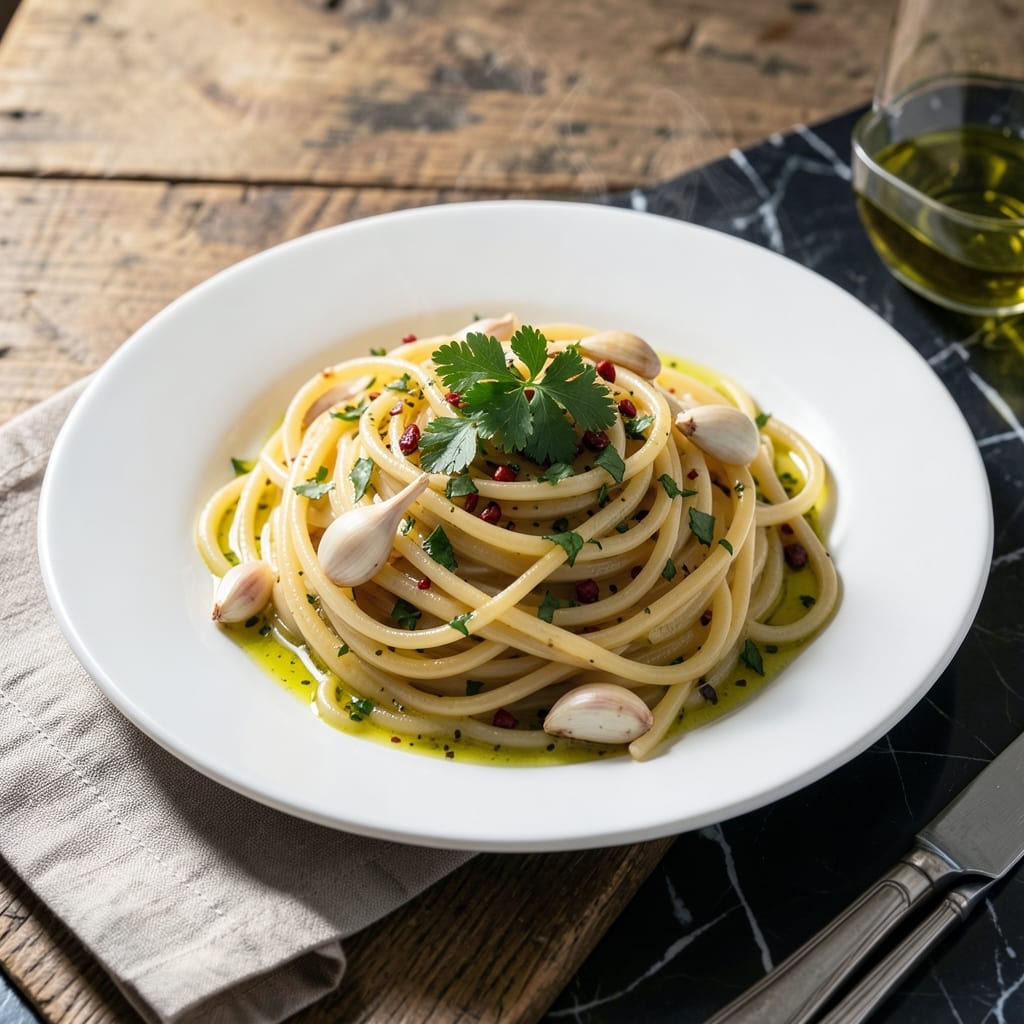
This dish proves that great pasta doesn’t need elaborate sauces or expensive ingredients. Perfect aglio e olio relies on quality olive oil, fresh garlic, and the right technique to create something extraordinary from the simplest components.
I’ve tested this method in my small Boston kitchen countless times, refining the balance of heat, timing, and seasoning. The key is cooking the garlic just until golden, not browned, to preserve its sweetness and prevent bitterness.
What you’ll get is a plate of pasta with a silky, fragrant oil sauce that clings to every strand. A sprinkle of parsley and chili flakes adds freshness and a subtle kick.
Ready in 15 minutes with pantry staples, this is the kind of meal that feels indulgent but couldn’t be simpler.
Ingredients for Recipe for Aglio Olio Pasta
Quality olive oil, fresh garlic, and pasta transform into something extraordinary with minimal effort.
| Ingredient | Amount | Notes |
|---|---|---|
| Spaghetti 🍝 | 1 lb | Dried, preferably bronze-die extruded |
| Extra-Virgin Olive Oil 🫒 | 1 cup | High quality, fruity and robust |
| Garlic Cloves 🧄 | 8 cloves | Thinly sliced for even cooking |
| Red Pepper Flakes 🌶️ | ½ tsp | Adjust for desired heat level |
| Kosher Salt 🧂 | 1 ½ tsp | Plus more for pasta water |
| Fresh Flat-Leaf Parsley 🌿 | ½ cup | Chopped, for garnish |
| Parmesan Cheese 🧀 | ½ cup | Freshly grated, optional for vegetarians |
| Freshly Ground Black Pepper 🌶️ | 1 tsp | For finishing |
| Reserved Pasta Water 💧 | ½ cup | Starchy, for emulsifying sauce |
[recipe_ingredient_scaler]
The olive oil is everything here. Splurge on a high-quality extra-virgin—look for cold-pressed, single-origin bottles from Italy or California. I prefer robust, peppery oils that can stand up to the garlic. For the pasta, bronze-die extruded spaghetti holds sauce better. Most grocery stores carry good options, but Eataly or Whole Foods have premium selections worth the extra cost.
No parsley? Fresh basil or oregano work in a pinch (use half the amount). Don’t have red pepper flakes? A pinch of cayenne does the trick. Vegetarian Parmesan is widely available—BelGioioso or Organic Valley make great options. If avoiding cheese entirely, nutritional yeast adds a similar umami depth. The garlic must be fresh though—jarred minced garlic won’t give you the same sweetness.
This keeps 3-4 days in the fridge, though it’s best fresh. Reheat gently with a splash of water to revive the sauce. Freezing isn’t recommended—the texture changes. Store olive oil in a cool, dark place (not the fridge) and use within 1-2 months of opening for peak flavor.
Why You’ll Love This Recipe
- Ready in 15: I can go from pantry to plate faster than the water boils for the pasta. Honestly, it’s just garlic, oil, and a pinch of red pepper flakes.
- Garlic Bomb: That golden olive oil infuses with the garlic cloves until it’s fragrant enough to make my kitchen smell like an Italian trattoria.
- Weeknight Hero: It’s my go-to when I need something unfussy for a solo dinner or a last-minute meal for friends.
Step-by-Step Instructions for Aglio E Olio Pasta
Master this classic dish with precision and you’ll achieve restaurant-quality results every time.
Step 1: Cook the Spaghetti to Al Dente Perfection
Bring a large pot of water to a rolling boil and salt it generously with 1.5 tsp Kosher Salt. Add the 1 lb Spaghetti and cook for 1 minute less than package directions, stirring occasionally to prevent sticking.
You want the pasta slightly underdone because it will finish cooking in the sauce. Reserve 0.5 cup Reserved Pasta Water before draining—the starchy liquid is essential for emulsifying the sauce. Drain the pasta but do not rinse; the surface starch helps the sauce cling beautifully.
Step 2: Infuse the Olive Oil with Garlic and Red Pepper Flakes
While the pasta cooks, heat 1 cup Extra-Virgin Olive Oil in a large skillet over medium-low heat. Add the 8 cloves Garlic Cloves (thinly sliced) and 0.5 tsp Red Pepper Flakes, stirring frequently.
Cook for 3-4 minutes until the garlic turns light golden brown and becomes fragrant. Watch closely—the garlic can burn quickly. Remove the skillet from heat as soon as the garlic reaches the desired color to prevent bitterness.
Step 3: Combine Pasta and Oil for Silky Emulsion
Add the drained spaghetti to the skillet with the garlic oil. Toss vigorously with tongs to coat the strands evenly. Return the skillet to low heat and add 0.5 cup Reserved Pasta Water, a little at a time, while continuing to toss.
The starch in the pasta water will emulsify with the oil, creating a silky sauce that clings to the noodles. This step is crucial for achieving the signature creamy texture of aglio e olio. Cook for 1-2 minutes until the pasta is perfectly al dente.
Step 4: Finish with Parsley and Parmesan
Remove the skillet from heat and stir in 0.5 cup Fresh Flat-Leaf Parsley (chopped). The residual heat will wilt the parsley slightly without losing its vibrant color. Taste and adjust seasoning if needed, though the pasta water and oil should provide enough saltiness.
Transfer the pasta to serving plates and top with 0.5 cup Parmesan Cheese (freshly grated) and 1 tsp Freshly Ground Black Pepper. The Parmesan adds a salty, nutty depth, while the black pepper provides a subtle warmth. Serve immediately for the best texture and flavor.
Pro Tips For Making Recipe For Aglio Olio Pasta
- Use Pasta Water: Reserve about 1 cup of the starchy pasta water before draining—it’s the glue that helps the olive oil and garlic cling to the noodles.
- Slice Garlic Thin: Cut the garlic into paper-thin slices instead of mincing so it cooks evenly without burning, giving you that sweet, mellow flavor.
- Skip the Crowding: Cook the garlic and red pepper flakes in a wide pan with enough space—cramming them in makes the garlic steam instead of toast.
- Finish in the Pan: Toss the drained pasta in the pan with the garlic oil for 1-2 minutes—this lets the flavors meld instead of just dumping it on a plate.
Serving Suggestions for This Dish
Family-Style Serving
For a true Italian feast, serve this directly from the skillet at the table. I use my 12-inch cast iron pan for both cooking and serving—it keeps the pasta warm while adding rustic charm. Just be sure to let it cool for 2-3 minutes before setting it down. 💛
Elegant Plating
For a more refined presentation, twirl each portion with tongs into a neat nest on warm plates. Drizzle with an extra 1 tbsp Extra-Virgin Olive Oil and garnish with a few whole parsley leaves. A sprinkle of freshly cracked black pepper adds visual contrast.
Bread Pairing
Always serve with crusty bread to soak up that precious garlic oil. My Boston Italian deli carries ciabatta rolls that are perfect for this. Warm them for 2 minutes in a 350°F oven before serving. The bread becomes a second course in itself.
Wine Recommendation
A crisp Italian white wine like Pinot Grigio or Vermentino complements the garlic and oil beautifully. The acidity cuts through the richness while enhancing the dish’s simplicity. I keep a bottle of Santa Margherita Pinot Grigio on hand for just this occasion. 🍷
Simple Side Salad
A light arugula salad with lemon vinaigrette balances the meal. Toss 4 cups baby arugula with 1 tbsp olive oil, 1 tsp lemon juice, and a pinch of salt. The peppery greens provide a nice contrast to the pasta’s richness.
Vegetarian Protein Boost
For a heartier meal, top each serving with white beans or sautéed mushrooms. I love adding ½ cup cannellini beans per plate—they absorb the garlic oil wonderfully while keeping the dish meat-free. Just warm them through in the sauce before serving.
Nutrition Facts
Frequently Asked Questions
Can I use minced garlic instead of sliced?
Sliced garlic gives the best flavor and texture, but minced works in a pinch. Cook it for just 1-2 minutes on low heat to prevent burning, as smaller pieces brown faster.
Why does my sauce look oily instead of creamy?
You likely need more pasta water. Add 2-3 tbsp at a time while tossing vigorously over low heat. The starch emulsifies with the oil to create that signature silky texture.
Can I add protein to this dish?
Try shrimp (cook 2-3 minutes in the oil first) or chickpeas for a vegetarian option. Add proteins after the garlic step to avoid overcooking.

Trained in classic French technique but raised on slow-cooked ribs and spicy rubs, she blends culinary skill with smoke and soul.
- Stewed Beef Brisket Recipe: Deep-Rich Flavor After 8 Hours of Slow Simmering - October 15, 2026
- Beef Brisket Rolls Recipe: Flaky Layers and Smoky Sweet Filling - October 15, 2026
- Masterbuilt Smoker Beef Brisket Recipe: Bark-To-Meat Ratio Hack for Unmatched Flavor - October 15, 2026