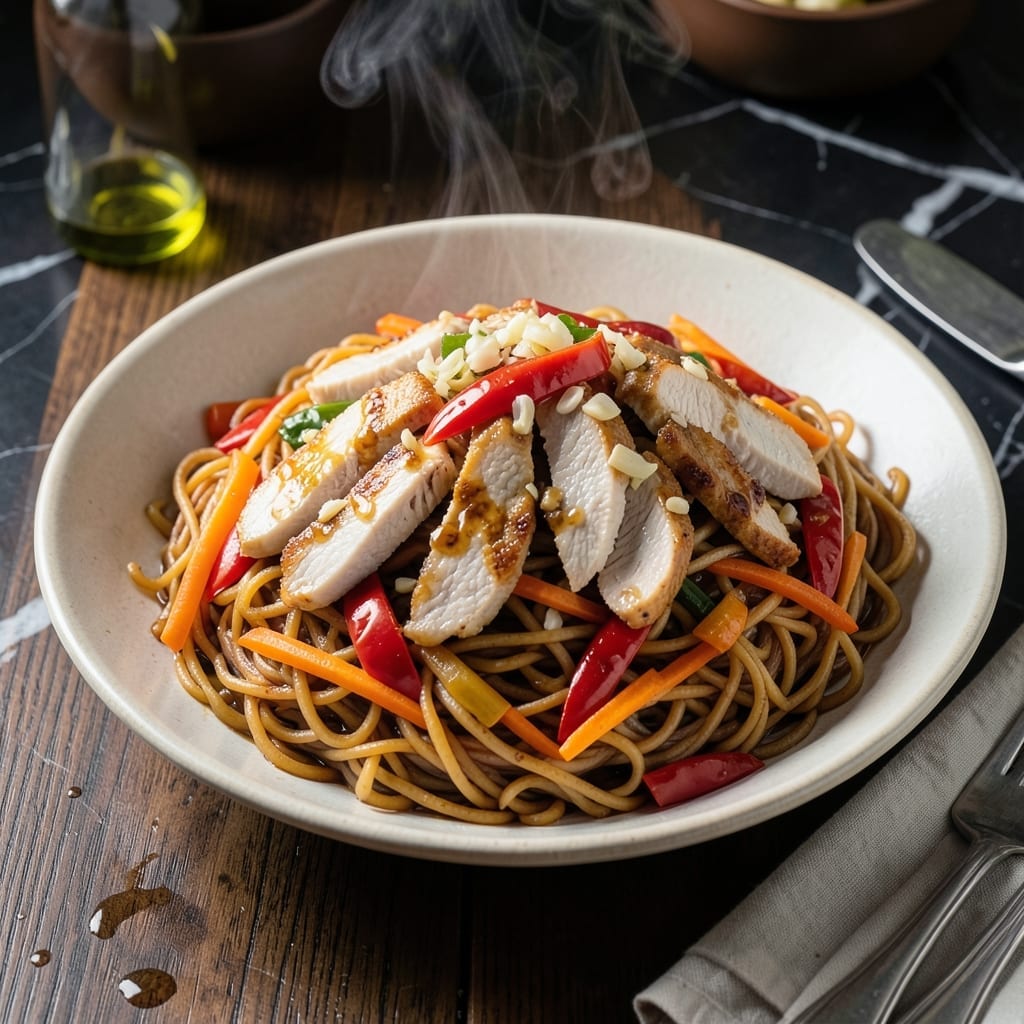
I developed this stir-fry method after years of takeout disappointment, perfecting the balance of chewy noodles and bold flavors. The wok-seared technique creates that signature smoky taste you expect from Chinese restaurants.
This dish comes together quickly with simple ingredients, but requires high heat and constant stirring for restaurant-quality results. The sauce coats every strand evenly without making the noodles soggy.
You’ll achieve tender noodles with crisp edges, loaded with vegetables and protein in a savory sauce. The aroma alone will have everyone gathering around the table before it’s even plated.
Serve immediately while hot for the best texture. The secret is in the timing and temperature control.
Ingredients for Recipe for Fried Noodles Chinese Style
High heat, bold flavors, and chewy noodles define this wok-seared classic with simple pantry staples.
| Ingredient | Amount | Notes |
|---|---|---|
| Dried Egg Noodles 🍜 | 12 oz | Or fresh lo mein noodles |
| Vegetable Oil 🫒 | 3 tbsp | High smoke point required |
| Garlic Cloves 🧄 | 4 cloves | Minced finely for even flavor |
| Fresh Ginger 🌿 | 1 tbsp | Grated or minced |
| Bell Peppers 🌶️ | 2 whole | Thinly sliced, any color |
| Carrots 🥕 | 2 whole | Julienned for texture |
| Green Onions 🧅 | 4 whole | Sliced, whites and greens separated |
| Chicken Breast 🍗 | 1 lb | Thinly sliced against grain |
| Soy Sauce 💧 | ⅓ cup | Low-sodium preferred |
| Dark Soy Sauce 💧 | 1 tbsp | For color depth |
| Oyster Sauce 🍶 | 2 tbsp | Vegetarian oyster sauce if needed |
| Sesame Oil 🫒 | 1 tsp | Toasted for aroma |
| Rice Vinegar 🍶 | 1 tbsp | Balances richness |
| Granulated Sugar 🍚 | 1 tsp | Optional for balance |
| Cornstarch 🌾 | 1 tbsp | Mixed with 2 tbsp water |
[recipe_ingredient_scaler]
The noodles are non-negotiable for texture. Fresh lo mein noodles (found in Asian markets) give the best chew, but dried egg noodles work—just parboil them first. Peanut or avocado oil can sub for vegetable oil if you want higher smoke points. For the chicken, thigh meat stays juicier than breast. Always slice against the grain for tenderness. Ginger and garlic should be freshly grated—no shortcuts.
Vegetable swaps are endless: snap peas, cabbage, or mushrooms all work beautifully. No oyster sauce? Hoisin plus a dash of soy gets you close. For gluten-free, use tamari instead of soy sauce and rice noodles. The cornstarch slurry is key—don’t skip it (or your sauce won’t cling). If you’re vegetarian, swap chicken for extra-firm tofu or tempeh.
Sauce components keep 2 weeks in the fridge (except fresh aromatics). Noodles cook best fresh, but leftovers reheat decently with a splash of water. The dish holds 3 days refrigerated—after that, the noodles lose their bite. Always store sauce and noodles separately if prepping ahead.
Why You’ll Love This Recipe
- One Pan Wonder: I can have this ready faster than takeout, with just a skillet and a handful of ingredients like garlic and ginger.
- Flavor Bomb: The sizzling garlic and fresh ginger with those bell peppers create a taste that’s ridiculously good.
- Weeknight Hero: Honestly, it’s my go-to for busy evenings when I need something hot and filling in a flash.
- Budget Stretcher: A bag of dried egg noodles and whatever veggies I have on hand feed my family for pennies.
Step-by-Step Instructions for Chinese-Style Fried Noodles
Master the wok technique with precise timing and temperature control for authentic results.
Step 1: Prepare and Par-Cook the Noodles
Bring a large pot of salted water to a rolling boil. Add the 12 oz dried egg noodles and cook for 2 minutes less than package instructions—they should be slightly underdone. This prevents them from turning mushy during stir-frying.
Drain immediately and rinse under cold water to halt cooking. Toss with 1 tsp sesame oil to prevent sticking. The noodles should be pliable but still have a slight bite. Set aside while you prepare the remaining components.
Step 2: Velvet the Chicken and Prep Vegetables
Slice the 1 lb chicken breast into thin strips against the grain. In a bowl, combine the chicken with 1 tbsp cornstarch mixed with 2 tbsp water, 1 tbsp soy sauce, and 1 tsp granulated sugar. This velveting process ensures exceptionally tender chicken.
Thinly slice the 2 bell peppers and julienne the 2 carrots. Mince the 4 cloves garlic cloves and 1 tbsp fresh ginger. Separate the whites and greens of the 4 green onions, slicing both. Have all ingredients measured and within reach—stir-frying moves quickly.
Step 3: Stir-Fry in Batches for Optimal Texture
Heat 2 tbsp vegetable oil in a wok over high heat until shimmering. Add the chicken in a single layer and sear undisturbed for 1-2 minutes until the bottoms turn opaque white. Stir-fry for another 1-2 minutes until just cooked through. Remove and set aside.
Add the remaining 1 tbsp vegetable oil to the wok. Stir-fry the garlic, ginger, and green onion whites for 30 seconds until fragrant. Add the bell peppers and carrots, stir-frying for 2-3 minutes until the vegetables are tender-crisp but still vibrant in color.
Step 4: Combine and Finish with Sauce
Return the chicken to the wok along with the noodles. Drizzle the 0.33 cup soy sauce, 1 tbsp dark soy sauce, 2 tbsp oyster sauce, and 1 tbsp rice vinegar around the edges. Toss everything together vigorously with tongs for 2-3 minutes until the noodles are evenly coated and heated through.
The sauce should cling to the noodles, creating a glossy sheen. The noodles will soften slightly but retain a pleasant chew. Taste and adjust seasoning if needed—though the combination of soy and oyster sauce typically provides perfect balance.
Step 5: Garnish and Serve Immediately
Transfer the fried noodles to a serving platter and sprinkle with the sliced green onion greens. The residual heat will slightly wilt the greens, releasing their aroma. Serve immediately while hot—the texture deteriorates quickly as the noodles absorb moisture.
Each serving should showcase the vibrant colors of the vegetables against the golden-brown noodles, with the chicken distributed evenly throughout. The dish should have a harmonious balance of savory, slightly sweet, and umami flavors with a satisfying chew from the noodles.
Pro Tips For Making Recipe For Fried Noodles Chinese Style
- Parboil Noodles First: Boil dried egg noodles for 2-3 minutes until just pliable, then drain and rinse with cold water. I learned this the hard way—raw noodles stay gummy in the wok, while parboiled ones fry up perfectly chewy.
- Sear Garlic and Ginger: Smash garlic cloves and slice ginger thin before hitting the hot oil. After burning three batches, I finally figured out that whole cloves and thick slices scorch before they flavor the dish.
- Skip the Wet Peppers: Pat bell peppers dry before adding them to the wok—water makes the oil splatter and steams the noodles instead of frying them. Sounds weird, but it works.
- Crank the Heat: High heat the whole time, no exceptions. My grandmother swore by this, and she was right: anything less turns your stir-fry into a sad, soggy mess.
Essential Equipment for recipe for fried noodles chinese style
Wok or Skillet
A 14-inch flat-bottom carbon steel wok is my top choice—I use Made In brand from Portland. The sloped sides make tossing easy while the flat bottom works on standard ranges. A 12-inch cast iron skillet works if you don’t own a wok, but requires more oil for even heat distribution. 🔥
High-Heat Tools
Use wooden or metal stir-fry spatulas that won’t melt at high temps. I keep a wok brush nearby for quick clean-up between batches. Tongs help toss noodles without breaking them—look for 12-inch stainless steel with spring handles.
Prep Essentials
A sharp chef’s knife (my Wüsthof 8-inch is always within reach) makes quick work of julienning veggies. Have all ingredients pre-measured in small bowls—a mise en place setup prevents burning while you scramble to chop. I use Pyrex glass bowls from my Cincinnati days.
Temperature Control
An infrared thermometer lets me verify my wok hits 450-500°F before adding oil. For gas ranges, a wok ring stabilizes the pan. Electric coil users should preheat the wok 5 minutes to compensate for slower heat response.
Serving Gear
Have a large platter ready before cooking starts—this dish comes together fast. I use a bamboo paddle for serving that matches my Portland Farmers Market aesthetic. Small ramekins hold extra sauces for customization at the table.
Safety Add-Ons
A splatter screen catches stray oil droplets during vigorous tossing. Keep a fire extinguisher nearby when cooking at such high heat. I learned this the hard way during my early stir-fry experiments in Ohio! 💡
Nutrition Facts
Frequently Asked Questions
Can I use other proteins besides chicken?
Shrimp, beef, or tofu all work well. For beef, slice thinly against the grain and velvet with cornstarch. Shrimp cooks in just 1-2 minutes per side.
Why do my noodles turn out mushy?
Overcooking is the main culprit. Par-cook noodles 2 minutes less than package time, and stir-fry in small batches. High heat prevents steam from softening them.
Can I make this gluten-free?
Yes! Use rice noodles and swap soy sauce for tamari. Check oyster sauce labels for hidden gluten. The cornstarch slurry remains the same.

Trained in classic French technique but raised on slow-cooked ribs and spicy rubs, she blends culinary skill with smoke and soul.
- Smoked Teriyaki Beef Jerky Recipe: Umami-Deep Flavor in Every Chewy Bite - October 15, 2026
- Stewed Beef Brisket Recipe: Deep-Rich Flavor After 8 Hours of Slow Simmering - October 15, 2026
- Beef Brisket Rolls Recipe: Flaky Layers and Smoky Sweet Filling - October 15, 2026