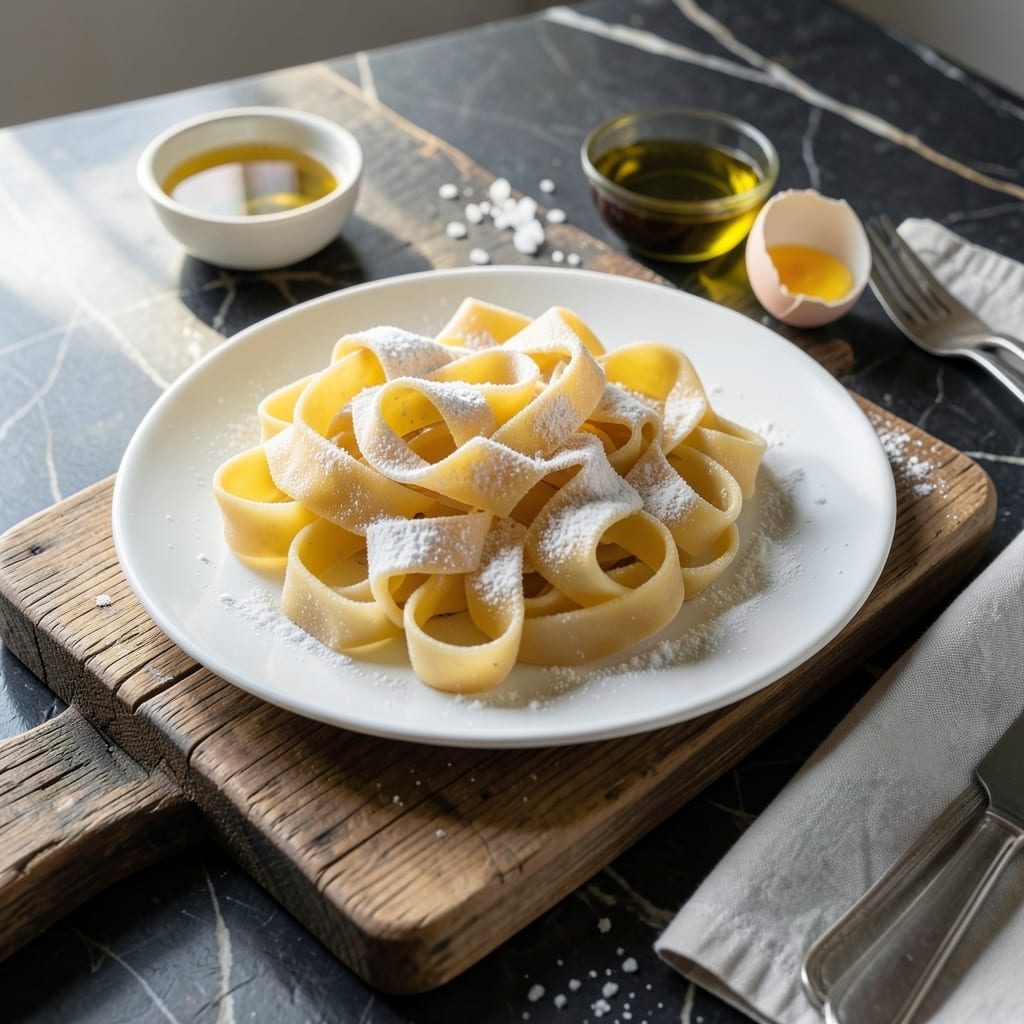
There’s something deeply satisfying about making fresh pasta from scratch using just your hands and a rolling pin. My grandmother never needed a pasta machine to create silky sheets that cooked to perfectly tender perfection in minutes.
This method proves that you don’t need special equipment to achieve restaurant-quality results at home. The key is in the dough consistency and proper resting time, which makes rolling by hand surprisingly manageable.
What emerges from your efforts will be delicate pasta sheets with a texture that store-bought versions simply can’t match. The process takes patience but rewards you with pasta so fresh it cooks in under 2 minutes.
Serve it with your favorite sauce or simply tossed with butter and herbs. The difference is undeniable.
Ingredients for Recipe for Homemade Pasta Without Pasta Machine
Just five simple ingredients for pasta that tastes like Nonna’s kitchen magic.
| Ingredient | Amount | Notes |
|---|---|---|
| All-Purpose Flour 🌾 | 2 cups | Plus extra for dusting |
| Large Eggs 🥚 | 3 whole | Room temperature preferred |
| Olive Oil 🫒 | 1 tbsp | Extra-virgin for richness |
| Salt 🧂 | ½ tsp | Fine sea salt preferred |
| Water 💧 | 1 tbsp | As needed for consistency |
[recipe_ingredient_scaler]
The flour is the foundation here—King Arthur or Bob’s Red Mill are my go-tos (all-purpose, not bread flour). Eggs at room temp blend more evenly into the dough, but don’t stress if yours are cold. The olive oil adds a silky quality (and helps with shelf life), but you can skip it if you’re purist about the classic flour-and-egg method. Dusting flour should be the same type you’re using for the dough.
No all-purpose flour? 00 flour makes it even more authentic (find it at Eataly or World Market), but it’s not required. Short on eggs? You can stretch the dough with a tablespoon of water per missing egg. For a richer flavor, swap the olive oil for melted butter (cool it first). The salt is flexible—use what you’ve got, just don’t skip it entirely.
Fresh pasta cooks fast—like, 2 minutes fast—so prep your sauce ahead. Store dough wrapped tightly in plastic for up to 24 hours in the fridge, or freeze for 1 month. Let it come to room temp before rolling for best results.
Why You’ll Love This Recipe
- No Machine Needed: I roll it out with a wine bottle—no fancy equipment, just my hands and a little elbow grease.
- Rich Egg Flavor: The large eggs give it that deep, golden taste that store-bought pasta just can’t match.
- Endless Meal Options: I toss it with pesto one night, then use the leftovers in a hearty soup the next day.
- Budget Friendly: All-purpose flour and eggs cost pennies, and it makes enough to feed my whole family twice over.
Step-by-Step Instructions for Homemade Pasta Without Pasta Machine
Here’s the method I swear by for perfect pasta sheets using just a rolling pin.
Step 1: Mix and Knead the Dough
On a clean work surface, mound the 2 cups All-Purpose Flour and make a well in the center. Add the 3 whole Large Eggs, 1 tbsp Olive Oil, and 0.5 tsp Salt into the well. Using a fork, gradually incorporate the flour into the wet ingredients until a shaggy dough forms.
Now comes the fun part: kneading. Dust your hands with a bit of flour and work the dough for 8-10 minutes until it’s smooth and elastic. I press the heel of my hand into the dough, then fold and turn, repeating this motion. If it feels too dry, add the 1 tbsp Water a teaspoon at a time.
Step 2: Rest the Dough for Optimal Texture
Shape the kneaded dough into a ball and wrap it tightly in plastic wrap. Let it rest at room temperature for 30 minutes. This relaxation period allows the gluten to unwind, making the dough much easier to roll out later.
I know it’s tempting to skip this, but don’t. The rested dough will roll out smoothly without springing back, and your pasta will have a better texture. While you wait, clean your work surface and dust it generously with flour to prevent sticking during rolling.
Step 3: Roll Out the Pasta Sheets
Divide the rested dough into 4 equal portions. Working with one portion at a time (keep the others covered), flatten it with your hands until it’s about ½ inch thick. Begin rolling with a rolling pin, starting from the center and working outward.
Roll each portion until it’s as thin as possible, aiming for about ⅛ inch thickness or less. I rotate the dough occasionally to maintain an even shape. If it starts to stick, dust with more flour. The sheets should be nearly translucent when held up to the light—this thinness ensures proper cooking.
Step 4: Cut and Shape Your Pasta
Once rolled, let the sheets dry for 5-10 minutes on a floured surface. This prevents them from sticking together when you cut them. For fettuccine, roll each sheet loosely and slice into ¼-inch strips. For lasagna sheets, leave them whole.
Dust your cut pasta with flour to prevent sticking. I like to shape the strands into small nests for even cooking. At this point, you can cook immediately or let dry completely for storage. Fresh pasta cooks much faster than dried, so be ready to test for doneness after just 2-3 minutes in boiling water.
Pro Tips For Making Recipe For Homemade Pasta Without Pasta Machine
- Knead Longer: I learned this the hard way—knead the dough for at least 8-10 minutes until it’s smooth and elastic, otherwise it’ll crack when you roll it out.
- Use Room Temp Eggs: Cold eggs make the dough fight you, so take them out of the fridge 30 minutes before mixing—it blends way easier.
- Skip Extra Flour: Resist the urge to dust the counter too much while rolling; too much flour makes the pasta tough and dry.
- Rest the Dough: After kneading, let it sit wrapped in plastic for 20-30 minutes—this relaxes the gluten so it rolls thin without springing back.
Serving Suggestions for Leftovers
Classic Pairings
Toss your fresh pasta with a simple garlic butter sauce and fresh herbs—¼ cup melted butter with 3 minced garlic cloves and 2 tbsp chopped parsley. The delicate flavor of homemade pasta shines with minimal adornment.
Rich and Creamy
For something indulgent, try a creamy Alfredo sauce with ½ cup heavy cream and 1 cup grated Parmesan. The sauce clings beautifully to the silky strands. I always add a pinch of nutmeg for warmth.
This was my grandmother’s go-to for special occasions. 💛
Light and Fresh
A lemon olive oil sauce with zest of 1 lemon and 3 tbsp extra-virgin olive oil keeps things bright. Add toasted pine nuts for crunch and fresh basil for color.
Hearty Options
Pair with a slow-simmered marinara or ragù Bolognese for a comforting meal. The fresh pasta will absorb the sauce differently than dried, creating a harmonious bite. I prefer a San Marzano tomato base.
Simple Finishes
Sometimes less is more. Try brown butter and sage with a sprinkle of Parmesan. Or just olive oil, salt, and pepper to let the pasta itself be the star.
This is how my grandmother served it most often. ✨
Nutrition Facts
Frequently Asked Questions
Can I use a wine bottle instead of a rolling pin?
Yes! A clean, dry wine bottle works perfectly as a rolling pin substitute. The smooth glass surface actually helps create even sheets. Just make sure it’s not chilled, as cold glass can make the dough tough.
Why does my dough keep springing back when rolling?
This means the gluten hasn’t relaxed enough. Always let the dough rest for the full 30 minutes before rolling. If it still resists, cover and let rest for another 10-15 minutes.
How thin should the pasta be before cutting?
Aim for about ⅛ inch thickness or less. The sheets should be nearly translucent when held to light. Thinner pasta cooks more evenly and has better texture.
Can I make this dough in advance?
Wrap the dough tightly in plastic and refrigerate for up to 24 hours. Let it come to room temperature for 30 minutes before rolling for easiest handling.

Trained in classic French technique but raised on slow-cooked ribs and spicy rubs, she blends culinary skill with smoke and soul.
- Beef Brisket Rolls Recipe: Flaky Layers and Smoky Sweet Filling - October 15, 2026
- Masterbuilt Smoker Beef Brisket Recipe: Bark-To-Meat Ratio Hack for Unmatched Flavor - October 15, 2026
- Costco Beef Brisket Recipe: Low-and-Slow Masterpiece With Molasses-Kissed Crust - October 15, 2026