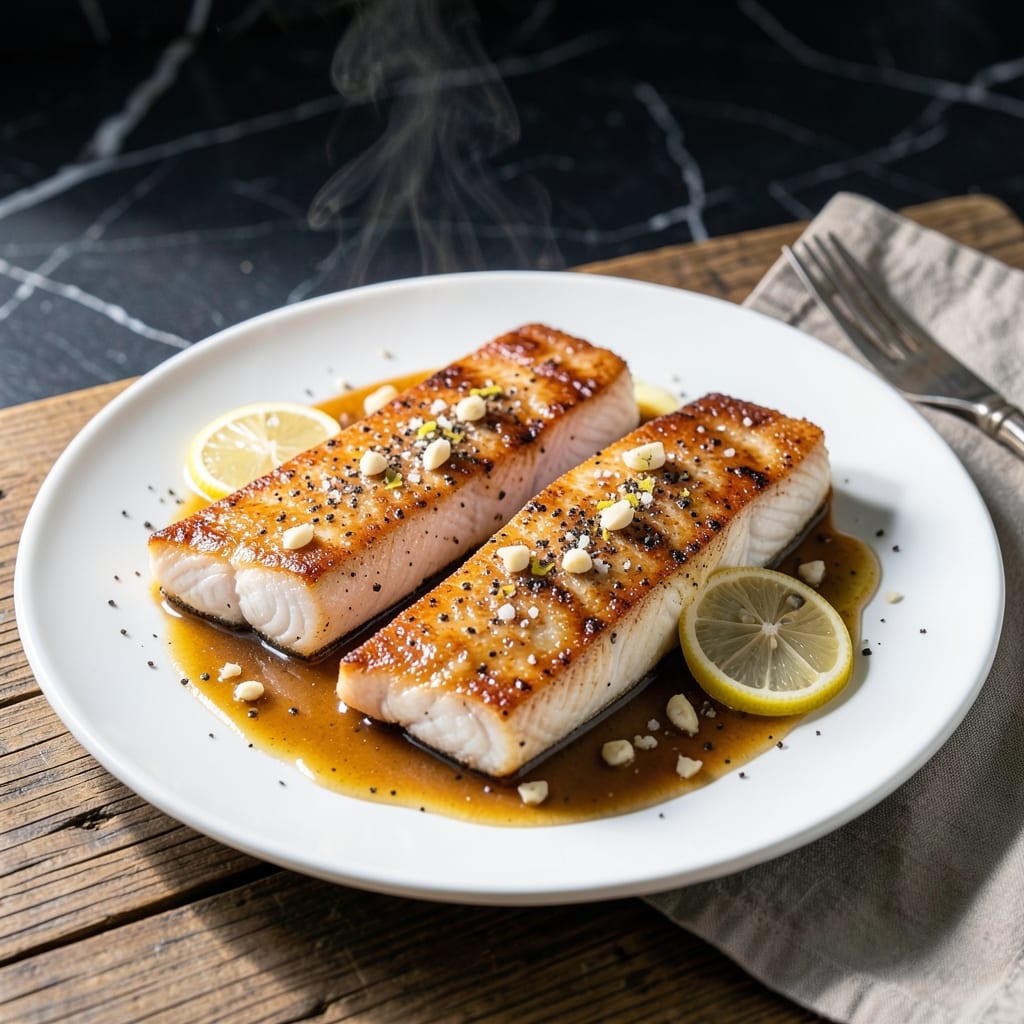
This ling cod preparation delivers the flaky texture that defines great white fish cookery. A simple pan-searing technique creates a golden crust while keeping the interior moist and tender.
The lemon-herb butter adds brightness that complements the mild sweetness of ling cod without overpowering it. This method works perfectly with either fresh or previously frozen fillets.
You’ll achieve professional results with just a few basic ingredients and about 20 minutes of cooking time. The butter basting technique ensures even flavor distribution and prevents dryness.
Serve immediately with roasted vegetables or a simple green salad. This dish proves that elegant seafood doesn’t require complicated preparation.
Ingredients for Recipe for Ling Cod
Elegant seafood requires minimal effort with these carefully selected components for perfect flaky texture.
| Ingredient | Amount | Notes |
|---|---|---|
| Ling Cod Fillets 🐟 | 1 ½ lb | Skin-on or skinless, about 1-inch thick |
| Unsalted Butter 🧈 | ½ cup | Cut into small cubes for even melting |
| Extra-Virgin Olive Oil 🫒 | 2 tbsp | Divided for pan-searing and finishing |
| Fresh Lemon Juice 🍋 | 3 tbsp | About 1 large lemon |
| Lemon Zest 🍋 | 1 tbsp | Finely grated from 1 lemon |
| Garlic Cloves 🧄 | 3 cloves | Minced or thinly sliced |
| Fresh Parsley 🌿 | ¼ cup | Finely chopped, flat-leaf variety |
| Fresh Thyme Sprigs 🌿 | 4 sprigs | Leaves stripped from stems |
| Kosher Salt 🧂 | 1 tsp | Diamond Crystal preferred for even seasoning |
| Freshly Ground Black Pepper 🌶️ | ½ tsp | Coarse grind for texture |
| Shallot 🧅 | 1 whole | Finely diced for herb butter |
| Dry White Wine 🍷 | ¼ cup | Optional for deglazing, Sauvignon Blanc works well |
[recipe_ingredient_scaler]
The ling cod is the star—opt for wild-caught from a trusted fishmonger or the seafood counter at Whole Foods. Look for fillets with a translucent sheen and no fishy odor, which indicates freshness. Skin-on fillets hold together better during cooking, but skinless works if that’s your preference. For the butter, European-style unsalted (like Plugrá) has a higher fat content that resists burning.
No fresh herbs? Dried at one-third the amount works in a pinch, but fresh is ideal for brightness. The white wine can be swapped for extra lemon juice or low-sodium chicken stock if you prefer to skip alcohol. If thyme isn’t on hand, fresh tarragon offers a complementary anise note. For the olive oil, use a neutral variety if you’re concerned about smoke point.
The herb butter can be made 1 day ahead and refrigerated—bring to room temperature before using. Cooked fillets are best served immediately but hold in a 170°F oven for up to 10 minutes if needed. Store leftover butter in an airtight container for 3 days.
Why You’ll Love This Recipe
- One Pan Magic: I just sear the ling cod in butter and olive oil, then finish with lemon—no fancy steps.
- Bright and Zesty: That hit of fresh lemon juice and zest makes the flaky fish taste like a seaside dinner.
- Weeknight Hero: Honestly, it’s ready faster than takeout and fancy enough for guests.
- Stretches Further: Leftovers (if there are any) make killer fish tacos the next day.
Step-by-Step Instructions for Ling Cod with Lemon-Herb Butter
Master these techniques to achieve perfectly flaky fish with a bright, aromatic finishing touch.
Step 1: Prepare and Season the Ling Cod Fillets
Pat the 1.5 lb ling cod fillets completely dry with paper towels to ensure proper searing. This step is non-negotiable—excess moisture prevents the beautiful crust we’re after. Season both sides uniformly with the 1 tsp kosher salt and 0.5 tsp freshly ground black pepper.
Let the seasoned fillets rest at room temperature for 10-15 minutes while you prepare the remaining components. This brief rest allows the salt to penetrate slightly, enhancing the natural sweetness of the cod.
Step 2: Sear the Fillets to Golden Perfection
Heat 1 tbsp extra-virgin olive oil in a large, heavy skillet over medium-high heat until it shimmers but doesn’t smoke. Add the ling cod fillets and cook undisturbed for 3-4 minutes per side, depending on thickness.
Resist the urge to move them—the fillets will release naturally when a golden crust forms. Look for the edges to turn opaque and the bottom to develop a light golden brown color. The flesh should flake slightly when tested with a fork but still appear slightly translucent in the center.
Step 3: Infuse the Lemon-Herb Butter
While the cod cooks, melt the 0.5 cup unsalted butter in a small saucepan over low heat. Add the finely diced shallot, minced garlic cloves, lemon zest, and fresh thyme leaves stripped from the sprigs.
Simmer gently for 2-3 minutes until the shallots soften and the mixture becomes fragrant. Avoid browning—this should be a gentle infusion. Stir in the 3 tbsp fresh lemon juice and 0.25 cup fresh parsley, then remove from heat. The butter will turn a pale yellow with specks of green from the herbs.
For added depth, deglaze the cod pan with the 0.25 cup dry white wine after removing the fish, scraping up any browned bits. Pour this into the butter mixture for a more complex sauce.
Step 4: Finish and Serve Immediately
Transfer the seared ling cod fillets to a serving platter. Spoon the warm lemon-herb butter generously over each portion, allowing it to pool slightly around the edges. The residual heat from the fish will gently warm the butter, releasing its aromatics.
Garnish with additional fresh parsley and a drizzle of the remaining 1 tbsp extra-virgin olive oil for brightness. Serve immediately—the cod should flake effortlessly with a fork and glisten with the citrus-herb sauce.
Pro Tips For Making Recipe For Ling Cod
- Pat Fillets Dry: Use paper towels to thoroughly dry the ling cod fillets before cooking—this guarantees a golden crust instead of steamed fish. I learned this the hard way after wondering why my first few attempts lacked that perfect sear.
- Hot Pan, Cold Fish: Get your skillet screaming hot before adding the fillets, then resist the urge to move them for at least 3-4 minutes. After burning a batch or two, I finally realized the pan wasn’t ready when the fish stuck immediately.
- Zest Before Juicing: Always zest the lemon before cutting it in half for juice—it’s nearly impossible to do afterward, and fresh zest makes a real difference with the butter sauce. Sounds obvious, but I’ve ruined more than one lemon trying to zest a juiced half.
- Baste With Butter: Tilt the pan slightly and spoon the melted butter, olive oil, and lemon juice over the fillets as they cook. I was skeptical until I tried it, but this simple move keeps the fish moist and adds layers of flavor.
Troubleshooting This Dish
Sticking to the Pan
If your fillets won’t release, your pan isn’t hot enough or the fish wasn’t dry. Pat fillets thoroughly with paper towels and let them sit at room temperature for 10-15 minutes. Heat your skillet over medium-high heat until oil shimmers. 💡
Overcooked Fish
Cod continues cooking after removal from heat. Pull it when the center is still slightly translucent—it will reach 145°F while resting. Use a Thermapen for accuracy. Thin fillets may need just 2-3 minutes per side.
Butter Separating
Prevent butter from breaking by keeping heat low while infusing. If it separates, whisk in 1 tsp cold water off heat to re-emulsify. European-style butter like Plugrá has higher fat content, making it more stable for this technique.
Dry or Bland Butter
If your butter sauce lacks vibrancy, you likely under-seasoned. Add ¼ tsp kosher salt and 1 tbsp lemon juice to brighten. Fresh herbs are key—dried won’t provide the same aromatic punch. Use flat-leaf parsley for best flavor.
Uneven Cooking
For consistent doneness, choose fillets of uniform thickness. If pieces vary, start thicker ones first, adding thinner ones 2 minutes later. A heavy skillet like Lodge cast iron distributes heat evenly, preventing hot spots. 🔥
Fish Falling Apart
Handling too much causes breakage. Use a fish spatula for flipping and transfer to platter with a single motion. Skin-on fillets hold together better during cooking. If using skinless, be extra gentle when moving.
Nutrition Facts
Frequently Asked Questions
What’s the best way to tell when ling cod is done?
Use a fork to check for flakiness. The flesh should separate easily and appear opaque with a slight translucence in the center. The internal temperature should reach 145°F when measured at the thickest part.
Can I use frozen ling cod for this recipe?
Yes, but thaw it completely in the refrigerator overnight first. Pat it very dry before cooking to ensure proper searing. Avoid microwaving to thaw, as it can make the texture uneven.
How do I prevent the lemon-herb butter from burning?
Infuse it over low heat and remove from the burner as soon as it’s fragrant. If it starts to brown, lower the heat immediately. European-style butter works best for this technique.
What’s a good substitute for fresh thyme?
Fresh tarragon or rosemary both pair well with fish. Use the same amount as thyme, but add rosemary sparingly as its flavor is stronger. Dried thyme can work in a pinch at one-third the amount.

Trained in classic French technique but raised on slow-cooked ribs and spicy rubs, she blends culinary skill with smoke and soul.
- Smoked Whitefish Recipe: Wood-Fired Flakes with Herbed Butter Drizzle - October 15, 2026
- Smoked Teriyaki Beef Jerky Recipe: Umami-Deep Flavor in Every Chewy Bite - October 15, 2026
- Stewed Beef Brisket Recipe: Deep-Rich Flavor After 8 Hours of Slow Simmering - October 15, 2026