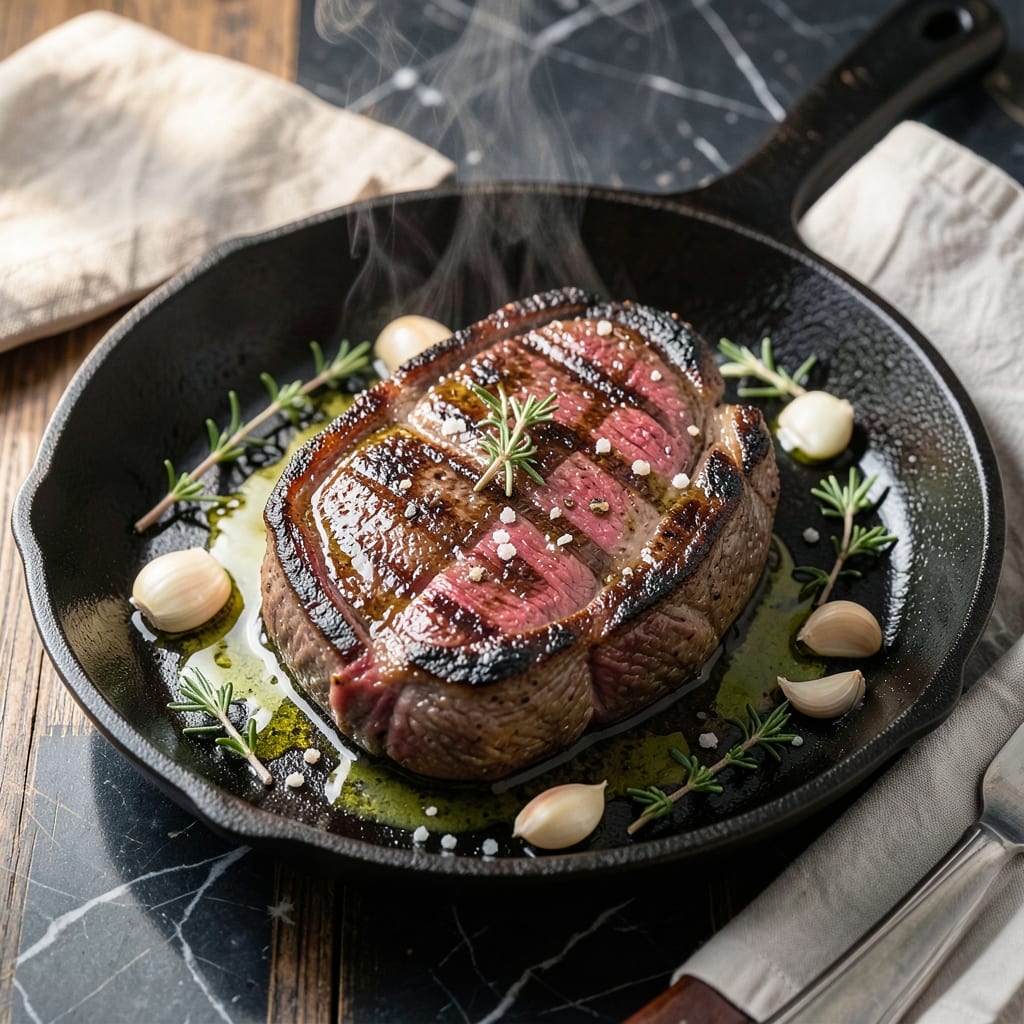
Achieving a steakhouse-level crust at home is simpler than most realize. I developed this method after years of trial and error, focusing on precise temperature control and proper basting technique.
The key lies in starting with a dry, room-temperature steak and a very hot pan. This ensures an immediate sear that locks in juices while creating a deeply caramelized exterior. A touch of butter and aromatics during the final minute elevates the flavor profile significantly.
This approach delivers consistently perfect results—crispy, flavorful crust with a tender interior. The basting step, often overlooked by home cooks, adds an extra layer of richness that mimics professional kitchen techniques.
With just a few simple steps and attention to detail, you’ll produce a steak that rivals any restaurant version. The process is straightforward but demands focus on timing and heat management.
Ingredients for Recipe for Pan Frying Steak
Ten ingredients transform a simple steak into a restaurant-quality masterpiece with proper technique.
| Ingredient | Amount | Notes |
|---|---|---|
| Ribeye Steak 🥩 | 2 lb | 1 to 1.5 inches thick, bone-in preferred |
| Kosher Salt 🧂 | 1 ½ tbsp | Diamond Crystal preferred for even seasoning |
| Freshly Ground Black Pepper 🌶️ | 1 tsp | Coarse grind for texture |
| Unsalted Butter 🧈 | 4 tbsp | High-quality, 80% fat content |
| Garlic Cloves 🧄 | 4 cloves | Lightly crushed, peeled |
| Fresh Thyme Sprigs 🌿 | 4 sprigs | Or 1 tsp dried thyme |
| Fresh Rosemary Sprigs 🍃 | 2 sprigs | Or 1 tsp dried rosemary |
| Neutral Cooking Oil 💧 | 2 tbsp | High smoke point, avocado or grapeseed |
| Shallot 🧅 | 1 whole | Finely minced for basting |
| Red Wine 🍷 | ¼ cup | Dry variety, optional for deglazing |
| Beef Stock 🥣 | ¼ cup | Low-sodium preferred for reduction |
[recipe_ingredient_scaler]
The steak selection is paramount. Ribeye offers the ideal fat marbling for flavor, while New York strip provides a firmer texture. Source from Whole Foods or a trusted butcher for consistent quality. Ensure the meat is dry-brined (salted and rested uncovered) for at least 40 minutes prior to cooking. Room temperature is critical—cold steak won’t develop the proper crust.
Substitutions are limited but possible. New York strip can replace ribeye with slightly less marbling. No fresh herbs? Dried at one-third the quantity works, though fresh is superior. For the wine, beef stock with a splash of balsamic vinegar mimics the acidity. Avoid pre-minced garlic—it lacks the fresh, pungent quality needed for the final baste.
Store raw steak on a wire rack over a tray in the fridge for up to 3 days. Post-cooking, rest at least 10 minutes before slicing. Leftovers (if any) keep 4 days refrigerated or 3 months frozen. Reheat gently in a skillet to preserve texture.
Why You’ll Love This Recipe
- One Pan Wonder: I sear the ribeye in the same pan I melt the butter and garlic in—minimal cleanup, maximum flavor.
- Rich and Buttery: The ribeye soaks up that garlic-infused butter like a sponge, every bite is ridiculously good.
- Date Night Ready: I throw this together for a fancy-feeling dinner without the restaurant price or hassle.
- Leftovers? Yes Please: Cold steak slices the next day make my lunch sandwiches the envy of the office.
Step-by-Step Instructions for Pan Frying Steak
Master the technique for a perfect crust and juicy interior every time.
Step 1: Season and Rest the Ribeye
Pat the 2 lb ribeye steak completely dry with paper towels—this ensures a proper sear. Season both sides aggressively with the 1.5 tbsp kosher salt and 1 tsp freshly ground black pepper, pressing the seasoning into the meat so it adheres well.
Let the steak rest at room temperature for 45-60 minutes before cooking. This step is crucial for even cooking throughout the thick cut. The surface should develop a slight tackiness as the salt begins to draw out moisture, which will then reabsorb for maximum flavor.
Step 2: Sear the Steak to Perfection
Heat a heavy skillet (cast iron preferred) over medium-high heat until very hot. Add the 2 tbsp neutral cooking oil and swirl to coat the pan. When the oil shimmers and just begins to smoke, carefully lay the ribeye in the pan.
Sear undisturbed for 3-4 minutes until a deep brown crust forms. Use tongs to flip the steak and sear the other side for another 3-4 minutes. For medium-rare, the internal temperature should reach 125-130°F at this stage. The crust should be dark and crisp, not black or burnt.
Step 3: Baste with Aromatics
Reduce heat to medium and add the 4 tbsp unsalted butter, 4 cloves garlic cloves, 4 sprigs fresh thyme sprigs, 2 sprigs fresh rosemary sprigs, and 1 whole shallot to the pan. Tilt the skillet slightly and use a spoon to baste the steak continuously with the foaming butter for 1-2 minutes.
The aromatics should become fragrant and lightly browned but not burn. The butter will turn a nutty golden brown, and the garlic will soften. This basting process adds incredible depth of flavor and helps cook the steak evenly while building layers of complexity in the crust.
Step 4: Rest and Optional Pan Sauce
Transfer the steak to a cutting board and tent loosely with foil. Let it rest for 10 minutes—this allows the juices to redistribute throughout the meat. The internal temperature will rise by 5-10°F during this time (carryover cooking).
For an optional pan sauce, return the skillet to medium heat and add the 0.25 cup red wine to deglaze, scraping up all the browned bits with a wooden spoon. Simmer until reduced by half, then add the 0.25 cup beef stock and simmer for another 2-3 minutes until slightly thickened. Strain and serve over sliced steak.
Pro Tips For Making Recipe For Pan Frying Steak
- Dry the Steak: Pat the ribeye completely dry with paper towels before seasoning—I learned this the hard way after my first few steaks steamed instead of seared.
- Sear in Batches: If cooking multiple steaks, resist the urge to crowd the pan; one at a time guarantees a proper crust and even cooking.
- Use High Smoke Point Oil: Start with a tablespoon of neutral oil like canola before adding butter, or you’ll burn the butter before the steak is done.
- Baste with Butter: Tilt the pan and spoon the melted butter, garlic, and juices over the steak for the last 2 minutes—sounds fancy, but it’s just stirring with a spoon.
Make-Ahead Tips for Leftovers
Prep Ahead Strategy
I always dry-brine my steak the night before—just salt it and leave uncovered on a rack in the fridge. This draws out moisture then reabsorbs it with the salt, ensuring even seasoning and a better crust. The surface dries out, which is exactly what you want. 💡
Herb Prep
Wash and dry your thyme and rosemary sprigs the day before, then wrap them in a damp paper towel in a sealed container. They’ll stay fresh for 24-48 hours. I learned this trick from my local butcher at New Seasons Market.
Aromatics Ready
Crush the 4 garlic cloves and mince the shallot up to a day ahead. Store them separately in small containers. This saves precious minutes when you’re focusing on temperature control during cooking.
Room Temp Timing
Take the steak out of the fridge 60-90 minutes before cooking. I set a timer so I don’t forget. Cold steak won’t sear properly, and you’ll end up with uneven cooking. Trust me, this step makes all the difference.
Pan Prep
Have your cast iron skillet cleaned and ready on the stove. I keep mine in the oven at 200°F while the steak comes to temp. A hot pan is non-negotiable for that perfect crust.
Sauce Prep
Measure out the ¼ cup red wine and ¼ cup beef stock in advance. If making the pan sauce, having these ready means you can deglaze immediately after removing the steak, capturing all those flavorful browned bits. 🔥
Nutrition Facts
Frequently Asked Questions
Why rest the steak after cooking?
Resting allows juices to redistribute throughout the meat. Cutting too soon causes them to spill out, leaving your steak dry. 10 minutes is ideal for a 2 lb cut.
Can I use a non-stick pan instead?
Non-stick won’t achieve the same sear as cast iron. The surface needs to reach medium-high heat for proper browning. A heavy stainless skillet works as a backup.
What’s the best way to check doneness?
Use a meat thermometer for accuracy. 125-130°F for medium-rare, 130-135°F for medium. The temperature rises 5-10°F during resting.
How do I prevent smoke while searing?
Use oil with a high smoke point like avocado or grapeseed. Ensure your pan is very hot before adding the steak. Good ventilation helps too.

Trained in classic French technique but raised on slow-cooked ribs and spicy rubs, she blends culinary skill with smoke and soul.
- Beef Brisket Rolls Recipe: Flaky Layers and Smoky Sweet Filling - October 15, 2026
- Masterbuilt Smoker Beef Brisket Recipe: Bark-To-Meat Ratio Hack for Unmatched Flavor - October 15, 2026
- Costco Beef Brisket Recipe: Low-and-Slow Masterpiece With Molasses-Kissed Crust - October 15, 2026