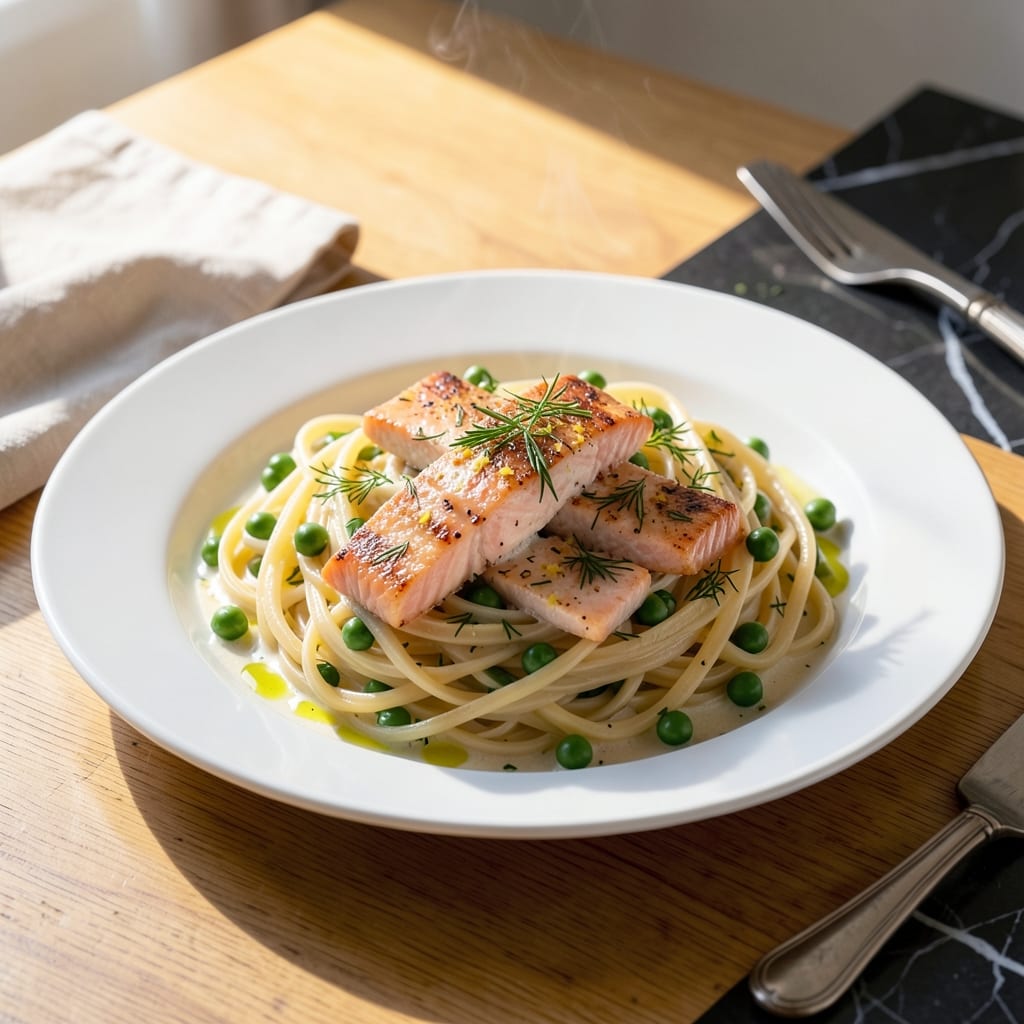
This weeknight pasta dish combines tender salmon, sweet peas, and bright lemon-dill flavors for a restaurant-quality meal in under 30 minutes. The secret lies in cooking the salmon gently to maintain its delicate texture.
Fresh dill and zesty lemon elevate the simple ingredients, creating a sophisticated yet approachable dish. The peas add a pop of color and natural sweetness that balances the richness of the salmon perfectly.
The pasta absorbs all the vibrant flavors, resulting in a satisfying one-bowl dinner that feels special enough for company. Every bite delivers the perfect harmony of tender fish, crisp vegetables, and al dente pasta.
Serve immediately while the flavors are at their peak. This method ensures consistent results every time.
Ingredients for Recipe for Pasta with Salmon and Peas
Fresh salmon, bright peas, and lemon-dill create this restaurant-worthy weeknight pasta in minutes.
| Ingredient | Amount | Notes |
|---|---|---|
| Salmon Fillets 🐟 | 1 ½ lb | Skinless, boneless, fresh preferred |
| Linguine Pasta 🍝 | 12 oz | Or substitute spaghetti or fettuccine |
| Frozen Green Peas 🌱 | 1 ½ cups | Thawed, or fresh if available |
| Fresh Dill 🌿 | ½ cup | Chopped, loosely packed |
| Lemon 🍋 | 2 whole | Zested and juiced, about 3 tbsp juice |
| Garlic Cloves 🧄 | 4 cloves | Minced, for aromatic base |
| Extra-Virgin Olive Oil 🫒 | ½ cup | Divided for cooking and finishing |
| Unsalted Butter 🧈 | 2 tbsp | For rich, velvety sauce |
| Heavy Cream 🥛 | ½ cup | Or substitute half-and-half for lighter option |
| White Wine 🍷 | ½ cup | Dry variety like Sauvignon Blanc |
| Shallot 🧅 | 1 whole | Finely diced, for subtle onion flavor |
| Kosher Salt 🧂 | 1 ½ tsp | Divided, Diamond Crystal preferred |
| Freshly Ground Black Pepper 🌶️ | ½ tsp | For bright, aromatic finish |
| Parmesan Cheese 🧀 | ½ cup | Freshly grated, for garnish |
| Reserved Pasta Water 💧 | ½ cup | Starchy, for adjusting sauce consistency |
[recipe_ingredient_scaler]
The salmon quality is paramount. Wild-caught sockeye or coho from Whole Foods or Trader Joe’s offers superior flavor and texture. Look for fillets with vibrant color and no fishy odor (a sign of freshness). The linguine should be bronze-cut for optimal sauce adhesion. De Cecco or Barilla are reliable brands for consistent al dente results.
No white wine? Substitute chicken broth with a splash of lemon juice. Fresh dill can be replaced with dried at one-third the amount, though the bright flavor will be less pronounced. Heavy cream not on hand? Full-fat Greek yogurt works in a pinch (stir in off-heat to prevent curdling). For a lighter dish, half-and-half is an excellent alternative to heavy cream.
Cook and serve immediately for peak texture and flavor. Leftovers keep in the fridge for 2-3 days but are best enjoyed fresh. The salmon may dry slightly upon reheating, so gently warm with a splash of water or cream to restore moisture.
Why You’ll Love This Recipe
- One Pan Wonder: I love that everything cooks together—linguine, salmon, and peas—so I’m not juggling multiple pots.
- Bright & Fresh: The lemon and dill make the salmon taste ridiculously good, not fishy at all.
- Weeknight Friendly: Honestly, this is my go-to when I need dinner on the table in 25 minutes flat.
- Leftovers Win: The flavors actually get better overnight, so lunch the next day is something to look forward to.
Step-by-Step Instructions for Pasta With Salmon and Peas
This method ensures perfect timing for a seamless weeknight dinner experience.
Step 1: Cook the Linguine Pasta to Al Dente Perfection
Bring a large pot of generously salted water to a rolling boil. Add the 12 oz Linguine Pasta and cook according to package instructions for al dente, typically 8-10 minutes. The pasta should offer slight resistance when bitten, not mushy.
Before draining, reserve exactly 0.5 cup Reserved Pasta Water in a measuring cup. This starchy liquid is essential for creating a silky sauce that clings to every strand. Drain the pasta but do not rinse—you want to preserve the surface starch.
Step 2: Sauté Aromatics and Prepare the Salmon
While the pasta cooks, finely dice the 1 whole Shallot and mince the 4 cloves Garlic Cloves. Heat 2 tablespoons of the 0.5 cup Extra-Virgin Olive Oil in a large skillet over medium heat. Add the shallot and cook for 2-3 minutes until translucent and fragrant.
Add the minced garlic and cook for an additional 30 seconds, stirring constantly to prevent burning. Remove the skillet from heat and set aside. Season the 1.5 lb Salmon Fillets with 1 tsp of the 1.5 tsp Kosher Salt and the 0.5 tsp Freshly Ground Black Pepper.
Step 3: Cook the Salmon and Create the Sauce Base
Return the skillet to medium-high heat and add the remaining extra-virgin olive oil. Place the salmon fillets skin-side up in the skillet and sear for 3-4 minutes per side until golden brown and the fish flakes easily with a fork. Remove the salmon and set aside.
In the same skillet, add the 0.5 cup White Wine and deglaze, scraping up any browned bits. Simmer for 2 minutes until the liquid reduces by half. Stir in the 2 tbsp Unsalted Butter and 0.5 cup Heavy Cream, then add the 1.5 cups Frozen Green Peas to warm through.
Step 4: Combine All Elements and Finish with Fresh Flavors
Add the cooked linguine to the skillet with the sauce and peas. Toss gently to coat the pasta evenly. If the sauce is too thick, add splashes of the reserved pasta water until it reaches a silky consistency that clings to the pasta.
Zest and juice the 2 whole Lemon and stir both into the pasta, along with the 0.5 cup Fresh Dill. Break the salmon into large chunks and fold it into the pasta. Taste and adjust seasoning with the remaining 0.5 tsp Kosher Salt if needed.
Serve immediately, garnished with the 0.5 cup Parmesan Cheese. The dish should have a bright, citrusy aroma with a creamy, herb-flecked sauce coating each strand of pasta.
Pro Tips For Making Recipe For Pasta With Salmon And Peas
- Poach the Salmon: I learned this the hard way—simmer the salmon in the pasta water for the last 4-5 minutes of cooking. It infuses the pasta with flavor and cooks the fish perfectly without extra pans.
- Thaw Peas First: Sounds obvious, but run the frozen peas under warm water for 2 minutes before adding to the pan. They’ll heat evenly and won’t turn mushy or water down the sauce.
- Save Pasta Water: Always reserve at least 1 cup of the starchy pasta water before draining. It’s the non-negotiable glue that helps the sauce cling to the linguine and salmon.
- Zest Before Juicing: Grate the lemon zest directly into the sauce—it’s where all the bright, aromatic flavor hides. Then juice the same lemon; you’ll get every bit of flavor without waste.
Regional Styles of These Flavors
Pacific Northwest Style
In Portland, I love using wild-caught sockeye salmon from local fisheries for this dish. The rich, deep red flesh pairs beautifully with fresh English peas from my garden. A touch of local honey in the sauce adds a subtle sweetness that balances the acidity perfectly. 🌿
Mediterranean Approach
Swap the dill for fresh basil and add 1/2 cup Kalamata olives for a Greek-inspired version. Use feta cheese instead of Parmesan to crumble on top. The briny olives contrast wonderfully with the sweet peas and rich salmon.
Northern Italian Variation
Replace the cream with 1/2 cup mascarpone for a velvety sauce that’s traditional in Lombardy. Add 1/4 cup toasted pine nuts for crunch and a sprinkle of lemon zest for brightness. This version feels luxurious yet stays true to Italian simplicity.
Scandinavian Twist
Forget the cream entirely and use 1/2 cup crème fraîche for a tangier sauce, a nod to Nordic flavors. Add 1 tbsp fresh tarragon along with the dill, and finish with white pepper instead of black. This lighter version lets the salmon shine. ❄️
Southern French Style
Incorporate 1 tbsp Dijon mustard into the sauce for a sharp kick. Add 1/4 cup chopped chives and a splash of Pastis (anise liqueur) to the wine deglaze. The anise notes complement the salmon beautifully, a trick I learned from a chef in Marseille.
Nutrition Facts
Frequently Asked Questions
Can I use canned salmon instead of fresh?
Yes, canned salmon works well—just drain and flake it. Use high-quality wild-caught for best flavor, and add it at the end to avoid overcooking.
How do I keep the salmon from drying out?
Sear it for only 3-4 minutes per side over medium-high heat. Remove it from the pan while still slightly underdone—it’ll finish cooking when tossed with the hot pasta.
What pasta shapes work best?
Linguine or fettuccine hold the creamy sauce beautifully. For a fun twist, try farfalle or penne, but avoid very thick shapes.
Can I make this ahead of time?
It’s best served fresh, but you can prep ingredients in advance. Cook pasta and salmon just before serving to maintain texture. Leftovers keep for 2-3 days in the fridge.

Trained in classic French technique but raised on slow-cooked ribs and spicy rubs, she blends culinary skill with smoke and soul.
- Best Smoked Oxtail Recipe: Deep-Rich Flavor After Low-and-Slow Cooking - October 14, 2026
- Pit Boss Smoked Prime Rib Roast Recipe: Bark-to-Bone Crispness in 4 Hours - October 14, 2026
- Smoked Tuna Steak Recipe: Seared Crust Meets Silky Centers - October 14, 2026