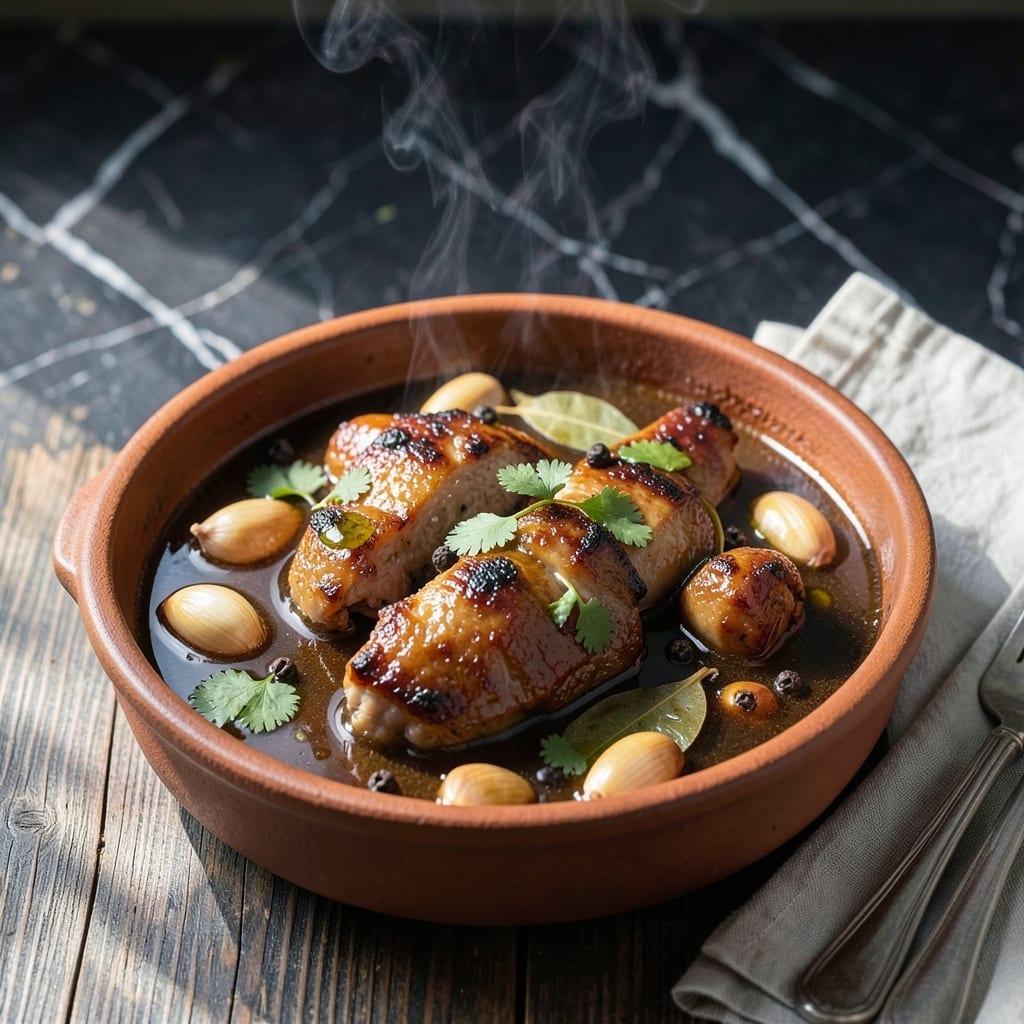
This Filipino classic transforms humble pork into tender, deeply flavorful perfection through a simple vinegar braise. My grandmother’s handwritten notes called for equal parts patience and intuition—both of which I’ve decoded into precise steps.
The magic lies in the balance of vinegar, soy sauce, and garlic, which work together to break down the meat while building layers of savory, tangy complexity. Bay leaves add an aromatic depth that’s uniquely Filipino.
What emerges is fall-apart pork with a rich, slightly sticky sauce that clings to every bite. The vinegar mellows during cooking, leaving only its bright essence behind.
Serve this with steamed rice to soak up every drop of that incredible sauce. The results speak for themselves.
Ingredients for Recipe for Pork Adobo Philippines
Simple, bold ingredients come together for this Filipino braised pork masterpiece.
| Ingredient | Amount | Notes |
|---|---|---|
| Pork Shoulder 🥩 | 2 lb | Cut into 2-inch pieces, bone-in |
| White Vinegar 💧 | 1 cup | Cane vinegar preferred for authenticity |
| Soy Sauce 🫕 | ¾ cup | Use Filipino brand like Silver Swan |
| Garlic Cloves 🧄 | 12 cloves | Minced for maximum flavor infusion |
| Bay Leaves 🌿 | 5 pieces | Dried, whole leaves preferred |
| Black Peppercorns 🌶️ | 1 tsp | Lightly crushed for aroma |
| Brown Sugar 🍚 | 2 tbsp | Optional for balancing acidity |
| Water 💧 | 1 cup | To adjust braising liquid |
| Vegetable Oil 🫒 | 2 tbsp | For searing pork |
| Salt 🧂 | 1 tsp | Adjust to taste at end |
| Green Onions 🧅 | 4 whole | Thinly sliced for garnish |
[recipe_ingredient_scaler]
The pork is non-negotiable—pork shoulder (sometimes called pork butt) gives you that fall-apart texture. Asian markets often have it pre-cut, or ask your butcher to cube it for you. I’ve had luck with Costco’s pork shoulder in a pinch. Look for good marbling; that fat renders down into the sauce. The vinegar should be white vinegar or cane vinegar—apple cider vinegar works but changes the flavor profile slightly.
No Filipino soy sauce? Regular soy sauce in a pinch, but the flavor won’t be as deep. Short on bay leaves? One-third the amount of ground bay leaf works (but whole is better). The garlic can’t be substituted—it’s doing half the work here. If you’re out of black peppercorns, freshly ground black pepper at the same amount is fine. The sugar balances the acidity, but you can skip it if you prefer a sharper tang.
This tastes even better the next day once the flavors meld. Keeps in the fridge for 4-5 days or freeze for up to 3 months. The sauce thickens as it cools—just warm it gently with a splash of water to loosen it up.
Why You’ll Love This Recipe
- One Pot Magic: I just dump everything in a pot and let the vinegar and soy sauce do all the work.
- Tangy Perfection: The garlic and bay leaves create that signature sweet-sour punch I crave every time.
- Feeds Everyone: Honestly, this tastes just as good reheated the next day—my kids even ask for it in their lunchboxes.
- Budget Winner: Pork shoulder stays tender and flavorful without breaking the bank, and a little goes a long way.
Step-by-Step Instructions for Pork Adobo Philippines
This method guarantees melt-in-your-mouth pork with that signature tangy, garlicky depth.
Step 1: Sear the Pork Shoulder for Deep Flavor
Heat the 2 tbsp vegetable oil in a large pot or Dutch oven over medium-high heat. Working in batches to avoid crowding, add the 2 lb pork shoulder pieces and sear until golden brown on all sides, about 5-7 minutes per batch.
This searing step builds a rich fond at the bottom of the pot, which will deepen the flavor of your braising liquid later. Don’t rush this—you want that deep caramelization. Remove the seared pork and set aside.
Step 2: Build the Aromatic Braising Liquid
In the same pot, add the 12 cloves minced garlic cloves and sauté for 30 seconds until fragrant but not browned. Immediately add the 1 cup white vinegar, 0.75 cup soy sauce, 1 cup water, 5 pieces bay leaves, and 1 tsp black peppercorns.
Bring the mixture to a boil, then reduce heat to medium-low. The vinegar smell will be strong at first, but it mellows beautifully as it cooks. Stir in the 2 tbsp brown sugar until fully dissolved—this balances the acidity perfectly.
Step 3: Braise Until Fork-Tender
Return all the pork to the pot, ensuring the pieces are mostly submerged in the liquid. Cover and simmer gently for 1 to 1.5 hours, turning the pork occasionally. You’ll know it’s ready when a fork slides in with absolutely no resistance.
Keep an eye on the liquid level—if it reduces too much, add a splash of water. The pork should stay moist but not swimming. This slow cooking process transforms the tough cuts into that fall-apart tenderness that defines great adobo.
Step 4: Reduce the Sauce and Finish
Once the pork is tender, uncover the pot and increase heat to medium-high. Let the sauce reduce for 10-15 minutes until it thickens slightly and coats the back of a spoon. This concentrates all those beautiful flavors.
Stir in the 1 tsp salt and adjust seasoning to taste. Remember, soy sauce is already salty, so go easy with the salt until you’ve tasted it. The sauce should be tangy, savory, and slightly sweet with a glossy sheen.
Step 5: Garnish and Serve
Discard the bay leaves and transfer the pork to a serving dish. Spoon the thickened sauce over the top and garnish with the 4 whole green onions, thinly sliced. The green onions add a fresh, bright contrast to the rich, deep flavors of the dish.
Let the adobo rest for 10 minutes before serving. This allows the flavors to meld and the sauce to cling better to the pork. Serve with steamed rice to soak up every last bit of that incredible sauce.
Pro Tips For Making Recipe For Pork Adobo Philippines
- Simmer Uncovered: After adding the vinegar, let it simmer uncovered for 15-20 minutes to reduce the sauce and intensify the flavors—I learned this the hard way after my first few batches were too watery.
- Score the Pork: Cut shallow slits into the pork shoulder before browning so the marinade penetrates deeper, and the meat absorbs more of that garlicky, tangy goodness.
- Balance the Vinegar: Taste as you go and adjust the vinegar-to-soy ratio; my grandmother swore by 1:1, but I often add a splash more soy if the tang is too sharp.
- Use Fresh Bay Leaves: Skip the dried ones if you can—fresh bay leaves release their aroma better during the long simmer and actually change the outcome of the dish.
Perfect Pairings for This Dish
Rice Pairings
Steamed jasmine rice is the classic choice—its delicate floral notes complement the bold adobo flavors beautifully. For extra richness, try coconut rice by cooking 1 cup rice in 1 cup coconut milk and 1 cup water. 🥗
Vegetable Sides
A simple stir-fried bok choy with garlic adds freshness to cut through the richness. Just 2 tbsp oil, 3 minced garlic cloves, and 4 baby bok choy for 3-4 minutes works perfectly. I also love pickled cucumbers for a bright, crunchy contrast.
Beverage Matches
San Miguel beer is the traditional pairing—its crisp, light body refreshes your palate. For non-alcoholic options, calamansi juice (Filipino limeade) balances the dish’s tanginess. Try it with 2 tbsp honey and 1 cup sparkling water for a fizzy twist. 🍺
Starchy Sides
Garlic fried rice (sinangag) makes a hearty base—just fry day-old rice with 3 minced garlic cloves and 1 tbsp oil. For something different, boiled potatoes absorb the adobo sauce wonderfully. I prefer Yukon Gold for their buttery texture.
Nutrition Facts
Frequently Asked Questions
What kind of vinegar works best?
Cane vinegar is traditional, but white vinegar works perfectly too. Avoid balsamic—it’s too sweet and will overpower the dish.
Can I use a different cut of pork?
Pork belly works well for extra richness, but avoid lean cuts like tenderloin. They’ll dry out during the long braise.
Why does my adobo taste too sour?
Balance the acidity with a touch of brown sugar or let it simmer longer. The vinegar mellows significantly as it cooks.
How do I make it less salty?
Use low-sodium soy sauce or add 1 cup water to dilute. Remember, the saltiness reduces as the sauce cooks down.

Trained in classic French technique but raised on slow-cooked ribs and spicy rubs, she blends culinary skill with smoke and soul.
- Beef Brisket Rolls Recipe: Flaky Layers and Smoky Sweet Filling - October 15, 2026
- Masterbuilt Smoker Beef Brisket Recipe: Bark-To-Meat Ratio Hack for Unmatched Flavor - October 15, 2026
- Costco Beef Brisket Recipe: Low-and-Slow Masterpiece With Molasses-Kissed Crust - October 15, 2026