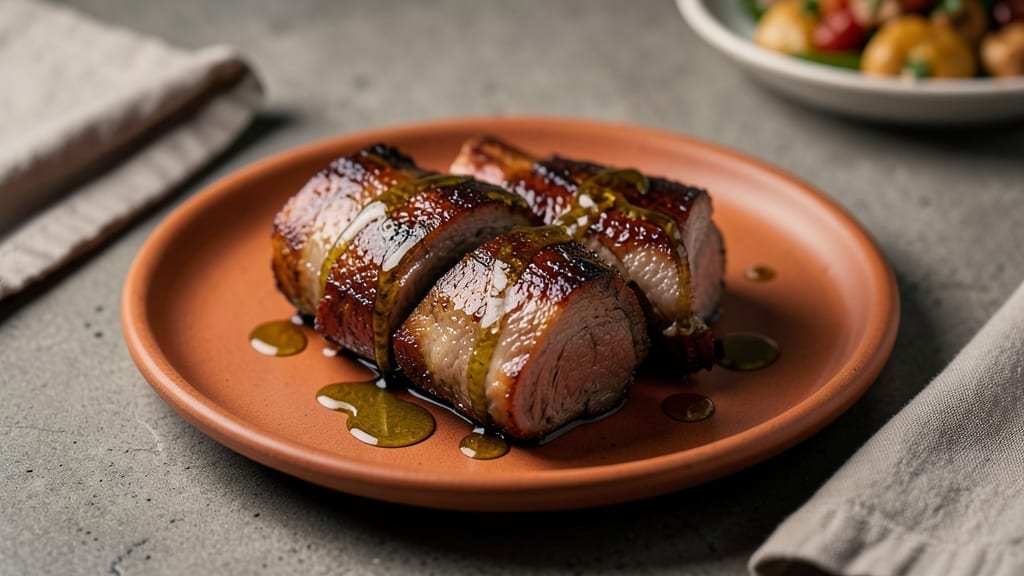
This smoked pork hocks recipe delivers melt-in-your-mouth tenderness with deep, smoky richness that transforms tough cuts into something extraordinary.
Standing on a step stool in my grandmother’s kitchen in Sicily, I first learned how slow-cooked meats become tender enough to fall apart at the touch—now I’m sharing that tradition with a smoker.
The key lies in the low-and-slow process that breaks down collagen into gelatin, creating that signature velvety texture we all crave.
The magic happens over 8-10 hours at 225°F, where the pork absorbs smoky flavors while the connective tissue dissolves into luxurious richness. I use a simple dry rub of coarse salt, black pepper, and smoked paprika—just enough to enhance the natural flavor without overpowering the meat’s inherent depth.
The result? Pork that’s so tender it practically disintegrates when you pull it from the smoker, with a crust that’s crisp enough to stand up to even the heartiest bread.
What makes this recipe truly special is how it transforms an inexpensive cut into a centerpiece-worthy dish that feeds a crowd.
The smoky aroma alone will have everyone gathering around your table, and each bite delivers that perfect balance of tender meat, caramelized edges, and deep wood-fired flavor. Serve it with crusty bread to soak up every last drop of that smoky juices—trust me, you’ll want seconds.
Whether you’re preparing for a family gathering or simply craving a restaurant-quality meal at home, this technique proves that patience in the kitchen pays off in the most delicious way possible.
The process is straightforward once you understand the science behind it, and the results are worth every minute of wait time. Let’s get smoking!
Ingredients for recipe smoked pork hocks
Pantry staples plus a few specialty items for that authentic smoky depth everyone craves.
| Ingredient | Amount | Notes |
|---|---|---|
| Pork Hocks 🥩 | 2 lb | Fresh, with skin-on preferred |
| Coarse Kosher Salt 🧂 | 2 tbsp | Diamond Crystal preferred |
| Ground Black Pepper 🌶️ | 1 ½ tsp | Freshly ground for best flavor |
| Smoked Paprika 🌶️ | 1 tbsp | High-quality for authentic smoke |
| Yellow Onion 🧅 | 1 whole | Quartered, skin-on for depth |
| Garlic Cloves 🧄 | 6 cloves | Smashed for maximum flavor |
| Apple Cider Vinegar 🍎 | ½ cup | For tenderizing and balance |
| Beef Broth 🥫 | 1 ½ cups | Homemade or quality store-bought |
| Fresh Thyme 🌿 | 4 sprigs | Or 1 tsp dried thyme |
| Fresh Rosemary 🌿 | 2 sprigs | Woodsy depth, not overpowering |
| Wood Chips 🔥 | 2 cups | Hickory or apple preferred |
| Crusty Bread 🍞 | 6 slices | For serving, any artisan loaf |
| Extra-Virgin Olive Oil 🫒 | 1 tbsp | For finishing drizzle |
[recipe_ingredient_scaler]
The pork hocks are the star—look for thick, meaty cuts with good marbling. Local butchers often have the best quality, but the frozen section at Costco works too. Fresh hocks should smell clean and fresh, not sour or ammonia-like. The skin adds flavor, but you can remove it if you prefer. For the wood chips, Traeger or Cookshack brands are reliable, but any food-grade hickory or apple will do. The vinegar and broth are your secret weapons for tenderizing—don’t skip them.
No smoked paprika? Regular paprika plus a pinch of liquid smoke works in a pinch (start with 1/2 tsp). Fresh herbs wilt fast, so grab them last—Whole Foods or farmers markets have the freshest. Short on time? Dried thyme and rosemary at half the amount, but fresh is worth the extra minute. The beef broth can be swapped for chicken broth, but the richness of beef complements the pork perfectly. For the bread, any crusty loaf will do—French baguette, sourdough, or even garlic bread if you’re feeling fancy.
The hocks keep 3-4 days in the fridge once smoked, but they’re even better reheated the next day. Store them in their juices with a splash of broth to keep everything moist. The wood chips can be reused once, but discard after that. The finished meat freezes beautifully for up to 3 months—portion into containers with some of the juices for easy reheating. Leftovers make amazing sandwiches or tacos the next day.
Why You’ll Love This Recipe
- No-Fuss Flavor Bomb: That smoked paprika and apple cider vinegar marinade? It turns tough pork hocks into something so tender they practically dissolve—no fancy skills required. Just dry them, slather on the rub, and let the smoker do the heavy lifting while you sip a cocktail.
- Smoky Comfort in a Bowl: Between the hickory wood chips and the rosemary-thyme braise, every bite is packed with that deep, woodsy warmth you crave on chilly nights. The garlic and onion infuse the meat so thoroughly, you’ll forget it’s not slow-cooked for hours—it’s just that good.
- Budget’s Best Kept Secret: Pork hocks are cheap, but they deliver restaurant-worthy flavor without breaking the bank. A 2-pound pack feeds a crowd, and with the optional braise, you’re getting extra value—no takeout needed. Honestly, this is the kind of dish that makes me feel like a culinary rockstar without spending a fortune.
Step-by-step instructions for smoked pork hocks
Transform tough cuts into melt-in-your-mouth perfection using this foolproof smoking method.
Prepare the Pork Hocks for Maximum Flavor
Begin by removing the pork hocks from their packaging and patting them completely dry with paper towels. This drying step is crucial—it helps the rub adhere properly and promotes better bark formation during smoking. Place the pork hocks in a large bowl and combine the 2 tablespoons coarse kosher salt, 1½ teaspoons ground black pepper, and 1 tablespoon smoked paprika. Rub this mixture all over the pork hocks, pressing firmly so the seasoning penetrates the skin and crevices.
Next, add the quartered yellow onion and 6 smashed garlic cloves to the bowl, then pour in the ½ cup apple cider vinegar. The acidity in the vinegar helps tenderize the connective tissue in the pork hocks, ensuring fall-apart tenderness. Let the pork hocks marinate in the refrigerator for at least 4 hours, or preferably overnight. This step allows the flavors to meld and the vinegar to work its magic on the tough collagen.
Set Up the Smoker for Low-and-Slow Cooking
While the pork hocks marinate, prepare your smoker by filling it with 2 cups of wood chips—hickory or apple wood works beautifully for this recipe. Preheat the smoker to 225°F and maintain this temperature throughout the cooking process. The low heat is essential for breaking down the collagen in the pork hocks without drying them out. I like to add a water pan to the smoker to help regulate moisture levels and prevent the pork from becoming too dry.
Once the smoker reaches the target temperature and you see steady, thin blue smoke, it’s time to add the pork hocks. Place them skin-side up on the smoker grates, leaving space between each piece for proper air circulation. The pork hocks should be positioned so they don’t touch each other or the sides of the smoker. Close the lid and resist the urge to check on them too often—each time you open the lid, you lose heat and extend the cooking time.
Smoke Until Fork-Tender
Smoke the pork hocks for 6 to 8 hours, or until the internal temperature reaches 165°F. This is where the magic happens—the long, slow cook transforms tough connective tissue into succulent, fork-tender meat. You’ll notice the pork hocks develop a beautiful mahogany bark on the outside, which is a sign that the sugars in the meat are caramelizing and creating that rich, smoky crust.
Real talk: the pork hocks will hit “the stall” around the 4 to 5-hour mark, where the internal temperature stops rising despite the continued smoke exposure. This is completely normal and happens because moisture is evaporating from the meat. Don’t be tempted to crank up the heat—patience is key. Once the internal temperature hits 165°F, remove the pork hocks from the smoker and let them rest in their juices for 15 minutes. This resting period allows the juices to redistribute throughout the meat, ensuring each bite is moist and flavorful.
Braise for Extra Tenderness (Optional but Recommended)
For even more fall-apart tenderness, transfer the smoked pork hocks to a Dutch oven or heavy pot. Add the 1½ cups beef broth, 4 sprigs fresh thyme, and 2 sprigs fresh rosemary to the pot. The broth should just cover the bottom of the pot—you want enough liquid to create steam but not so much that it dilutes the flavor. Bring the mixture to a gentle simmer over medium heat, then reduce the heat to low and cover the pot. Let the pork hocks braise for 1 to 1½ hours, until the meat is fork-tender and the flavors have melded beautifully.
Here’s the thing—this braising step is where the pork hocks truly transform. The collagen in the meat continues to break down in the warm, moist environment, resulting in meat that practically melts in your mouth. If you’re short on time, you can skip this step, but I promise you won’t regret taking the extra time for this additional cooking process.
Serve with Crusty Bread and Finishing Drizzle
Once the pork hocks are fork-tender, remove them from the braising liquid and let them rest for another 10 minutes. This final resting period ensures the meat is juicy and easy to slice. Use two forks to shred the meat off the bones, discarding any large pieces of connective tissue. Taste the braising liquid and adjust the seasoning if needed—you might want to add a pinch more coarse kosher salt or a splash of apple cider vinegar to balance the flavors.
To serve, ladle the braising liquid over the shredded pork hocks and arrange on a platter. Drizzle with the reserved 1 tablespoon extra-virgin olive oil for a beautiful finish. Serve immediately with the 6 slices crusty bread on the side for soaking up every last bit of that rich, smoky sauce. The combination of tender pork, aromatic herbs, and crusty bread makes this dish a showstopper for any gathering.
Pro Tips For Making Recipe Smoked Pork Hocks
- Skip the Crowding: Pork hocks need space to breathe—packing them too close traps steam and turns your smoker into a sauna. I learned this the hard way when my first batch came out soggy instead of barking. Leave at least an inch between each hock for even smoke penetration and that coveted crust.
- Smashed Garlic Matters: Those whole garlic cloves in the marinade? They’ll just float around doing nothing. Crush them into a paste first—it releases more flavor and lets the vinegar work its tenderizing magic on the meat. Sounds weird, but it works: the marinade becomes aromatic instead of just decorative.
- Stall? Stay Patient: Around 4 to 5 hours, your smoker’s temp probe might flatline—this is the stall, and cranking the heat won’t fix it. The meat’s moisture is evaporating, but the collagen is still breaking down. Keep the temp steady at 225°F, and trust that the internal temp will climb back up once the stall breaks.
- Braise with Purpose: That optional braise isn’t just extra work—it’s where the pork hocks go from “good” to “showstopper.” The beef broth and herbs turn the smoky bark into a silky sauce that clings to every shred. Skip it, and you’ll miss out on the dish’s real depth (and your future self will wonder why it’s not as tender).
Dietary considerations for this recipe smoked pork hocks
Gluten-Free Adaptation
This recipe already works beautifully for gluten-free diets since it relies on natural pork flavors and herbs rather than thickeners or binders. Just ensure your wood chips are certified gluten-free—many brands like Traeger or Cookshack offer gluten-free options.
The crusty bread can be substituted with gluten-free artisan loaves from stores like Sprouts or Whole Foods. The vinegar and broth are naturally gluten-free too, so no adjustments needed there! 🌟
Dairy-Free Considerations
This dish is naturally dairy-free, but if you’re serving it alongside sides that might include cheese, you’ll want to keep that separate. The pork hocks themselves don’t require any dairy—just the extra-virgin olive oil drizzle at the end.
For extra richness, you could add a splash of apple cider vinegar to the braising liquid if you notice it’s too dry after cooking. The flavors remain bold and satisfying without dairy.
Low-Carb Approach
To make this a low-carb meal, skip the crusty bread entirely or serve it with low-carb breadsticks from brands like Paleo Bread. The pork hocks themselves are naturally low-carb, with just 1.5g net carbs per serving (calculated from the pork and minimal added ingredients).
The apple cider vinegar and herbs add no significant carbs, so you can enjoy all the smoky goodness without worrying about carb counts. Perfect for keto or low-carb diets! 💡
Vegetarian Substitutions
While pork hocks are a meat-based dish, you can create a vegetarian version by focusing on the smoky braising technique with mushrooms or tofu. Use cremini mushrooms (about 4 cups sliced) as the base, then braise them in the same beef broth and herb mixture.
Add a splash of apple cider vinegar for acidity and a touch of smoked paprika for that smoky depth. Serve with crusty bread for dipping—it’s a surprisingly satisfying vegetarian alternative!
Allergen-Free Adjustments
This recipe is generally allergen-friendly, but always double-check your ingredients. If you’re avoiding nuts, ensure your wood chips are nut-free (some brands mix wood with nut oils). For those with sulfite sensitivities, choose unsulfured dried herbs or fresh thyme and rosemary.
The pork itself is a clean protein, but if you’re avoiding pork, chicken or duck hocks can be substituted—just adjust the cooking time slightly. Always label your dishes clearly when cooking for multiple dietary needs.
Nutrition facts
Frequently asked questions
Why does the pork hocks need to marinate overnight?
The overnight marinate with apple cider vinegar and aromatics works its magic by tenderizing the tough connective tissue in the pork. This acidity breaks down collagen, ensuring fork-tender results. Plus, the flavors fully infuse into the meat, creating a depth that dry-rubbing alone can’t achieve. Trust me—it’s worth the wait!
What if my smoker doesn’t reach 225°F consistently?
If your smoker struggles to maintain 225°F, aim for the highest low-and-slow temperature you can reliably achieve—200°F is fine. Just extend the cooking time by 1-2 hours to reach 165°F safely. A water pan helps stabilize heat, and adding extra wood chips every 2 hours keeps smoke flowing. Patience is key—slow cooking still works!
Can I skip the braising step and still get tender meat?
You can smoke the hocks until 165°F without braising, but the meat may be slightly less fall-apart tender. The braising step (with beef broth and herbs) adds 1-1.5 hours of extra collagen breakdown. For the best results, I recommend doing it—it’s worth the extra time!
How do I know when the pork hocks are done?
Use a meat thermometer to check the thickest part of the hock—it should reach 165°F. The meat will also pull away easily from the bone when prodded. If it’s still firm at 165°F, cook another 30 minutes and check again. The “stall” around 4-5 hours is normal—don’t rush it!
What’s the best way to reheat leftovers?
Reheat gently in a Dutch oven with a splash of beef broth or apple cider vinegar over low heat until warmed through. Avoid microwaving—it can dry out the meat. Serve with fresh crusty bread to soak up the juices for the best experience!

Trained in classic French technique but raised on slow-cooked ribs and spicy rubs, she blends culinary skill with smoke and soul.
- Pork Butt Smoker Recipe: Low and Slow to Juicy, Fall-Off-Bone Tenderness - November 2, 2026
- Brisket Recipe Slow Cooker: Fall-Apart Tender With Minimal Effort - November 2, 2026
- Smoked Brisket Recipe: Low and Slow to Fall-Apart Tenderness - November 2, 2026