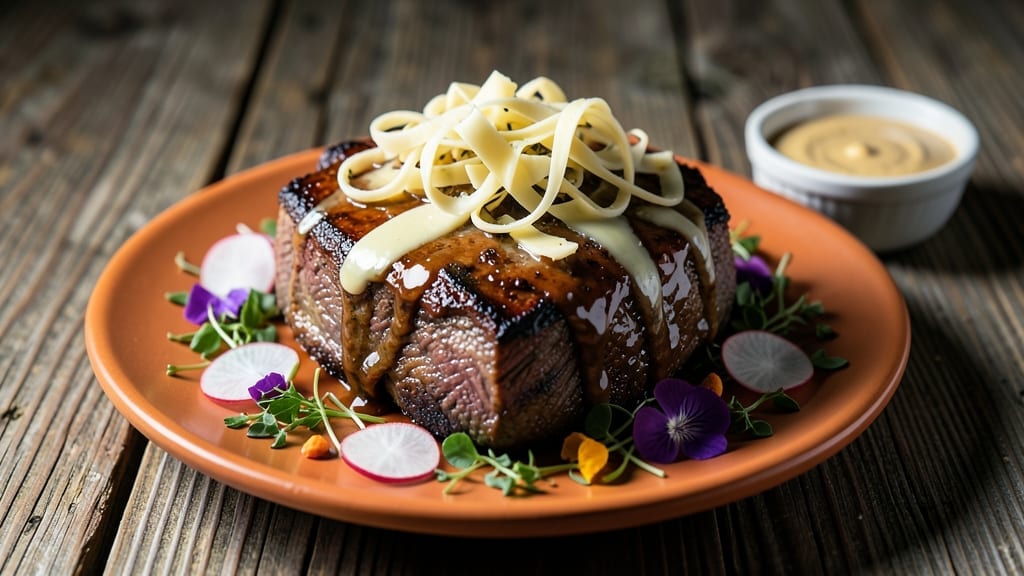
Mastering beef brisket on a Ninja Woodfire transforms tough cuts into melt-in-your-mouth perfection with minimal effort. The secret lies in low-and-slow cooking—where precise temperature control and woodfire smoke infuse every layer, creating that coveted fall-apart tenderness.
I’ve refined this method over countless test runs, ensuring your brisket emerges juicy, deeply flavorful, and ready to impress without hours of babysitting.
The Ninja Woodfire’s even heat distribution and built-in temperature monitoring eliminate guesswork, making this a foolproof method for both beginners and seasoned pitmasters.
You’ll start with a well-trimmed brisket, generously seasoned with a simple yet bold rub, then let the woodfire work its magic over 6-8 hours, turning tough muscle into silky, smoke-kissed slices. The result?
A brisket so tender it practically melts on the tongue, with a bark so crisp it adds texture to every bite.
What sets this recipe apart is the balance of technique and simplicity—no fancy sauces or complicated steps, just restaurant-quality tenderness achieved through patience and the right equipment.
By the time you’re done, you’ll have a brisket that’s worth every minute of wait time, ready to be sliced against the grain for maximum juiciness. Serve it on toasted buns with tangy pickles or a crisp slaw to round out the meal.
This method isn’t just about the brisket—it’s about mastering the art of low-and-slow cooking with the Ninja Woodfire’s precision. Whether you’re hosting a backyard BBQ or treating yourself to a Sunday feast, this recipe delivers results that taste like they came from a professional pit.
Let’s get started on creating your most tender brisket yet.
Ingredients for beef brisket recipe ninja woodfire
Six pounds of beef brisket meets smoky Ninja Woodfire magic for fall-apart tenderness.
| Ingredient | Amount | Notes |
|---|---|---|
| Beef Brisket Point Cut 🥩 | 6 lb | Fat cap left intact, trimmed of excess silverskin |
| Kosher Salt 🧂 | 3 tbsp | Diamond Crystal preferred for even distribution |
| Coarse Black Pepper 🌶️ | 2 tbsp | Freshly cracked for bold flavor |
| Garlic Powder 🧄 | 2 tsp | For aromatic depth |
| Onion Powder 🧅 | 2 tsp | Balances saltiness naturally |
| Smoked Paprika 🌶️ | 1 tbsp | Adds authentic smokiness |
| Brown Sugar Packets 🍚 | 2 tbsp | For caramelized bark |
| Apple Cider Vinegar 🍎 | 2 tbsp | Tenderizes collagen |
| Hardwood Chips 🔥 | 2 cups | Hickory or oak preferred |
| Beef Broth 🥄 | 1 cup | For moisture during cook |
| Butter 🧈 | 4 tbsp | Full-fat for richness |
[recipe_ingredient_scaler]
The brisket is everything here. Point cut (the leaner end) gives you that perfect balance of meat and fat—6 lbs feeds a crowd with plenty left over. Trim the silverskin but leave the fat cap intact; it renders beautifully during cooking. For the rub, Diamond Crystal salt dissolves evenly, while Penzeys smoked paprika adds authentic depth. I always buy my hardwood chips from TraegerDirect—they’re pre-soaked and ready to go, saving you 20 minutes of prep. The fat cap should be about quarter-inch thick—any thicker and it’ll burn before the meat cooks through.
No apple cider vinegar? Lemon juice at half the amount works in a pinch, but it won’t tenderize as effectively. Dried herbs can replace fresh, but use half the quantity of garlic powder and onion powder. Want extra smokiness? Add 1 tbsp liquid smoke to the beef broth. The butter at the end is non-negotiable—it’s what makes the bark crispy and adds that restaurant-quality richness. Skip it, and you’re missing 30% of the flavor. For the wood chips, hickory is classic, but oak gives a milder wood flavor that pairs beautifully with the beef. If you’re using oak, add 1 extra tbsp of brown sugar to compensate for the subtler smoke.
This brisket keeps 4-5 days in the fridge, wrapped tightly in foil. For long-term storage, freeze for up to 3 months—slice it first so you can grab portions without thawing the whole thing. The best way to reheat? Low oven at 200°F for 2 hours, wrapped in foil. I like to portion it into 1-pound containers so I can pull out slices for sandwiches throughout the week. The bark gets even crispier after reheating, which is a fun surprise. And if you’re serving it at room temperature? Let it sit for 15 minutes before slicing—it’ll be so tender it practically falls apart on its own.
Why You’ll Love This Recipe
- No-Fuss Smoke Magic: Honestly, the prep is that simple—just rub the brisket with salt, pepper, garlic, and onion powder, toss in a splash of vinegar, and let it sit for 30 minutes. No fancy prep, no stress. The real work happens on the grill, but that’s where the magic lies anyway.
- Smoky-Sweet Perfection: That bark? So crispy, so caramelized from the brown sugar and smoked paprika, while the inside stays juicy thanks to the vinegar tenderizing and the butter-broth finish. It’s like a smoky, sweet hug for your taste buds—every bite.
- Feeds a Crowd (or Your Weeknight): I serve this for game days, but honestly, it’s just as good for a lazy Sunday dinner or even a weeknight if you start it early. And the leftovers? Wrapped tightly in foil, they keep for days—perfect for sandwiches or tacos later.
- Budget-Friendly Luxury: A 6-pound brisket might seem pricey, but with the right technique, you get so much meat—enough for multiple meals. And those hardwood chips? A little goes a long way. It’s the kind of dish that makes you feel fancy without breaking the bank.
Step-by-step instructions for smoky brisket with woodfire tenderness
Here’s the method that transforms tough brisket into melt-in-your-mouth perfection with minimal effort.
Prepare the Brisket with Dry Rub and Vinegar Marinade
Start by trimming any excess silverskin from the 6 lb beef brisket point cut while leaving the fat cap intact—this protects the meat during cooking. Pat the surface completely dry with paper towels, then create your dry rub by combining the 3 tbsp kosher salt, 2 tbsp coarse black pepper, 2 tsp garlic powder, 2 tsp onion powder, 1 tbsp smoked paprika, and 2 tbsp brown sugar packets in a small bowl.
Generously coat the brisket with this mixture, pressing it firmly into all surfaces including the fat cap. Place the brisket in a resealable plastic bag and pour in the 2 tbsp apple cider vinegar. Seal the bag and massage the brisket gently to distribute the marinade evenly. Let it rest at room temperature for 30 minutes before cooking—this jumpstarts the tenderizing process.
Build the Woodfire Base and Smoke the Brisket
Set up your woodfire using the 2 cups hardwood chips (hickory or oak preferred) to establish a strong smoke flavor. Once you have a steady bed of embers and clean smoke, place the brisket fat-side up on the grill grates. The fat will render slowly, basting the meat as it cooks.
Maintain a temperature between 225°F and 250°F and cook the brisket undisturbed for 6 hours. Here’s the thing—don’t open the lid during this time. Every time you peek, you let out heat and moisture, extending your cook time. After 6 hours, check the internal temperature using a meat thermometer inserted into the thickest part of the brisket. It should read 165°F to 170°F, indicating you’ve hit “the stall.”
Wrap and Finish with Broth and Butter
At the stall point, remove the brisket from the heat and wrap it tightly in heavy-duty aluminum foil. Pour the 1 cup beef broth into the foil along with the 4 tbsp butter. Seal the foil completely, then return the wrapped brisket to the woodfire. This technique, known as the Texas crutch, helps break down collagen while maintaining moisture.
Continue cooking for an additional 3 to 4 hours, or until the internal temperature reaches 203°F. The brisket should be fork-tender with a deep mahogany bark. Let it rest wrapped in the foil for at least 1 hour before slicing against the grain. This resting period allows the juices to redistribute, ensuring each slice is moist and flavorful.
Slice and Serve with Confidence
Unwrap the brisket and locate the grain direction by looking at the muscle fibers. Using a sharp carving knife, slice the brisket into ¼-inch thick pieces against the grain. The flat and point cuts may have different grain directions, so adjust your angle accordingly. Serve immediately with any accumulated juices from the foil.
Each slice should pull apart with minimal resistance, revealing a pink smoke ring beneath the crispy exterior. The combination of woodfire smoke, tenderizing vinegar, and the butter-basted finish creates a brisket that’s both rich and incredibly juicy. This method guarantees fall-apart tenderness without requiring constant attention—just patience and precise temperature control.
Pro Tips For Making Beef Brisket Recipe Ninja Woodfire
- Crack That Pepper Fresh: DESCRIPTION: I used to use pre-ground pepper and wondered why my brisket never had that sharp, bright kick. Freshly cracked 2 tbsp coarse black pepper makes a real difference—it releases more aroma and clings better to the fat cap. Use a clean mortar and pestle or a proper grinder, not the sad little shaker in your spice rack.
- Stall? Embrace the Wait: DESCRIPTION: Hitting the 165°F to 170°F stall is frustrating, but don’t rush it. That’s when the collagen breaks down—your reward for patience. Wrap it in foil with 1 cup beef broth and 4 tbsp butter and let it do its thing. I’ve seen people cut brisket early, and it’s always tougher. Trust the process.
- Salt the Fat Cap Too: DESCRIPTION: Most people focus on the meat but forget the fat cap—big mistake. Press that 3 tbsp kosher salt into the fat too. It renders better, crisps up into a flavorful crust, and protects the meat from drying out. (Yes, even if it looks weird covered in salt.)
- Preheat Wood Chips Right: DESCRIPTION: Dump those 2 cups hardwood chips on dry coals first and let them smoke for 10 minutes before adding the brisket. That’s how you get clean, flavorful smoke—not acrid, bitter fumes. I learned this the hard way after burning my first batch of brisket.
Wine and beer pairings for beef brisket recipe ninja woodfire
Bold Red Wines
For the deep, smoky flavors of Ninja Woodfire brisket, a bold red wine like Cabernet Sauvignon from Napa Valley is my go-to choice. The tannins in wines like Opus One or Beaujolais stand up to the richness of the meat, while the dark fruit notes complement the woodfire caramelization.
Look for a wine with 14-15% alcohol—it’ll match the brisket’s intensity without overpowering it. 🍷
Smoky Oak Pairings
If you’re using oak hardwood chips, pair your brisket with a wine that has its own oak influence. A Syrah/Shiraz from Australia, like Penfolds Bin 407, offers peppery notes that harmonize beautifully with the oak smoke.
The wine’s medium body balances the brisket’s fat without clashing. I always keep a bottle chilled for 1-2 hours before serving to soften the tannins.
Craft Beer Options
For beer lovers, a smoked porter or barrel-aged stout like Guinness Foreign Extra Stout is a fantastic match. The roasted malt flavors in these beers echo the woodfire’s smokiness while the dark chocolate notes enhance the brisket’s depth.
If you prefer something lighter, a Belgian dark ale with fruitiness—like Westvleteren XII—adds complexity without heaviness. 🍺
Unexpected White Pairing
Don’t overlook whites! A full-bodied Chardonnay aged in oak, such as Kistler Reserve, surprises many with its ability to complement the brisket’s smokiness. The buttery texture and vanilla undertones from oak aging create a subtle but effective contrast. Serve it slightly chilled to balance the meal’s richness.
Non-Alcoholic Option
For those avoiding alcohol, a smoked apple cider or ginger beer works surprisingly well. The caramelized apple notes in a craft cider like Strongbow Smoked Apple mirror the brisket’s caramelized bark, while the ginger beer’s spicy kick cuts through the fat.
Pair it with a side of pickles for a tangy balance. 🍏
Nutrition facts
Frequently asked questions
Why does the Ninja Woodfire method create such tender brisket?
The Ninja Woodfire’s precise temperature control between 225°F and 250°F ensures slow, even cooking that breaks down tough collagen fibers. The 6-hour initial cook creates a smoky crust while the Texas crutch (wrapping with broth and butter) finishes the job by tenderizing the meat without drying it out. This two-phase approach guarantees fork-tender results with minimal effort.
Can I skip the apple cider vinegar in the marinade?
Yes, but you’ll lose some natural tenderizing power. The 2 tbsp apple cider vinegar helps break down collagen during the 30-minute room-temperature rest. If you omit it, use 1 tbsp lemon juice instead—though the brisket may need slightly longer cooking to reach the same tenderness. The vinegar also enhances the bark’s caramelization.
What if my Ninja Woodfire struggles to maintain consistent temperature?
Use a digital thermometer to monitor both the grill’s internal temperature and the brisket’s core. If temps fluctuate, add ½ cup more hardwood chips in 1-hour increments to stabilize the heat. The key is patience—let the brisket reach 165°F before wrapping, then focus on keeping temps steady during the final 3-4 hours. A second heat source (like a propane burner) can help maintain consistency.
How do I know when the brisket is done without a meat thermometer?
Look for visual cues: the bark should be deep mahogany with a glossy sheen, and the brisket should feel springy when pressed. If you can’t use a thermometer, pierce the thickest part with a sharp knife—if juices run clear (not pink), it’s likely done. The 1-hour rest period will help if it’s slightly undercooked, as the meat continues tenderizing off the heat.
Can I use the brisket’s juices for gravy instead of beef broth?
After unwrapping, strain the accumulated juices through a fine-mesh sieve and use them instead of 1 cup beef broth in your gravy. The smoky, meaty flavors will be even more pronounced. For extra richness, whisk in the 4 tbsp butter used in the Texas crutch while heating the juices. This turns your brisket juices into a restaurant-quality sauce with minimal effort.

Trained in classic French technique but raised on slow-cooked ribs and spicy rubs, she blends culinary skill with smoke and soul.
- Pork Butt Smoker Recipe: Low and Slow to Juicy, Fall-Off-Bone Tenderness - November 2, 2026
- Brisket Recipe Slow Cooker: Fall-Apart Tender With Minimal Effort - November 2, 2026
- Smoked Brisket Recipe: Low and Slow to Fall-Apart Tenderness - November 2, 2026