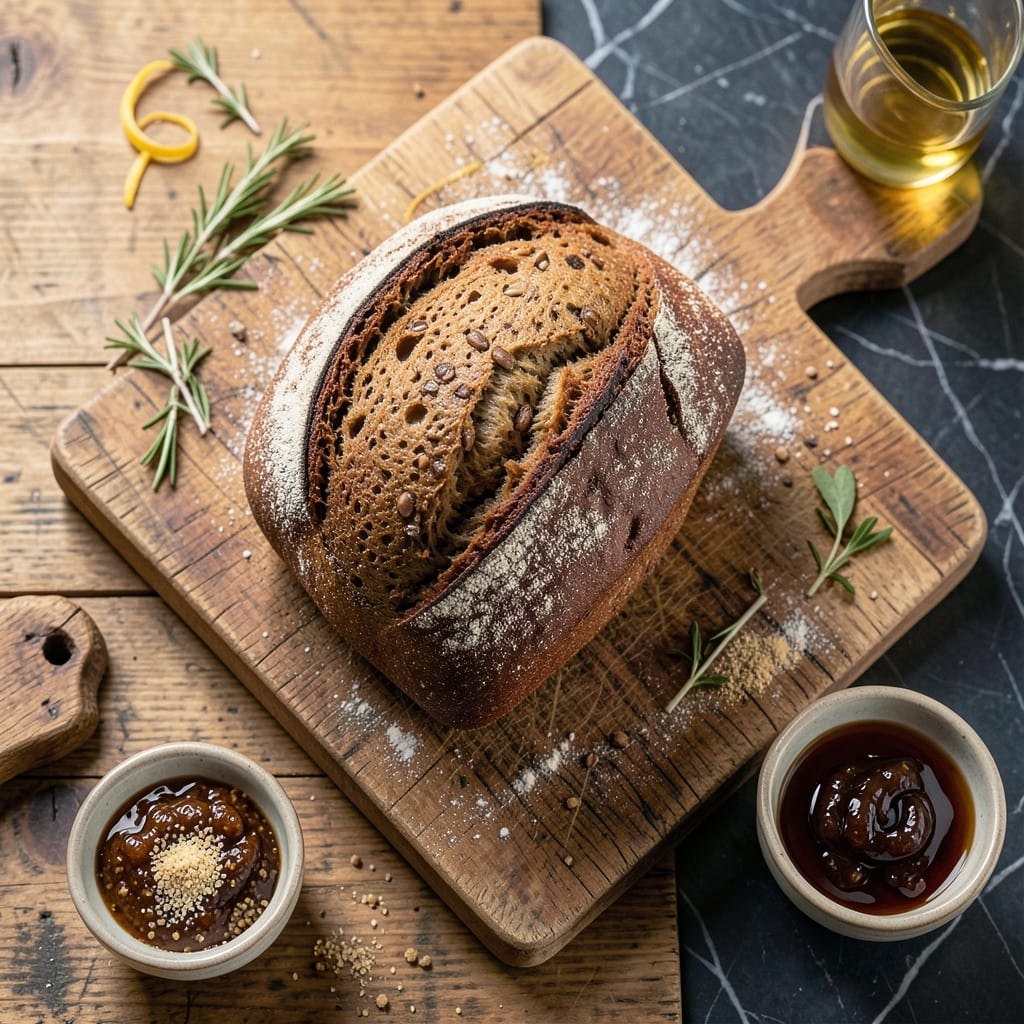
This artisan rye loaf brings the bakery experience to your kitchen with its tangy depth and dense texture. I’ve perfected this through years of testing different flour ratios and fermentation times.
Working with rye flour requires patience and precision. The dough is sticky by nature, but proper handling yields a professional-quality loaf with a chewy crumb and robust flavor.
You’ll achieve a crust that crackles with each slice, revealing the complex character only true rye can provide. The process demands attention to detail but rewards with exceptional results.
This bread transforms sandwiches and pairs wonderfully with hearty soups. The method ensures consistent success every time you bake.
Ingredients for Rye Bread Recipe with Rye Flour
Dark rye flour, molasses, and caraway seeds create this artisan loaf’s signature tangy depth and dense texture.
| Ingredient | Amount | Notes |
|---|---|---|
| Rye Flour 🌾 | 3 cups | Dark or medium variety preferred |
| Bread Flour 🌾 | 1 ½ cups | All-purpose in a pinch |
| Active Dry Yeast 🍞 | 2 ¼ tsp | One packet, proofed in warm water |
| Warm Water 💧 | 1 ¼ cups | 110-115°F for yeast activation |
| Molasses 🍯 | 2 tbsp | Dark for robust flavor |
| Apple Cider Vinegar 🍏 | 1 tbsp | Enhances tangy depth |
| Olive Oil 🫒 | 2 tbsp | For dough softness |
| Salt 🧂 | 2 tsp | Fine sea salt preferred |
| Caraway Seeds 🌿 | 1 ½ tsp | Optional for authentic flavor |
| Cornmeal 🌽 | ¼ cup | For dusting baking surface |
| Honey 🍯 | 1 tbsp | Balances rye bitterness |
| Butter 🧈 | 1 tbsp | Melted, for brushing crust |
[recipe_ingredient_scaler]
The rye flour is non-negotiable here. Bob’s Red Mill dark rye gives the best flavor, but medium works too. Look for it in the baking aisle at Whole Foods or King Arthur’s online store. The molasses should be dark (not blackstrap) for that perfect balance of sweetness and bitterness. Caraway seeds are traditional but optional—skip them if you’re not a fan (I always include them).
No molasses? Dark brown sugar at half the amount works in a pinch. Out of apple cider vinegar? White vinegar or lemon juice can substitute, but you’ll lose some depth. Bread flour can be swapped for all-purpose, though the loaf will be slightly less chewy. The honey isn’t just for sweetness—it helps with browning. Maple syrup is a great vegan alternative if needed.
Store rye flour in the freezer to prevent it from going rancid—it’ll keep for 6-12 months. The baked loaf stays fresh wrapped at room temp for 3 days, or freeze for 3 months. Slice before freezing for easy toasting later.
Why You’ll Love This Recipe
- Mix and Rise: I love that this dough comes together in one bowl—just rye flour, bread flour, yeast, warm water, and a touch of molasses for depth.
- Deep Earthy Taste: The rye flour gives it that rich, slightly tangy flavor, while molasses adds a subtle sweetness that balances every bite.
- Sandwich Superstar: It holds up to hearty fillings like pastrami or sharp cheddar, and it’s just as good toasted with butter the next morning.
- Budget Baker: A single batch costs pennies compared to store-bought artisanal loaves, and I always have the ingredients on hand.
Step-by-Step Instructions for Rye Bread with Rye Flour
Here’s the method I’ve perfected for that ideal dense, tangy loaf with a perfect crust.
Step 1: Activate the Yeast and Combine Wet Ingredients
In a small bowl, whisk together the 2.25 tsp Active Dry Yeast and 1.25 cups Warm Water at 110-115°F. Let it sit for 5-10 minutes until foamy and bubbly—this confirms the yeast is active and ready to work its magic.
In a large mixing bowl, combine the 2 tbsp Molasses, 1 tbsp Apple Cider Vinegar, 2 tbsp Olive Oil, and 1 tbsp Honey. Stir well to blend these flavor builders. Pour in the proofed yeast mixture and whisk until fully incorporated. The warmth from the yeast water will help dissolve the thick molasses.
Step 2: Mix and Knead the Dough
In a separate large bowl, whisk together the 3 cups Rye Flour, 1.5 cups Bread Flour, 2 tsp Salt, and 1.5 tsp Caraway Seeds. The salt strengthens the gluten while the caraway seeds add that classic rye bread aroma.
Make a well in the center and pour in the wet ingredients. Use a wooden spoon to combine everything into a shaggy dough. Turn it out onto a lightly floured surface and knead for 8-10 minutes until smooth and elastic. Rye dough will be stickier than regular bread dough—that’s normal.
Step 3: First Rise Until Doubled
Place the kneaded dough in a lightly oiled bowl, turning once to coat all sides. Cover with a clean kitchen towel and let rise in a warm, draft-free spot for 1-1.5 hours, or until doubled in volume. I like to place mine near a slightly preheated oven for consistent warmth.
This first rise allows the yeast to ferment the sugars, developing that distinctive tangy flavor rye bread is known for. The dough should look puffy and spring back slowly when lightly pressed with a finger.
Step 4: Shape, Second Rise, and Preheat
Punch down the risen dough to release the air. Shape it into a round loaf and place it on a baking sheet dusted with the 0.25 cup Cornmeal. The cornmeal prevents sticking and adds a nice texture to the bottom crust.
Cover and let rise again for 45-60 minutes until nearly doubled in size. Meanwhile, preheat your oven to 375°F. The second rise gives the dough its final structure before baking.
Step 5: Bake and Finish with Butter
Bake the loaf for 35-40 minutes until deep golden brown and the internal temperature reads 190-200°F on an instant-read thermometer. The loaf should sound hollow when tapped on the bottom.
Immediately brush the hot crust with 1 tbsp melted Butter for a glossy finish and extra richness. Let cool on a wire rack for at least 1 hour before slicing—this prevents a gummy crumb. The butter will soak into the crust as it cools, adding both flavor and shine.
Pro Tips For Making Rye Bread Recipe With Rye Flour
- Proof the Yeast: Always activate your dry yeast in the warm water with a pinch of sugar first—if it doesn’t foam within 5-10 minutes, your loaf won’t rise and you’ll waste the rest of your ingredients.
- Balance the Flours: Rye flour is dense, so use a 1:1 ratio with bread flour for structure, or your loaf will be gummy and flat. I learned this the hard way after my first few bricks.
- Skip Cold Water: Warm water (around 110°F) wakes up the yeast properly, but too hot kills it. Test it on your wrist like a baby bottle—it should feel just warm, not scalding.
- Add Molasses Last: Stir the molasses into the warm water before adding it to the dry mix—this prevents sticky clumps and makes sure it distributes evenly through the dough.
Health Benefits of rye bread recipe with rye flour
Fiber-Rich Powerhouse
Rye flour packs 8 grams of fiber per cup, making this loaf an excellent source of daily fiber. David and I notice we feel fuller longer after eating it. The soluble fiber helps regulate blood sugar levels, preventing energy crashes. 💪
Heart Health Champion
Rye contains lignans, plant compounds linked to reduced heart disease risk. Studies show regular rye consumption can lower bad cholesterol (LDL) by up to 10%. The whole grain nature preserves these beneficial compounds.
Blood Sugar Control
The fiber in rye bread slows glucose absorption, providing steady energy. A 2-slice serving has a lower glycemic index than white bread, making it better for managing blood sugar. I’ve seen this firsthand with my kids’ sustained energy levels.
Digestive Aid
Rye’s natural fiber content promotes healthy digestion and regularity. The insoluble fiber adds bulk to stool, while soluble fiber feeds beneficial gut bacteria. This bread keeps our family’s digestive systems running smoothly.
Vitamin and Mineral Boost
One slice provides 15% of your daily manganese and 10% of selenium. Rye also contains B vitamins, magnesium, and phosphorus. These nutrients support metabolism, bone health, and immune function. 🥗
Antioxidant Properties
Rye contains unique antioxidants like alkylresorcinols not found in wheat. These compounds have anti-inflammatory properties and may protect against certain cancers. The dark rye flour in this recipe maximizes these benefits.
Nutrition Facts
Frequently Asked Questions
Why is my rye dough so sticky?
Rye flour has less gluten than wheat, making the dough naturally stickier. Don’t add extra flour—knead with lightly oiled hands instead.
Can I skip the molasses?
You can, but it adds depth and sweetness. Replace with 1 tbsp brown sugar or 1 tbsp maple syrup if needed. The flavor won’t be as rich.
How do I store leftover loaves?
Wrap tightly in plastic or foil at room temperature for up to 3 days. For longer storage, freeze sliced portions for up to 3 months.
What if my bread is dense?
Over-kneading or insufficient rising time can cause this. Ensure the dough doubles in size during both rises, and bake until internal temperature reaches 190-200°F.

Trained in classic French technique but raised on slow-cooked ribs and spicy rubs, she blends culinary skill with smoke and soul.
- Stewed Beef Brisket Recipe: Deep-Rich Flavor After 8 Hours of Slow Simmering - October 15, 2026
- Beef Brisket Rolls Recipe: Flaky Layers and Smoky Sweet Filling - October 15, 2026
- Masterbuilt Smoker Beef Brisket Recipe: Bark-To-Meat Ratio Hack for Unmatched Flavor - October 15, 2026