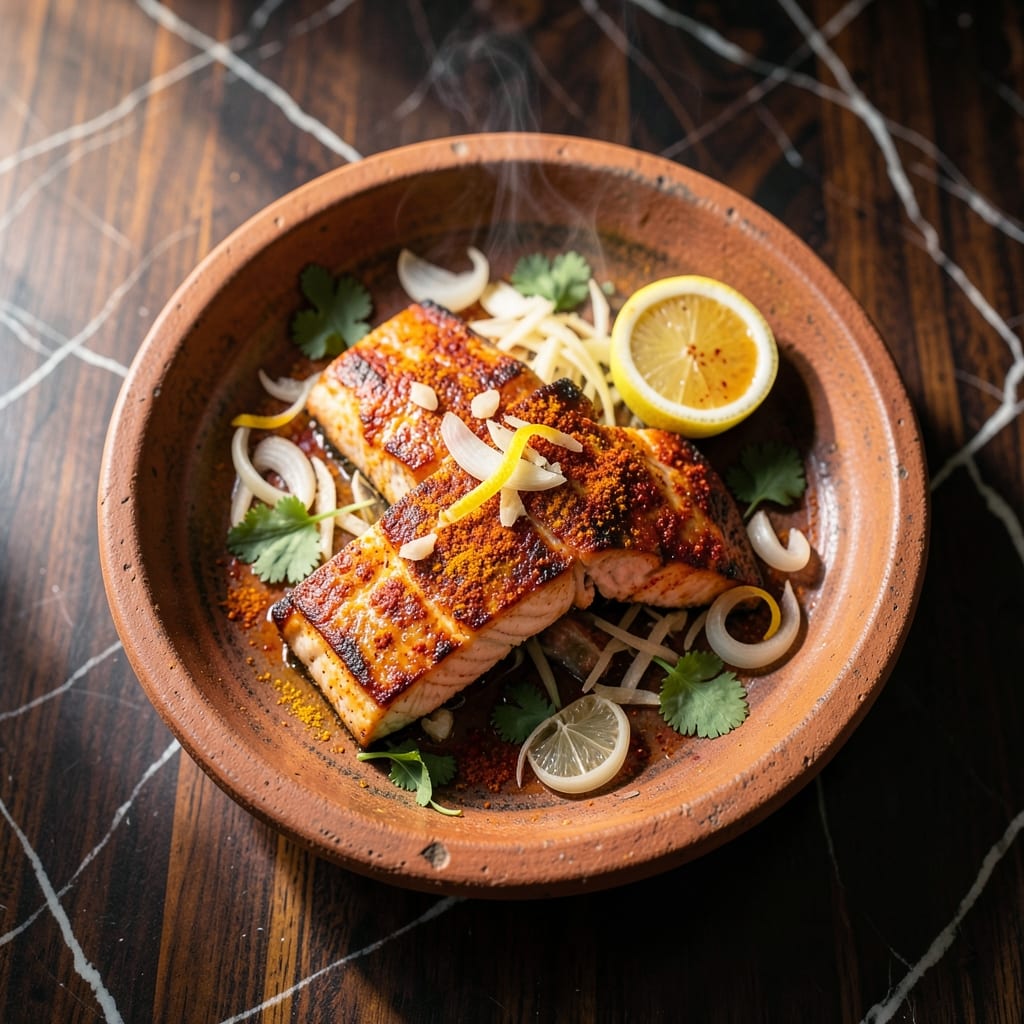
Kerala’s coastal flavors come alive in this salmon fry, where tender fish meets a fragrant blend of spices for crispy, golden perfection. The traditional mix of turmeric, chili, and coconut delivers an authentic taste that’s hard to resist.
I’ve simplified the method without compromising on texture or depth. A quick marinade infuses the salmon with bold flavors, while pan-frying ensures a shatteringly crispy exterior. The result is a dish that’s both rustic and refined.
Serve it with steamed rice or a cooling cucumber salad to balance the heat. The spices bloom beautifully, creating layers of warmth and aroma that define Kerala’s culinary spirit.
This recipe stays true to its roots while being approachable for any home cook.
Ingredients for Salmon Fry Recipe Kerala
Tender salmon meets bold Kerala spices for a dish with shatteringly crispy golden edges.
| Ingredient | Amount | Notes |
|---|---|---|
| Salmon Fillets 🐟 | 1 ½ lb | Skin-on, cut into 4 pieces |
| Turmeric Powder 🌿 | 1 tsp | Ground, for marinade color |
| Kashmiri Red Chili Powder 🌶️ | 2 tsp | Mild heat, vibrant color |
| Coriander Powder 🌿 | 1 tbsp | Ground, for earthy depth |
| Ground Cumin 🌿 | 1 tsp | Toasted if possible |
| Garlic Cloves 🧄 | 6 cloves | Minced for marinade |
| Fresh Ginger 🌱 | 1 tbsp | Peeled, finely grated |
| Fresh Green Chilies 🌶️ | 2 whole | Slit lengthwise, seeds removed |
| Curry Leaves 🍃 | ¼ cup | Fresh or dried, loosely packed |
| Unsweetened Coconut Flakes 🥥 | ½ cup | Toasted for coating |
| Rice Flour 🌾 | ½ cup | For crispy texture |
| Lemon Juice 🍋 | 2 tbsp | Freshly squeezed for acidity |
| Coconut Oil 🥥 | ½ cup | For pan-frying, high smoke point |
| Salt 🧂 | 1 tsp | Sea salt preferred |
| Black Pepper 🌶️ | ½ tsp | Freshly ground preferred |
[recipe_ingredient_scaler]
The salmon quality is non-negotiable here. Wild-caught fillets with skin on hold up best to frying. Look for bright, vibrant firm flesh at your fishmonger or the seafood counter at Whole Foods. The coconut flakes should be unsweetened—Bob’s Red Mill is a reliable brand. Curry leaves are essential for authenticity; find them fresh or dried at Indian grocery stores (the good stuff, not the pre-packaged kind).
No Kashmiri chili powder? Half cayenne and half paprika mimics the color and mild heat. Substitute fresh ginger paste at one-third the amount if grating feels tedious. Green chilies can be swapped for serranos or jalapeños (adjust seeds for heat). The rice flour is key for crispiness, but all-purpose flour works in a pinch. For a gluten-free option, cornstarch is a solid alternative.
Marinate the salmon for 30 minutes max—longer and the acidity starts to cook the fish. Leftovers keep in the fridge for 2 days (reheat gently in a pan). For best flavor, serve immediately with a squeeze of lemon. Coconut oil can be stored at room temperature for 6 months.
Why You’ll Love This Recipe
- One Pan Magic: I just toss the salmon with turmeric, chili powder, and cumin, then fry it up—no fancy techniques, no mess.
- Spice Heaven: The Kashmiri chili and coriander give it that warm, earthy Kerala kick I crave every time.
- Weeknight Hero: Honestly, it’s my go-to for busy evenings—ready faster than takeout and way more satisfying.
- Leftovers Win: Between us, the flavors taste even better the next day tucked into a roti or over rice.
Step-by-Step Instructions for Salmon Fry Kerala
Master this method for authentic coastal flavors with perfectly crispy edges.
Step 1: Marinate the Salmon Fillets
In a mixing bowl, combine the 1.5 lb Salmon Fillets with 1 tsp Turmeric Powder, 2 tsp Kashmiri Red Chili Powder, 1 tbsp Coriander Powder, 1 tsp Ground Cumin, 6 cloves Garlic Cloves (minced), 1 tbsp Fresh Ginger (grated), and 2 tbsp Lemon Juice. The acidity from the lemon helps tenderize the fish while the spices form a vibrant coating.
Add 1 tsp Salt and 0.5 tsp Black Pepper, then gently massage the mixture into the fillets, ensuring even coverage. Let the salmon marinate for 20-25 minutes at room temperature—this allows the flavors to penetrate deeply while the turmeric imparts its signature golden hue.
Step 2: Prepare the Coating Mixture
In a shallow dish, combine 0.5 cup Rice Flour and 0.5 cup Unsweetened Coconut Flakes. The rice flour creates an ultra-crispy texture, while the coconut flakes add a subtle nutty flavor and golden color characteristic of Kerala-style frying.
For added aroma, toss in 0.25 cup Curry Leaves (lightly crushed to release their oils) and the 2 whole Fresh Green Chilies (slit lengthwise). This mixture will form a flavorful crust when the salmon hits the hot oil.
Step 3: Coat and Pan-Fry the Salmon
Heat 0.5 cup Coconut Oil in a large skillet over medium-high heat until shimmering—this high smoke point oil is ideal for achieving that perfect sear. While the oil heats, dredge each marinated salmon fillet in the rice flour-coconut mixture, pressing gently to adhere.
Carefully place the coated fillets in the hot oil (skin-side down if using skin-on fillets). Fry for 4-5 minutes per side until the coating turns deep golden brown and the salmon flakes easily with a fork. Avoid overcrowding the pan to maintain oil temperature and ensure even cooking.
Step 4: Drain and Rest Before Serving
Transfer the fried salmon to a paper towel-lined plate to drain excess oil. The crust should be audibly crispy when lifted from the oil, with the curry leaves and coconut flakes forming a textured, aromatic layer.
Let the salmon rest for 2-3 minutes before serving. This brief rest allows the juices to redistribute, ensuring the fish remains moist beneath its crispy exterior. Serve immediately while hot, accompanied by lemon wedges for added brightness.
Pro Tips For Making Salmon Fry Recipe Kerala
- Dry the Fillets: Pat the salmon fillets completely dry with a paper towel before applying the spice mix—I learned this the hard way after my first batch turned out soggy instead of crisp.
- Toast the Spices: Lightly dry-roast the coriander powder and ground cumin in a pan for 30 seconds before mixing with the other spices to wake up their flavors.
- Skip Overcrowding: Fry the salmon in batches if needed—crowding the pan steams the fish instead of frying it, and you’ll lose that golden crust.
- Rest Before Serving: Let the fried salmon rest for 3-4 minutes on a wire rack after cooking so it stays crispy instead of turning limp from trapped steam.
Regional Styles of This salmon fry recipe kerala
Central Kerala Style
In the heart of Kerala, this dish often features fresh karimeen (pearl spot fish) instead of salmon. The marinade includes shallots for subtle sweetness, and the coating might use semolina instead of rice flour. I love how the fish stays juicy despite the crispy exterior. 🌿
Northern Malabar
Here, they amp up the heat with extra green chilies and add fennel seeds to the marinade for an anise-like aroma. The coconut coating is thicker, almost like a crust. I noticed this version pairs beautifully with tamarind rice.
Southern Travancore
This style uses coconut milk in the marinade for extra tenderness. The fish is shallow-fried in ghee for a richer flavor. I tried this once and couldn’t get enough of the nutty, buttery combination.
Coastal Kochi
The port city’s version incorporates vinegar in the marinade for tang. They also add onion slices to the coating mixture. The result is a perfect balance of sour, spicy, and crispy. I always make extra of this one! 🥥
High Range Idukki
In the mountains, they use dried spices more liberally. The salmon gets a longer marination of up to 2 hours to develop deeper flavors. I find this version especially comforting during cooler weather.
Traditional Christian
This community’s version often includes cinnamon and cloves in the spice mix. The fish is fried in coconut oil with mustard seeds crackling in it first. The aroma alone will make your mouth water. ✨
Nutrition Facts
Frequently Asked Questions
Can I use another fish instead of salmon?
Try firm white fish like cod or halibut for similar results. Pearl spot fish (karimeen) is traditional in Kerala.
How do I make it less spicy?
Reduce the chili powder to 1 tsp and remove seeds from green chilies. Add a pinch of sugar to balance flavors.
What’s the best oil for frying?
Coconut oil is traditional and gives authentic flavor. For a neutral taste, use vegetable or canola oil with a high smoke point.
Can I bake it instead of frying?
Yes, bake at 400°F for 12-15 minutes on a greased rack for crispiness. Flip halfway for even browning.

Trained in classic French technique but raised on slow-cooked ribs and spicy rubs, she blends culinary skill with smoke and soul.
- Best Smoked Oxtail Recipe: Deep-Rich Flavor After Low-and-Slow Cooking - October 14, 2026
- Pit Boss Smoked Prime Rib Roast Recipe: Bark-to-Bone Crispness in 4 Hours - October 14, 2026
- Smoked Tuna Steak Recipe: Seared Crust Meets Silky Centers - October 14, 2026