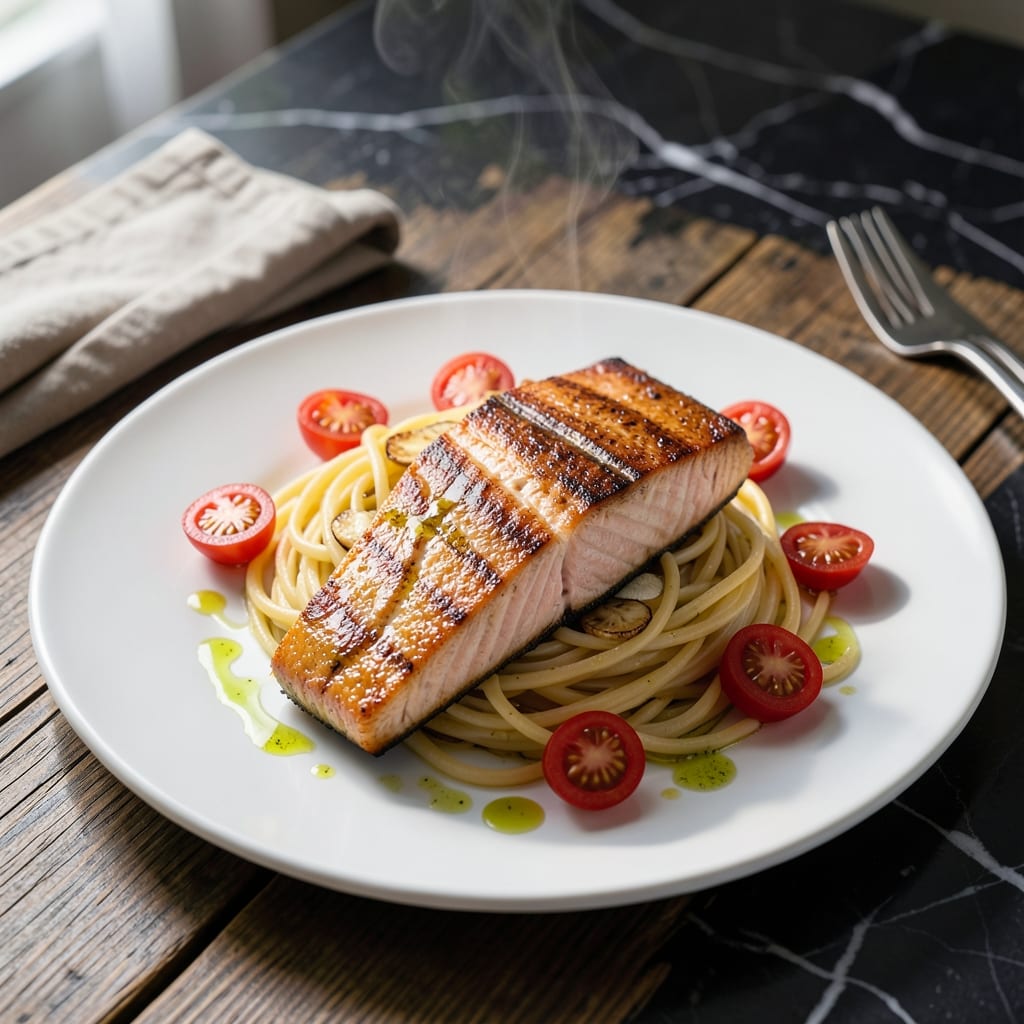
This Mediterranean-inspired dish brings together tender salmon, al dente pasta, and bright tomato flavors in a single pot. I developed this recipe to maximize flavor while minimizing kitchen cleanup and fuss.
The secret lies in cooking the salmon first to infuse the oil with its rich flavor, then using that same oil to build the tomato-based sauce. This technique creates a cohesive dish where every component complements the others.
What you get is a restaurant-quality meal with flaky salmon pieces, perfectly cooked pasta, and a light tomato sauce that ties everything together. The one-pot method ensures all the flavors meld beautifully.
It’s the kind of dish that feels special but comes together with minimal effort. Here’s how to make it.
Ingredients for Salmon Pasta Recipe Tomato
Tender salmon, bright tomatoes, and pasta combine in this Mediterranean one-pot dish.
| Ingredient | Amount | Notes |
|---|---|---|
| Salmon Fillets 🐟 | 1 ½ lb | Skin-on, wild-caught preferred |
| Linguine Pasta 🍝 | 12 oz | Cooked al dente |
| Cherry Tomatoes 🍅 | 2 cups | Halved for sauce |
| Garlic Cloves 🧄 | 4 cloves | Minced for sauce |
| Extra-Virgin Olive Oil 🫒 | ½ cup | For cooking and sauce |
| White Wine 🍷 | ½ cup | Dry variety preferred |
| Vegetable Broth 🥣 | 1 cup | Low-sodium preferred |
| Fresh Basil Leaves 🌿 | ½ cup | Chopped, for garnish |
| Lemon 🍋 | 1 whole | Zested and juiced |
| Red Pepper Flakes 🌶️ | ½ tsp | Adjust for spice preference |
| Salt 🧂 | 1 tsp | Kosher or sea salt |
| Black Pepper 🌶️ | ½ tsp | Freshly ground preferred |
| Parmesan Cheese 🧀 | ½ cup | Freshly grated for serving |
| Capers 🫒 | 2 tbsp | Drained, for briny flavor |
[recipe_ingredient_scaler]
The salmon should be fresh and skin-on for best texture. Whole Foods or a trusted fishmonger will have quality wild-caught fillets. Look for vibrant pink color and no fishy odor. The linguine should be high-quality Italian—De Cecco or Barilla hold up well to the one-pot method. Cherry tomatoes are ideal for their sweetness and ability to burst into a light sauce.
No white wine? Substitute with extra vegetable broth plus 1 tbsp lemon juice. Fresh basil is best but dried basil at one-third the amount works in a pinch. For a stronger tomato flavor, add 1 tbsp tomato paste with the garlic. Capers can be replaced with chopped green olives if needed. The Parmesan can be omitted for a dairy-free version.
This dish tastes best fresh but leftovers keep for 2-3 days in the fridge. Reheat gently to avoid overcooking the salmon. The sauce may thicken—add a splash of broth when reheating. Freezing is not recommended as the salmon texture suffers.
Why You’ll Love This Recipe
- One Pan Wonder: I love that this comes together in a single skillet—linguine cooks while the salmon and tomatoes blister in garlic oil.
- Burst of Flavor: Honestly, the sweet cherry tomatoes and rich salmon make every bite taste like a restaurant dish.
- Weeknight Hero: Between us, it’s my go-to for busy evenings when I need something fancy but fast.
- Leftovers Win: The flavors meld overnight, so yesterday’s dinner tastes even better for lunch the next day.
Step-by-Step Instructions for Salmon Pasta with Tomato
This one-pot method delivers restaurant-quality results with minimal cleanup.
Step 1: Sear the Salmon Fillets
Heat 2 tablespoons of the extra-virgin olive oil in a large, deep skillet over medium-high heat. While it heats, pat the salmon fillets dry with paper towels and season both sides with ½ teaspoon of the salt and ¼ teaspoon of the black pepper.
Place the salmon fillets skin-side up in the hot oil. Sear undisturbed for 4-5 minutes until the bottom develops a golden-brown crust and the edges begin to turn opaque. Carefully flip and sear for another 2-3 minutes until just cooked through. Remove to a plate and set aside.
Step 2: Build the Tomato and Wine Sauce Base
In the same skillet, reduce heat to medium. Add the remaining extra-virgin olive oil if needed, then add the minced garlic cloves and red pepper flakes. Sauté for 30 seconds until the garlic becomes fragrant but not browned.
Add the halved cherry tomatoes and capers to the skillet. Cook for 3-4 minutes, stirring occasionally, until the tomatoes begin to soften and release their juices. Pour in the white wine and vegetable broth, then bring to a gentle simmer.
Step 3: Cook the Linguine in the Sauce
Add the linguine pasta to the skillet, ensuring it’s mostly submerged in the liquid. If needed, add a splash of water to cover. Cook for 8-10 minutes, stirring frequently, until the pasta is al dente and has absorbed most of the liquid.
The pasta should be tender with a slight bite, and the sauce should have thickened enough to coat the strands. If the mixture seems dry, add a small amount of water and continue cooking until the pasta is done.
Step 4: Finish with Lemon, Basil, and Salmon
Stir in the juice and zest of the lemon, then gently fold in the fresh basil leaves. Taste and adjust seasoning with the remaining ½ teaspoon of salt and ¼ teaspoon of black pepper if needed.
Return the salmon fillets to the skillet, nestling them into the pasta. Cover and let warm through for 1-2 minutes. The salmon should flake easily with a fork, and the pasta should be perfectly coated in the vibrant tomato-wine sauce.
Step 5: Serve with Parmesan
Divide the pasta and salmon among serving plates. Top with freshly grated parmesan cheese, ensuring each portion gets an even sprinkle. The parmesan should melt slightly from the heat of the dish, adding a rich, savory finish.
Garnish with additional fresh basil leaves if desired. Serve immediately while hot, with any remaining lemon wedges on the side for a bright, citrusy accent.
Pro Tips For Making Salmon Pasta Recipe Tomato
- Skin Salmon First: Leave the skin on the fillets while cooking to keep them from falling apart in the pan—I learned this the hard way after my salmon turned to mush in the pasta.
- Blister the Tomatoes: Toss the cherry tomatoes in hot oil for 3-4 minutes until their skins split; it releases their juices and makes a quick, flavorful sauce base.
- Undercook the Pasta: Pull the linguine 1 minute early and finish it in the sauce so it soaks up the tomato and olive oil flavors instead of sitting dry.
- Warm the Oil: Heat the olive oil until it shimmers before adding garlic—after burning three batches, I finally figured out that cold oil makes garlic bitter.
Troubleshooting This Dish
Salmon Overcooks
If your salmon turns out dry and flaky, it likely cooked too long. Remember, it continues cooking after you remove it from the skillet. Pull it when it reaches 130-135°F internal temperature—it’ll finish to 145°F while resting. 🌡️
Pasta Sticks Together
Stir the linguine frequently while it cooks in the sauce. If it’s clumping, add a splash of hot water or broth to loosen. Use tongs to separate strands gently. I find De Cecco linguine resists sticking better than others.
Sauce Too Thin
If your tomato sauce is watery, simmer uncovered for 2-3 minutes before adding pasta. The liquid should reduce slightly and coat the back of a spoon. If needed, mix 1 tsp cornstarch with cold water and stir in at the end.
Tomatoes Won’t Burst
Cherry tomatoes need time to soften. If they stay firm after 4 minutes, cover the skillet for 1-2 minutes to trap steam. Alternatively, lightly crush a few with your spoon to release their juices and jumpstart the process.
Salmon Skin Sticks
Ensure your skillet is very hot and the salmon skin is completely dry before searing. Don’t move the fillets for the first 4 minutes—this builds the crust that prevents sticking. I swear by my cast-iron skillet for this. 💡
Bland Flavor
Taste as you go and adjust seasoning. If the dish lacks depth, add a pinch more salt, a squeeze of lemon juice, or a dash of red pepper flakes. The capers and Parmesan add saltiness, so balance with acid or heat.
Nutrition Facts
Frequently Asked Questions
Can I use canned tomatoes instead of fresh?
Yes, substitute 1 can (14 oz) of diced tomatoes (drained) for the cherry tomatoes. The flavor will be slightly different but still delicious.
What’s the best pasta shape for this dish?
Linguine or spaghetti work best to twirl with the salmon and sauce. Penne or fusilli are good alternatives if you prefer a heartier bite.
How do I prevent the salmon from breaking apart?
Use a fish spatula to flip the fillets, and handle them gently. Cooking skin-side down first helps hold the fillets together.
Can I make this dish ahead of time?
It’s best served fresh, but you can prep ingredients in advance. Cook the pasta and salmon just before serving for the best texture.

Trained in classic French technique but raised on slow-cooked ribs and spicy rubs, she blends culinary skill with smoke and soul.
- Smoked Teriyaki Beef Jerky Recipe: Umami-Deep Flavor in Every Chewy Bite - October 15, 2026
- Stewed Beef Brisket Recipe: Deep-Rich Flavor After 8 Hours of Slow Simmering - October 15, 2026
- Beef Brisket Rolls Recipe: Flaky Layers and Smoky Sweet Filling - October 15, 2026