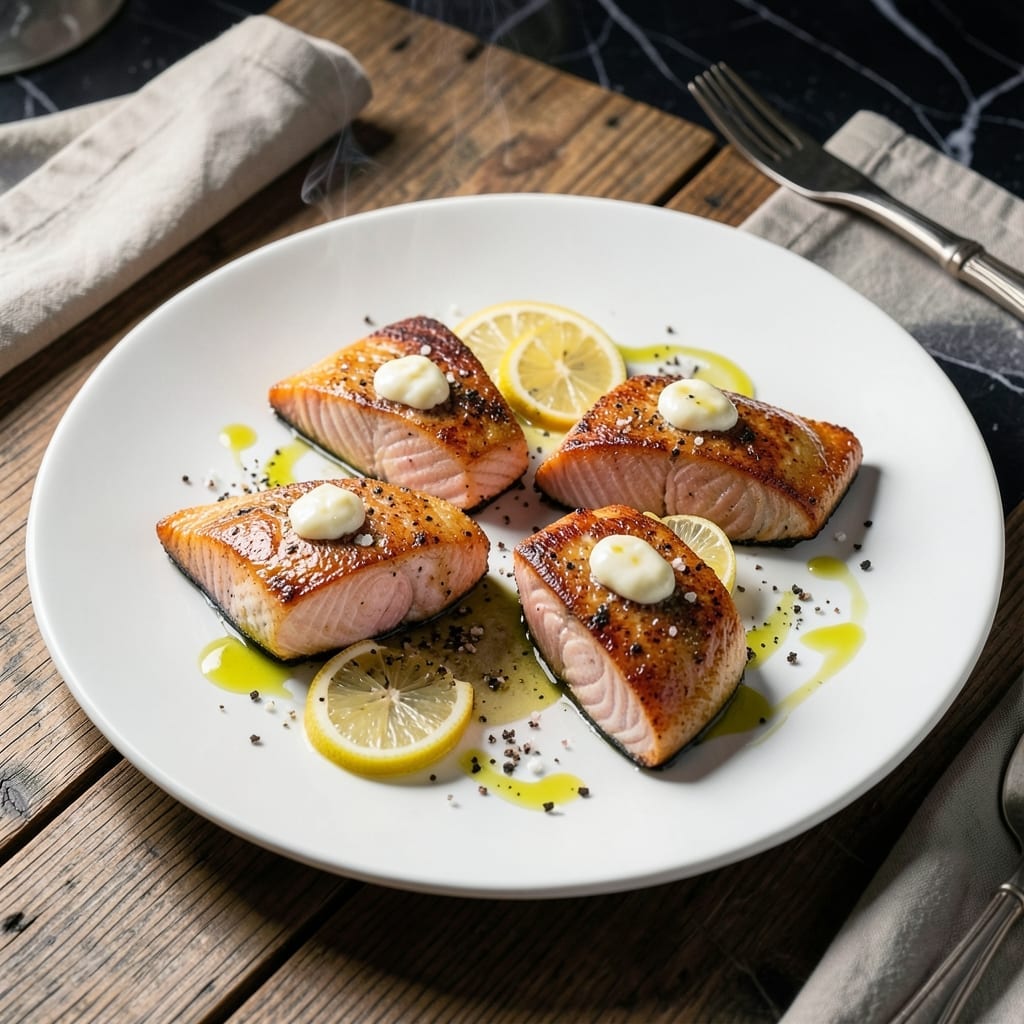
Mastering seared salmon at home is simpler than you think. The key lies in achieving crispy skin while keeping the flesh flaky and tender.
I developed this method after years of trial and error, testing different home kitchens to perfect the balance. The skin renders slowly in a hot pan, creating that coveted crunch without overcooking the delicate fish.
What emerges is a fillet with shatteringly crispy skin and moist, flaky interior. The technique works with any cut, from center-cut to tail pieces, for consistent results every time.
This approach transforms weeknight cooking into something special. The process is precise but accessible, delivering restaurant-quality salmon with minimal effort.
Ingredients for Salmon Recipe Seared
Ten ingredients deliver restaurant-quality seared salmon with crispy skin and flaky flesh every time.
| Ingredient | Amount | Notes |
|---|---|---|
| Salmon Fillets 🐟 | 4 whole | Skin-on, center-cut preferred |
| Kosher Salt 🧂 | 1 ½ tsp | Diamond Crystal preferred |
| Freshly Ground Black Pepper 🌶️ | ½ tsp | Coarse grind recommended |
| Olive Oil 🫒 | 3 tbsp | High smoke point, neutral flavor |
| Unsalted Butter 🧈 | 2 tbsp | European-style preferred |
| Fresh Lemon 🍋 | 1 whole | Zested and juiced |
| Garlic Cloves 🧄 | 3 cloves | Minced finely |
| Fresh Dill 🌿 | ¼ cup | Chopped, stems removed |
| Fresh Parsley 🍃 | ¼ cup | Chopped, for garnish |
| Shallot 🧅 | 1 whole | Finely diced |
| Dry White Wine 🍷 | ¼ cup | Sauvignon Blanc or Pinot Grigio |
[recipe_ingredient_scaler]
The salmon quality is paramount. Wild-caught fillets from Whole Foods or Costco offer the best balance of flavor and texture. Look for skin-on, center-cut pieces with vibrant color and no fishy odor. European-style butter (like Plugrá) has higher fat content, which prevents burning during searing. The olive oil should have a high smoke point—avocado oil works well too if you prefer a neutral taste.
No white wine? Substitute chicken stock with a splash of lemon juice. Fresh herbs are ideal, but dried at one-third the amount works in a pinch (skip the stems if using dried). The dill can be replaced with tarragon if you prefer a slightly sweeter note. For the lemon, bottled juice works but fresh is exponentially better—zest it first for maximum flavor extraction.
Cook salmon the same day you buy it for optimal freshness. Leftovers keep 2-3 days in the fridge—reheat gently to preserve moisture. The butter and herbs can be prepped 1 day ahead. Always bring salmon to room temperature before cooking for even doneness.
Why You’ll Love This Recipe
- Five Ingredient Magic: That’s it—salmon, salt, pepper, olive oil, butter. No grocery store scavenger hunt required.
- Crispy Outside, Silky Inside: The hot oil sears the fillet fast, locking in that buttery center while the edges turn golden.
- Weeknight Hero: Honestly, I’ve served this for Tuesday dinner and weekend guests—no one knows the difference.
- Leftover Luxury: Cold the next day, flaked over salad or toast, it’s even better. Between us, I make extra on purpose.
Step-by-Step Instructions for Seared Salmon
Master these techniques for restaurant-quality results with crisp skin and tender flesh.
Step 1: Season and Prepare the Salmon Fillets
Pat the 4 whole Salmon Fillets completely dry with paper towels—this is critical for achieving crispy skin. Season both sides evenly with the 1.5 tsp Kosher Salt and 0.5 tsp Freshly Ground Black Pepper, pressing gently to adhere.
Let the seasoned fillets sit at room temperature for 10-15 minutes while you prepare the remaining ingredients. This step ensures even cooking and prevents the fish from seizing up when it hits the hot pan.
Step 2: Sear the Salmon Skin-Side Down
Heat 2 tbsp of the 3 tbsp Olive Oil in a large skillet over medium-high heat until it shimmers but doesn’t smoke. Place the fillets skin-side down in the pan, pressing gently with a fish spatula for the first 10 seconds to prevent curling.
Cook undisturbed for 4-5 minutes until the skin is deep golden brown and crispy. The flesh should appear opaque about ⅔ of the way up the sides. Resist the urge to move the fillets—this builds the crispy crust.
Step 3: Flip and Baste with Aromatics
Flip the fillets and immediately add the remaining 1 tbsp Olive Oil, 2 tbsp Unsalted Butter, minced 3 cloves Garlic Cloves, and finely diced 1 whole Shallot to the pan. Tilt the skillet slightly and baste the fillets with the foaming butter mixture for 1-2 minutes.
Add the 0.25 cup Fresh Dill and cook for another 30 seconds until fragrant. The salmon is done when it reaches an internal temperature of 125-130°F and flakes easily with a fork.
Step 4: Deglaze and Finish the Sauce
Transfer the salmon to a warm plate. Pour the 0.25 cup Dry White Wine into the hot skillet and scrape up all the browned bits with a wooden spoon. Let the liquid reduce by half, about 1-2 minutes.
Squeeze the juice from the 1 whole Fresh Lemon into the pan and stir to combine. The sauce should be slightly thickened and glossy, coating the back of a spoon.
Step 5: Plate and Garnish
Spoon the pan sauce over the salmon fillets. Garnish with the 0.25 cup Fresh Parsley and any remaining Fresh Dill. The skin should remain crisp while the flesh stays flaky and moist.
Serve immediately while hot. The contrast between the crispy skin and tender interior is what makes this dish exceptional. Each fillet should have a beautiful golden crust and be perfectly cooked through.
Pro Tips For Making Salmon Recipe Seared
- Dry the Fillets: Pat the salmon fillets very dry with paper towels before seasoning—water is the enemy of a good sear. I learned this the hard way after too many soggy, steamed results.
- Start Hot, Finish Low: Crank the pan to high for the first 2 minutes to get that crisp crust, then drop to medium-low to cook through without burning the butter.
- Skip Cold Salmon: Let the fillets sit at room temperature for 10-15 minutes before cooking. Sounds weird, but it works—prevents that dreaded raw center with overcooked edges.
- Baste with Butter: Tilt the pan and spoon the foaming butter over the salmon repeatedly in the last minute. About 2 tablespoons—enough to coat and add that rich, nutty flavor.
Dietary Considerations for These Flavors
Pescatarian Friendly
This dish is naturally pescatarian, making it perfect for those who include fish in their diet. Salmon provides excellent omega-3 fatty acids without any meat. I love how it fits seamlessly into plant-forward lifestyles too. 💪
Gluten-Free Option
The recipe is inherently gluten-free as written. Just verify your white wine is labeled gluten-free, as some brands use wheat-based fining agents. I always check the label to be safe.
Dairy-Free Adaptation
Simply swap the 2 tbsp Unsalted Butter for olive oil or a dairy-free alternative like Miyoko’s Cultured Butter. The flavor will be just as rich, and the skin will still crisp beautifully.
Low-Carb Perfection
With zero carbs in the main ingredients, this fits perfectly into keto or low-carb diets. The protein and healthy fats keep you satisfied for hours. I often serve it with roasted asparagus for a complete meal.
Allergy Considerations
Contains fish and dairy (from butter). For shellfish allergies, ensure your salmon isn’t processed in facilities handling shellfish. Always check with your fishmonger about cross-contamination. 💡
Sodium Control
To reduce sodium, use low-sodium salt or cut the 1.5 tsp Kosher Salt by half. The lemon and herbs will still provide plenty of flavor. I find 1 tsp is often enough for my taste.
Nutrition Facts
Frequently Asked Questions
What’s the best pan for searing?
Use a heavy stainless steel or cast iron skillet for even heat distribution. Avoid nonstick as it prevents proper crisping. A 12-inch pan works best for 4 fillets without crowding.
How do I prevent the skin from sticking?
Ensure the pan is very hot before adding fish and don’t move the fillets for 4-5 minutes. Press gently with a spatula initially to prevent curling. Dry skin is key—pat thoroughly before seasoning.
Can I use frozen salmon?
Yes, but thaw completely in the fridge overnight first. Pat extremely dry before cooking. Frozen salmon releases more moisture, so high heat is critical for crisp skin.
How can I tell when it’s done?
The flesh should reach 125-130°F internally and flake easily with a fork. Look for opaque color up the sides—about ⅔ of the way through before flipping. Overcooking dries it out.

Trained in classic French technique but raised on slow-cooked ribs and spicy rubs, she blends culinary skill with smoke and soul.
- Stewed Beef Brisket Recipe: Deep-Rich Flavor After 8 Hours of Slow Simmering - October 15, 2026
- Beef Brisket Rolls Recipe: Flaky Layers and Smoky Sweet Filling - October 15, 2026
- Masterbuilt Smoker Beef Brisket Recipe: Bark-To-Meat Ratio Hack for Unmatched Flavor - October 15, 2026