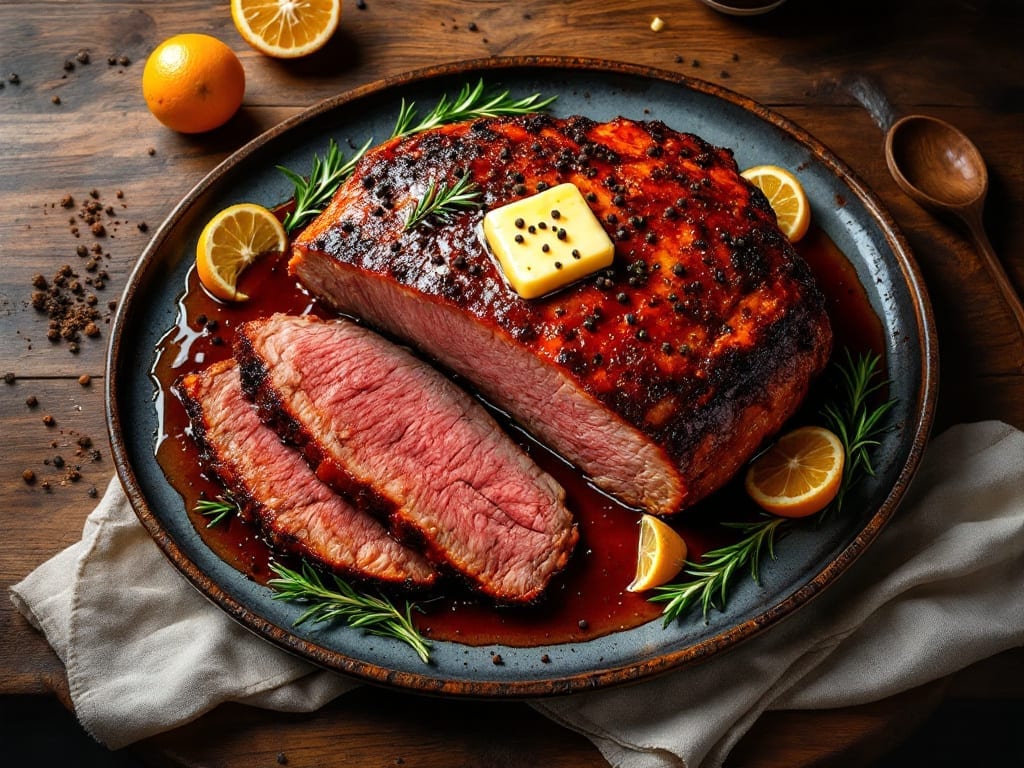
Mastering a smoked Boston butt roast transforms weekend barbecues into showstopping centerpieces with deep molasses-infused flavor and melt-in-your-mouth tenderness. This low-and-slow method builds a smoky crust while keeping the meat juicy, and the key lies in precise temperature control and proper wood selection.
I perfected this recipe after years of trial and error—no more dry, overcooked pork that falls apart at the first slice.
The process begins with a simple brine to enhance moisture retention, followed by a dry rub that balances sweet and savory notes. Using hickory or cherry wood chips creates that signature smoky aroma while the molasses adds a subtle caramel depth that lingers in every bite.
The secret to success is patience: cooking at 225°F until the internal temperature reaches 203°F ensures that pull-apart texture without sacrificing flavor.
Once pulled from the smoker, the roast rests for 30 minutes before slicing—this critical step locks in juices and prevents dryness. The result is a perfectly balanced dish with a dark, flavorful bark and tender meat that practically dissolves on your tongue.
Serve with classic sides like tangy coleslaw or buttery cornbread to complete the meal.
This recipe delivers restaurant-quality results at home, making it ideal for gatherings or special occasions. The method is repeatable, and the flavor profile is unforgettable—once you try it, you’ll never go back to store-bought again.
Ingredients for smoked boston butt roast
Eight pounds of pork shoulder and a handful of pantry staples—this is your smoky masterpiece.
| Ingredient | Amount | Notes |
|---|---|---|
| Boneless Boston Butt Pork Shoulder 🥩 | 8 lb | Freshly trimmed for even cooking |
| Kosher Salt 🧂 | ½ cup | Diamond Crystal preferred for precision |
| Dark Brown Sugar 🍯 | ¼ cup | Packed tightly for sweetness |
| Black Peppercorns 🌶️ | 2 tbsp | Freshly cracked for bold flavor |
| Smoked Paprika 🌶️ | 2 tbsp | High-quality for smoky depth |
| Garlic Powder 🧄 | 1 tbsp | Freshly ground preferred |
| Onion Powder 🧅 | 1 tbsp | For balanced sweetness |
| Unsalted Butter 🧈 | ¼ cup | Cold, cubed for basting |
| Pure Molasses 🍯 | ¼ cup | Unsulphured for authentic flavor |
| Hickory Wood Chips 🌳 | 2 oz | Food-grade, soaked for 30 mins |
| Cherry Wood Chips 🍒 | 2 oz | Food-grade, complementary flavor |
| Apple Cider Vinegar 🍎 | ¼ cup | For tenderizing brine |
| Fresh Thyme Sprigs 🌿 | 4 whole | For aromatic infusion |
[recipe_ingredient_scaler]
The pork shoulder is non-negotiable here—look for a well-marbled cut with good fat cap. Costco or local butchers usually have the best selection, but the regular grocery store meat counter works too. The wood chips? Traeger or Cookshack sell food-grade bags, and they’re worth the investment. Fresh thyme matters—dried won’t give you that same bright aroma. For the molasses, Grandma’s or Brer Rabbit are the gold standards (no sulphur means better flavor). The kosher salt? Diamond Crystal is the only way to go—it dissolves perfectly and gives you that clean, bright taste.
No hickory chips? Pecan or oak work in a pinch, but you’ll miss that signature smoky punch. Short on molasses? Dark corn syrup at half the amount gets you close, but it won’t have that rich depth. The butter should be cold and cubed—don’t melt it ahead of time. For the dry rub, if you can’t find smoked paprika, regular paprika plus a pinch of liquid smoke (about 1/2 tsp) mimics it. The apple cider vinegar is key for the brine—white vinegar works too, but it’s a bit harsher. And if you’re using a smoker without a water pan, add an extra 1/4 cup water to your rub mix to create steam.
This roast reheats beautifully—350°F for 20 minutes with a splash of apple juice keeps it moist. Leftovers keep 5 days in the fridge or 3 months frozen. I always slice it against the grain and portion into containers for easy lunches. The bark? Save a few slices—it’s perfect for sandwiches or crostini the next day. If you’re serving a crowd, double the rub and wood chips, but keep the cooking time the same—it’s all about the low-and-slow magic.
Why You’ll Love This Recipe
- Deep Smoky Magic: That dark brown sugar and smoked paprika? They caramelize into a sticky, slightly sweet crust while the peppercorns add a quiet heat. It’s the kind of flavor that makes people ask, “What’d you do to this?”—and I just smile and say, “Smoke and patience.”
- Budget-Friendly Feast: A whole pork shoulder costs less than takeout for two, and it stretches farther than any pre-packaged roast. Honestly, I’ve called it my “poor man’s catering”—because it’s the star of game days, potlucks, and lazy Sundays without breaking the bank.
Step-by-step instructions for smoked boston butt roast
Here’s the method that delivers melt-in-your-mouth pork with a perfect bark every time.
Prepare the Dry Rub and Brine
In a bowl, combine the 0.5 cup kosher salt, 0.25 cup dark brown sugar, 2 tbsp freshly cracked black peppercorns, 2 tbsp smoked paprika, 1 tbsp garlic powder, and 1 tbsp onion powder. Mix thoroughly until evenly distributed. This blend creates the perfect balance of sweetness, heat, and smokiness that clings to the meat.
In a separate container, create a simple brine by whisking together the 0.25 cup apple cider vinegar and 0.25 cup pure molasses. This mixture tenderizes the meat while adding depth of flavor. Place the 8 lb boneless boston butt pork shoulder in a large zip-top bag and pour the brine over it, massaging gently to ensure even coating. Add the 4 whole fresh thyme sprigs inside the bag for aromatic infusion. Seal and refrigerate for 12-24 hours, turning occasionally to ensure full penetration of flavors.
Soak the Wood Chips and Set Up the Smoker
Soak the 2 oz hickory wood chips and 2 oz cherry wood chips in water for 30 minutes to prevent burning. This step is crucial – dry wood chips ignite too quickly and produce bitter smoke. Drain before using. Preheat your smoker to 225°F using a combination of the soaked wood chips for that authentic smoky flavor profile.
Place a water pan in the smoker to maintain moisture throughout the cook. You want to see clean, blue smoke without thick white vapor. This indicates proper combustion and the right temperature for low-and-slow cooking. Let the smoker stabilize for 15-20 minutes before adding the meat – this ensures consistent temperature control from the start.
Smoke the Pork Shoulder Low and Slow
Remove the pork shoulder from the refrigerator and let it sit at room temperature for 1 hour before smoking. This prevents temperature shock and allows for even cooking. Place the pork shoulder fat-side up in the smoker, which helps render the fat and baste the meat as it cooks. Close the lid and resist the urge to open it – each time you peek, you lose heat and moisture.
Smoke the pork shoulder for 6-8 hours until the internal temperature reaches 165-170°F. You’ll notice the meat hitting “the stall” around this time – when the internal temperature stops rising despite the smoke continuing. This is completely normal and occurs as moisture evaporates from the meat. At this point, wrap the pork shoulder tightly in butcher paper (not aluminum foil) to preserve that beautiful bark while pushing through the stall.
Cook to Probe-Tender Perfection
Continue smoking the wrapped pork shoulder until the internal temperature reaches 200-205°F and a meat probe slides in like butter with no resistance. This typically takes an additional 4-6 hours of cooking time. The butcher paper allows the meat to breathe while maintaining moisture, creating that perfect balance of tender meat and crispy exterior.
Once probe-tender, remove the pork shoulder from the smoker and let it rest in the butcher paper for at least 1 hour (I prefer 2 hours) wrapped in towels in a cooler. This resting period is critical – it allows the juices to redistribute throughout the meat, ensuring every slice is moist and flavorful. The internal temperature will continue to rise 5-10°F during this rest, so don’t be concerned if it climbs above your target temperature.
Slice and Serve with Confidence
Unwrap the pork shoulder and locate the grain direction – you’ll see lines running through the meat. Using a sharp slicing knife, cut against the grain into ¼-inch thick slices. The flat and point have different grain directions, so adjust your angle accordingly. Each slice should be tender enough to pull apart with a gentle tug, with a beautiful mahogany bark on the outside.
Serve immediately while still warm. The pork shoulder should have a perfect balance of smoky flavor from the wood chips, sweetness from the molasses, and a touch of heat from the black peppercorns. The bark should be crispy enough to stand up to a toothpick but not so hard it’s difficult to eat. Pair with classic barbecue sides like coleslaw or baked beans for the ultimate comfort meal experience.
Pro Tips For Making Smoked Boston Butt Roast
- CRANK THE HEAT FIRST: Start your smoker at 250°F, but blast the butt with 400°F for the first 30 minutes—this sears the exterior and locks in juices before the long slow cook. I learned this the hard way after my first attempt turned out dry on the outside from uneven cooking.
- SALT THE NIGHT BEFORE: Generously coat the pork shoulder with kosher salt at least 12 hours ahead. This isn’t just about seasoning—it breaks down the muscle fibers, making the meat tender and juicy. (Yes, even if you’re impatient like me, trust the process.)
- STOP AT 195°F: Pull the roast when the internal temp hits 195°F, not 203°F. The meat will keep rising another 10 degrees while it rests—this is where it gets that pull-apart perfection. I used to overcook it, and the texture suffered.
- WRAP IT AT 165°F: Once the butt hits 165°F, wrap it tightly in butcher paper (not foil) and add a splash of apple cider vinegar. This speeds up the cooking without drying it out—my grandmother swore by this, and she was right.
Dietary considerations for this dish
Gluten-Free Adaptations
This recipe is naturally gluten-free, but the key is ensuring all components meet dietary needs. The dry rub and brine contain no gluten, but always double-check your smoked paprika and kosher salt for cross-contamination warnings.
For extra safety, use certified gluten-free brands like Anthony’s for your spices. The butcher paper wrap is also gluten-free, but avoid aluminum foil if you’re highly sensitive—some brands may contain trace gluten. 🌾
Low-Sodium Options
If you need to reduce sodium, cut the kosher salt in half and boost flavor with extra garlic powder and onion powder. Use a low-sodium soy sauce substitute (like Coconut Aminos) in your brine if you want deeper umami without added salt.
For the rub, increase the smoked paprika to 3 tbsp—it adds depth without relying on salt. Taste as you go and adjust gradually.
Dairy-Free Swaps
The butter basting is the only dairy component, but you can easily replace it with olive oil or vegan butter (like Miyoko’s) for a dairy-free version. The molasses and wood chips remain unchanged, so the smoky-sweet profile stays intact.
For extra richness, use coconut oil instead of butter—it mimics the fat content while keeping the dish dairy-free. 🥥
Allergen-Friendly Notes
This recipe avoids common allergens like nuts, dairy, and gluten, but always verify ingredient labels. The apple cider vinegar and molasses should be free of cross-contamination if purchased from trusted brands. For nut-free wood chips, stick to hickory or cherry—avoid pecan blends if allergies are a concern.
If you’re serving guests with allergies, label the dish clearly and keep ingredients separate during prep.
Protein-Packed Boost
This cut of pork is already a protein powerhouse, but if you want to maximize nutrition, consider adding a 1-inch thick layer of lean ground turkey (about 1 lb) to the smoker during the last 2 hours of cooking.
The turkey absorbs the smoky flavors while staying juicy. For a vegetarian option, swap the pork for extra-firm tofu pressed and marinated in the same rub—it won’t pull apart but will still deliver bold flavor. 💪
Nutrition facts
Frequently asked questions
How do I know when the pork shoulder is done?
Use a meat thermometer to check the internal temperature—aim for 203°F in the thickest part. The probe should slide in like butter with no resistance. If you don’t have a thermometer, look for a mahogany bark and check if it pulls apart easily with two forks.
Why does my smoked pork shoulder turn out dry?
Dry meat usually means it cooked too fast or wasn’t rested properly. Keep the smoker at 225°F and wrap in butcher paper at 165°F to retain moisture. Always rest for 1-2 hours before slicing—this lets juices redistribute.
Can I use a different wood chip for smoking?
Hickory and cherry are ideal, but pecan or oak work too. Avoid fruit woods like apple or cherry alone—they can overpower the pork. For a milder flavor, try alder or maple. Just soak them for 30 minutes first to prevent burning.
How long can I keep leftovers safely?
Store cooked pork in an airtight container in the fridge for 4 days or freeze for 3 months. Reheat slices to 165°F in the oven with a splash of apple juice to keep them moist.
What’s the best way to slice smoked pork shoulder?
Always cut against the grain (perpendicular to the muscle fibers) for tender slices. Use a sharp knife and slice at a 45-degree angle for uniform thickness. The flat and point cuts have different grain directions—adjust accordingly.

Trained in classic French technique but raised on slow-cooked ribs and spicy rubs, she blends culinary skill with smoke and soul.
- Beef Brisket Rolls Recipe: Flaky Layers and Smoky Sweet Filling - October 15, 2026
- Masterbuilt Smoker Beef Brisket Recipe: Bark-To-Meat Ratio Hack for Unmatched Flavor - October 15, 2026
- Costco Beef Brisket Recipe: Low-and-Slow Masterpiece With Molasses-Kissed Crust - October 15, 2026