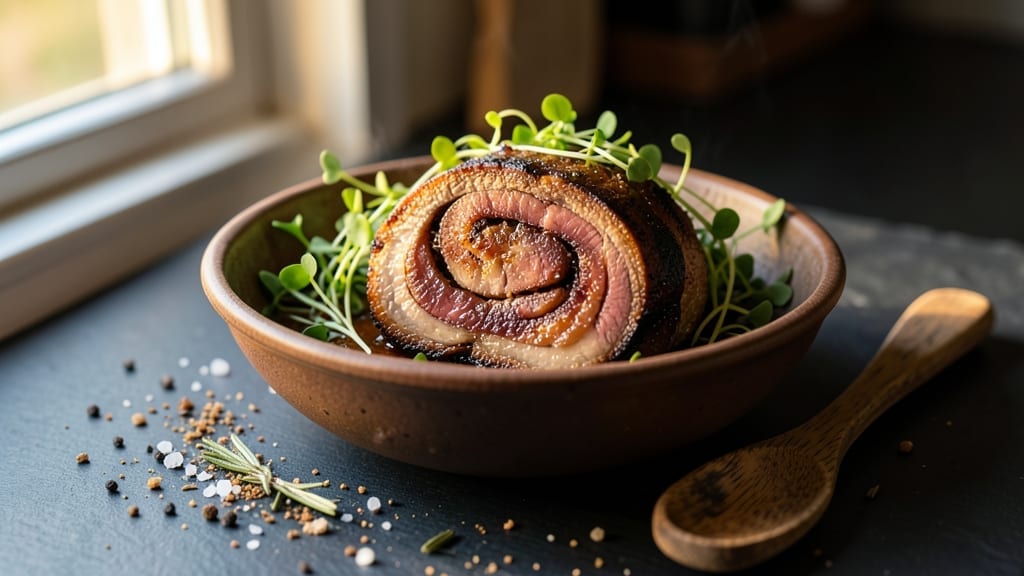
This smoked bottom round roast recipe transforms tough cuts into melt-in-your-mouth perfection, turning weeknight dinners into showstopping meals. This smoked bottom round roast recipe delivers restaurant-quality tenderness through precise low-and-slow techniques that even novice smokers can master.
I developed it after years of experimenting with different wood blends and temperature profiles—trust me, the results are worth every minute of wait time.
The secret lies in the combination of high-quality wood (I recommend hickory or oak) and maintaining a consistent 225°F temperature throughout the 4-6 hour smoking process. The meat develops deep, smoky flavors while breaking down into fork-tender slices that practically fall apart.
What makes this recipe particularly foolproof is the simple seasoning blend—just salt, pepper, and garlic powder—that lets the smoky character shine without competing flavors.
By the time you slice into this roast, you’ll have perfectly tender meat with a beautiful bark on the outside and juicy, flavorful slices that disappear faster than you can say “au jus.”
The resting period is just as critical as the smoking—it allows the juices to redistribute, ensuring every bite is moist and packed with flavor. This is the kind of roast that makes guests ask for seconds before you’ve even finished serving.
Serve with classic sides like roasted potatoes or a fresh garden salad to complete the meal. The leftovers reheat beautifully for sandwiches the next day, making this recipe perfect for meal prep or feeding a crowd. Let’s get started on creating your most tender smoked roast yet!
Ingredients for smoked bottom round roast
A few key ingredients transform tough beef into melt-in-your-mouth smoked perfection.
| Ingredient | Amount | Notes |
|---|---|---|
| Bottom Round Roast 🥩 | 4 lb | Trimmed of excess fat |
| Kosher Salt 🧂 | 1 ½ tbsp | Diamond Crystal preferred |
| Freshly Ground Black Pepper 🌶️ | 1 tbsp | Coarse grind preferred |
| Garlic Powder 🧄 | 1 tbsp | Freshly toasted preferred |
| Hickory Wood Chips 🌳 | 1 lb | Oak alternative acceptable |
| Yellow Onion 🧅 | 1 whole | Quartered for au jus |
| Beef Broth 💧 | 2 cups | Low-sodium preferred |
| Tomato Paste 🍅 | 2 tbsp | San Marzano preferred |
| Worcestershire Sauce 🍶 | 1 tbsp | Lea & Perrins brand |
| Apple Cider Vinegar 🍎 | 1 tbsp | For brightness |
| Brown Sugar 🍚 | 1 tbsp | Light or dark |
| Mustard Powder 🌶️ | ½ tsp | For depth |
| Black Peppercorns 🌶️ | ½ tsp | Crushed for au jus |
| Fresh Rosemary 🌿 | 2 sprigs | For wood blend aroma |
| Fresh Thyme 🌿 | 2 sprigs | For herbal balance |
[recipe_ingredient_scaler]
The bottom round roast is your star here—look for cuts with good marbling at Costco or your local butcher. A 4-pound roast serves six generously, but you can scale up for larger crowds. Trim any thick fat caps to about 1/4-inch thickness—this helps with bark formation. If you’re buying pre-trimmed, check for USDA Choice or Prime labels. For the wood chips, Traeger brand hickory is my go-to, but any quality hardwood works. The fresh herbs? Trader Joe’s sells great bundles—just tie them with kitchen twine before adding to the smoker.
No hickory? Oak or pecan chips work beautifully—just adjust the smoke time slightly. The Worcestershire and apple cider vinegar might be in your pantry, but if not, soy sauce plus a pinch of sugar mimics the umami punch. For the au jus, sub beef base paste if you’re short on broth. The tomato paste can be the squeeze-tube kind (it lasts forever), but San Marzano is worth the splurge for that authentic depth. Fresh herbs? Dried works at one-third the amount, but nothing beats the aroma of fresh rosemary and thyme straight from the garden.
This roast tastes even better the next day—rest it 2 hours before slicing. Store leftovers in the fridge for 5 days or freeze for 3 months. For sandwiches, slice against the grain and reheat with a splash of beef broth. The au jus keeps for 1 week in the fridge—perfect for drizzling over mashed potatoes or roasted veggies. Double the batch if you’re feeding a crowd; the leftovers make amazing breakfast hash the next morning.
Why You’ll Love This Recipe
- Unfussy Smoking Session: Honestly, this isn’t one of those recipes that requires you to be a smoker guru. Just toss that 4 lb bottom round roast on the grill, slap on the salt, pepper, and toasted garlic powder rub, and let the smoker handle the rest. The hickory wood chips do all the heavy lifting while you sip a beer—no babysitting needed.
- Mahogany Bark Magic: That crispy, smoky crust on the outside? Chef’s kiss. The hickory wood chips caramelize the surface just right while the butcher paper wrap keeps it juicy inside. And the au jus—with tomato paste, Worcestershire, and a touch of vinegar? It’s the perfect tangy hug for every slice.
- Leftovers That Last: I always make this for game day, but honestly, it’s just as good cold the next day. Slice it thin, pile it on sandwiches, or toss it into tacos. The au jus? Keeps for a week—great for drizzling over mashed potatoes or roasted Brussels sprouts. Zero waste, zero stress.
- Budget Beast: Bottom round is one of the most affordable cuts, and this recipe stretches it into enough servings for a crowd. You’re paying for the smoker time, not the meat—plus, the dry rub and au jus ingredients are pantry staples. Feeds six without breaking the bank.
Step-by-step instructions for smoked bottom round roast
Here’s the method that transforms tough bottom round into melt-in-your-mouth slices every time.
Prepare the Roast with Dry Rub
Start by trimming any excess fat from the 4 lb bottom round roast, leaving about ¼ inch fat cap. This prevents flare-ups during smoking. Pat the roast dry with paper towels – moisture is the enemy of good bark formation.
In a small bowl, combine the 1½ tablespoons kosher salt, 1 tablespoon freshly ground black pepper, and 1 tablespoon garlic powder. I like to toast the garlic powder in a dry skillet for 30 seconds first to deepen its flavor. Rub this mixture all over the roast, pressing firmly so it adheres well. This dry rub will create that beautiful mahogany bark while penetrating the meat for maximum flavor.
Place the seasoned roast on a wire rack set over a baking sheet and refrigerate uncovered for 1 hour. This resting period allows the salt to penetrate deeply and the surface to dry slightly, both crucial for developing that perfect crust during smoking.
Set Up the Smoker and Start Cooking
While the roast rests, prepare your smoker by adding the 1 lb hickory wood chips to the smoking box or chip tray. Light them according to your smoker’s instructions and preheat the smoker to 225°F. This low-and-slow temperature is key to achieving tender, juicy meat without drying it out.
Once the smoker reaches temperature and you see steady blue smoke, place the roast fat-side up on the smoker grate. The fat will render slowly, basting the meat as it cooks. Close the lid and resist the urge to peek – every time you open it, you lose heat and potentially hours of cooking time.
Smoke the roast for 6 hours, maintaining a consistent temperature between 225-250°F. This long cook time is what transforms tough bottom round into fork-tender slices. After 6 hours, check the internal temperature using a meat thermometer – it should be around 165°F. This is when you’ll hit “the stall,” where the meat’s moisture evaporates and the temperature plateaus.
Wrap and Finish the Roast
When you reach the stall, it’s time to wrap the roast. Tear off two large sheets of butcher paper and place the roast on one sheet. Sprinkle the quartered yellow onion, ½ teaspoon mustard powder, and ½ teaspoon crushed black peppercorns around the roast. This creates a flavorful environment that continues tenderizing the meat.
Wrap the roast tightly in the butcher paper, folding the edges to create a sealed package. Return it to the smoker and continue cooking until the internal temperature reaches 203°F. This typically takes an additional 3-4 hours. The butcher paper allows the roast to retain moisture while still developing that beautiful bark.
During the final hour, prepare the au jus by combining the 2 cups beef broth, 2 tablespoons tomato paste, 1 tablespoon Worcestershire sauce, 1 tablespoon apple cider vinegar, 1 tablespoon brown sugar, and the 2 sprigs fresh rosemary and 2 sprigs fresh thyme in a saucepan. Simmer gently until reduced by half, then strain out the herbs. This rich, flavorful liquid will complement your perfectly smoked roast beautifully.
Rest and Slice for Maximum Tenderness
Once the roast reaches 203°F, remove it from the smoker and let it rest in its butcher paper wrapping for at least 1 hour. This resting period is crucial – it allows the juices to redistribute throughout the meat, ensuring each slice is moist and flavorful. I like to place the wrapped roast in a cooler to maintain a consistent temperature during resting.
After resting, slice the roast against the grain into ½-inch thick slices. The grain direction will be visible as lines running through the meat. Serve immediately with the prepared au jus spooned over the top. The result should be slices that are fork-tender with a beautiful mahogany bark, perfectly complementing the rich, slightly tangy au jus.
This low-and-slow method guarantees tender, juicy meat that will impress even the most discerning guests. The key is patience – letting the smoker do the work while you prepare the accompaniments and enjoy the process.
Pro Tips For Making Smoked Bottom Round Roast
- Toast That Garlic: DESCRIPTION:
- Don’t Rush the Stall: DESCRIPTION:
- Trim Fat, Not Muscle: DESCRIPTION:
- Simmer Au Jus Low: DESCRIPTION:
Essential equipment for this recipe
Your Smoker is Your New Best Friend
You don’t need a fancy smoker to nail this recipe—even a basic pellet grill or offset smoker will work. I started with a Traeger Junior pellet grill, and it turned out better than I expected.
The key is consistency: keep that temperature steady at 225°F and avoid opening the lid too often. If you’re using a charcoal smoker, a thermowell and reliable thermometer are non-negotiable. I swear by the Meater+ probe thermometer—it’s my secret weapon for tracking internal temps without opening the smoker. 🔥
Must-Have Tools for Success
Beyond the smoker, invest in a wire rack and baking sheet for resting your roast—it keeps air circulating and prevents soggy bark. A meat thermometer is a game-changer; I’ve burned more than one roast trying to guess when it was done.
For the au jus, a fine-mesh strainer ensures your sauce is silky smooth. If you’re on a budget, a cast-iron Dutch oven works perfectly for simmering the sauce. I keep my tools within arm’s reach so I can prep while the roast smokes—multitasking is key! ✨
Budget-Friendly Swaps
Not everyone can drop cash on premium tools, and that’s okay! Use aluminum foil instead of butcher paper for wrapping—it’s cheaper and still effective. For wood chips, oak or pecan are great substitutes for hickory, especially if you’re near a local butcher who sells scraps.
I once used apple wood chips for a sweeter profile, and it worked surprisingly well. Even a cheap digital thermometer from Amazon will do the job if you’re just starting out. Every smoker has a learning curve, and you’ll figure it out! 💛
Pro Upgrades Worth It
If you’re serious about smoking, splurge on a digital smoker controller like the Traeger Pro Series for better temperature control. A smoke box with adjustable airflow lets you fine-tune the smoke level, which is huge for delicate cuts.
I also love using a smoke tube for extra flavor without overpowering the meat. These upgrades might seem pricey, but they make a world of difference in consistency. Trust me, your future guests will thank you! 💫
Garden-to-Table Hack
For the au jus, skip the store-bought herbs and grab fresh rosemary and thyme from your backyard garden. I talk to my plants like they’re my kids—it’s weird, but they seem to grow better when I do!
If you don’t have fresh herbs, dried ones work in a pinch, but use one-third the amount for flavor balance. The au jus tastes even better when made with homemade beef broth, so simmer down veggie scraps in water for a rich, flavorful base.
Simple swaps make all the difference! 🌿
Nutrition facts
Frequently asked questions
Why does the recipe specify smoking at 225°F
instead of higher heat?
Smoking at 225°F ensures tender, juicy meat by breaking down tough connective tissues slowly. Higher heat would dry out the bottom round, which naturally contains less fat than cuts like ribeye. The low temperature also allows the smoky flavors to penetrate deeply without overcooking the exterior.
Can I skip wrapping the roast in butcher paper?
You can try, but wrapping helps retain moisture during the final cooking phase. Without it, the roast might dry out slightly as it approaches 203°F. The paper also creates steam that keeps the bark tender while allowing the meat to finish cooking. For extra moisture, foil works too, though it may soften the bark slightly.
What if I don’t have a meat thermometer?
Use the “poke test” as a backup: insert a knife into the thickest part of the roast. If the juices run clear (not pink), it’s likely done. For the 203°F target, you’ll need to rely on timing—this roast typically reaches that temp after 9-10 hours total smoking time. A friend once told me her grandmother used this method, and it worked well for generations!
Can I make this recipe in a regular oven instead of smoking?
While you can slow-cook it in the oven at 275°F for 4-5 hours, you won’t get the same smoky depth. For authentic flavor, stick with smoking. If you’re short on time, try a pellet grill set to 275°F with hickory pellets—it mimics smoking while cooking faster. The key difference is the smoldering wood that infuses the meat with that signature aroma.
How do I store the au jus properly?
Let the au jus cool completely before transferring it to an airtight container. It keeps for 1 week in the fridge—perfect for reheating and using as a sauce for mashed potatoes or roasted vegetables. For longer storage, freeze in portions for up to 3 months. I always double the batch so I have leftovers for sandwiches the next day!

Trained in classic French technique but raised on slow-cooked ribs and spicy rubs, she blends culinary skill with smoke and soul.
- Chinese Braised Beef Brisket with Daikon Recipe: Silky Tender Meat and Crunchy Roots - October 18, 2026
- Oklahoma Joe’s Smoked Beans Recipe: Slow-Smoked Flavor That Rivals the Original - October 18, 2026
- Beef Brisket Chili Recipe: Slow-Simmered Richness with Deep Flavor Layers - October 18, 2026