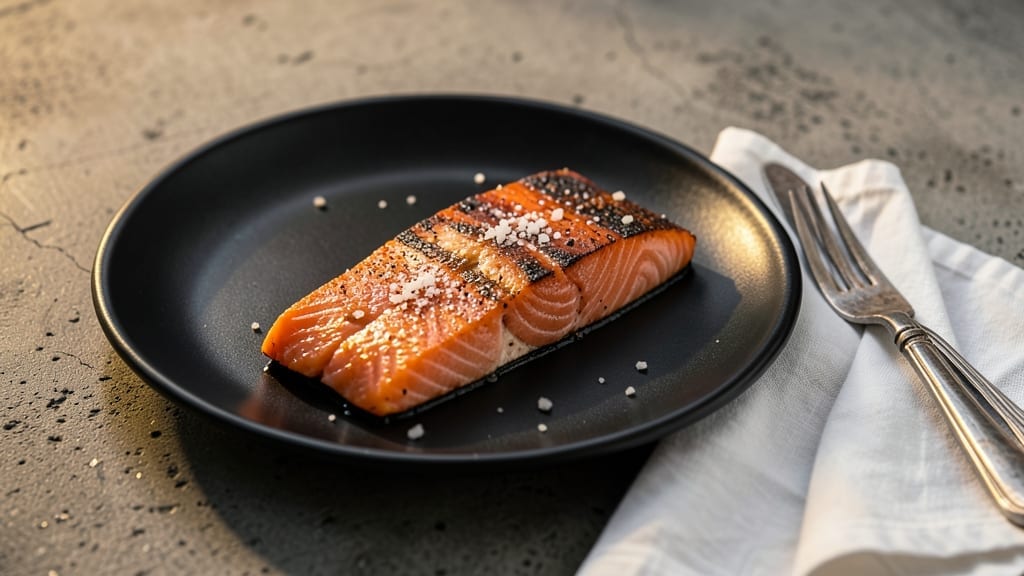
This oven-baked smoked salmon recipe transforms delicate fish into a restaurant-worthy dish with a crispy top and creamy center that melts at the touch. 🌟 I perfected this technique after years of experimenting with salmon—no steaming or soggy results here.
The secret lies in scoring the skin and baking just long enough to achieve that perfect texture while keeping the inside tender.
What sets this method apart is the balance between high heat and precise timing. You’ll start with skin-on salmon scored lightly to render fat and create crispy edges, then finish with a quick broil for that golden sheen.
The result? A dish that looks elegant enough for a dinner party but requires only simple ingredients and about 20 minutes of active prep.
Imagine flaky, buttery salmon with crisp edges that shatter slightly, served with a dollop of herbed cream or fresh dill sauce. The aroma alone—smoky, briny, and slightly sweet—will have everyone at the table asking for seconds. This recipe delivers professional-quality results without the fuss of poaching or complicated techniques.
Pair it with roasted asparagus, a simple salad, or crusty bread to round out the meal. The beauty of this method is its versatility—whether you’re cooking for two or a crowd, the principles stay the same. Let’s get started on creating salmon that’s worth every bite.
Ingredients for oven baked smoked salmon
Simple ingredients transform delicate smoked salmon into crispy, creamy perfection with minimal effort.
| Ingredient | Amount | Notes |
|---|---|---|
| Skin-On Smoked Salmon Fillet 🐟 | 1 ½ lb | Center-cut for even cooking |
| Unsalted Butter 🧈 | 2 tbsp | Cold, cut into small pieces |
| Fresh Dill 🌿 | ¼ cup | Chopped, stems removed |
| Extra-Virgin Olive Oil 🫒 | 1 tbsp | For scoring and crisping |
| Lemon Juice 🍋 | 1 tbsp | Freshly squeezed |
| Garlic Cloves 🧄 | 2 cloves | Minced for butter mixture |
| Heavy Cream 🥛 | ½ cup | Full-fat for richness |
| Salt 🧂 | ½ tsp | Kosher or sea salt |
| Black Pepper 🌶️ | ¼ tsp | Freshly ground |
| Fresh Lemon Zest 🍋 | 1 tsp | For finishing |
| Crusty Bread 🍞 | 4 slices | For serving |
| Fresh Parsley 🌿 | 2 tbsp | Chopped, for garnish |
| Capers 🫒 | 1 tbsp | Optional, for briny touch |
[recipe_ingredient_scaler]
The salmon is the star—look for center-cut fillets with even thickness for consistent crisping. Costco or Whole Foods often carry high-quality smoked salmon with vibrant color and firm texture. If using store-bought, check the label for minimal additives. Fresh dill is non-negotiable here; dried won’t give the same bright flavor. For the butter mixture, European-style unsalted butter like Plugrá melts beautifully and adds a rich depth. Always keep your salmon cold until ready to cook to preserve texture.
No fresh dill? Dried dill at one-third the amount works in a pinch, but the flavor won’t be as vibrant. Substitute heavy cream with half-and-half for a lighter version or Greek yogurt for tanginess. For the lemon, bottled juice lacks zest—always use freshly squeezed. The capers add a briny contrast that elevates the dish; omit if you prefer a milder flavor. For scoring the salmon, use a sharp knife to make shallow cuts—don’t go too deep or you’ll lose crispness. The bread should be sturdy enough to hold up to the creamy salmon without getting soggy.
Store any leftovers in an airtight container with a paper towel pressed on top to absorb moisture—keeps for 1 day in the fridge. The salmon reheats beautifully in a 350°F oven for 5-7 minutes, but honestly, it’s best enjoyed fresh. For meal prep, make the herbed cream ahead and store it separately; mix it with the salmon just before serving. The crispy skin loses its crunch when reheated, so treat this as a fresh-prep dish. Garnish with extra lemon zest and parsley right before serving for maximum freshness.
Why You’ll Love This Recipe
- No-Pan-Needed Magic: I’m obsessed with how effortless this is—just a baking sheet, parchment paper, and 15 minutes of hands-off time. The scoring step takes two minutes, and the rest is oven work while I prep the sauce or even just relax. No frying pans, no constant stirring, just pure simplicity.
- Crispy Skin, Creamy Center: That crispy skin from the butter and olive oil? It’s like eating a perfect golden crust with melt-in-your-mouth salmon underneath. The garlic, dill, and lemon zest turn it from basic to ridiculously good—each bite packs flavor without being overpowering. Trust me, the capers in the sauce are the secret weapon.
- Weeknight Dinner Hero: I make this on nights when I’m exhausted but still want something special. Serve it with crusty bread, and you’ve got a meal that feels fancy but takes less time than ordering takeout. Even my picky roommate (who hates fish) devours it—proof it’s universally loved.
- Leftover Rescue: Leftovers? They’re perfect for lunch the next day. Just reheat gently and drizzle with extra sauce—no soggy salmon here. The paper towel trick keeps it fresh for one day, so you’re not stuck with dry fish. Simple, no-fuss storage.
Step-by-step instructions for oven baked smoked salmon
Transform your smoked salmon from delicate to extraordinary with this foolproof baking method.
🔥 Step 1: Score and Season the Salmon Fillet
Preheat your oven to 400°F with the rack positioned in the center. Place the 1½ lb skin-on smoked salmon fillet on a cutting board, skin-side up. Using a sharp knife, make shallow diagonal cuts about ¼-inch apart across the flesh, being careful not to cut into the skin. This creates channels for the butter to penetrate and ensures even cooking.
In a small bowl, combine the 2 tbsp unsalted butter (cut into small pieces), 2 minced garlic cloves, ½ tsp salt, and ¼ tsp black pepper. Spread this mixture evenly over the scored salmon, pressing gently so it fills the channels. The butter will melt during baking, creating a crispy crust while keeping the center creamy.
Here’s the thing—don’t skip the scoring. It might seem like extra work, but those little cuts let the butter infuse properly, giving you that perfect crispy skin without drying out the fish underneath. Real talk: The skin should stay intact during this process, so handle the fillet gently to avoid tearing.
🍳 Step 2: Create the Dill-Zest Crust
In a separate small bowl, mix together the ¼ cup chopped fresh dill, 1 tbsp lemon juice, and 1 tsp fresh lemon zest. This bright, herby mixture will form the aromatic crust that seals in moisture and adds that signature freshness to every bite. Spread this mixture evenly over the buttered salmon, pressing down gently to adhere.
Now, here’s where it gets fun—drizzle the 1 tbsp extra-virgin olive oil evenly over the salmon. The oil helps create that beautiful crispy top while preventing the fish from sticking to the baking sheet. Place the salmon on a parchment-lined baking sheet, skin-side down, and let it sit at room temperature for 10 minutes while the oven finishes preheating.
This resting period is crucial. It allows the salmon to come to room temperature, which ensures even cooking throughout. If you’re impatient, you might end up with uneven doneness—so trust the process and let it sit.
⏰ Step 3: Bake to Crispy Perfection
Bake the salmon for 12-15 minutes until the edges are deep golden brown and the skin is crispy. You’ll know it’s ready when you see the skin pull away slightly from the edges and the flesh looks slightly opaque but still moist. The internal temperature should reach 135°F—this is the magic number for perfectly cooked salmon that’s still tender and moist inside.
Don’t overbake—salmon cooks fast, and it’s easy to go from perfect to dry in seconds. If your oven runs hot, start checking at the 10-minute mark. The reason we wait until the edges are golden brown is that this creates that satisfying crunch while keeping the center beautifully creamy.
Here’s a pro tip: If you’re worried about the salmon sticking, you can place the baking sheet on a lower rack to create more space for heat circulation. This helps achieve that even crispiness on all sides.
🥘 Step 4: Prepare the Creamy Dill Sauce
While the salmon bakes, prepare the creamy sauce. In a small saucepan, warm the ½ cup heavy cream over medium-low heat until it’s just about to simmer—you’re looking for gentle bubbles around the edges, not a full boil. Remove from heat and stir in the 1 tbsp capers and 2 tbsp chopped fresh parsley. This sauce should be thick enough to coat the back of a spoon but still silky smooth.
The capers add a briny contrast that cuts through the richness of the salmon and cream. Don’t skip this step—it’s what elevates this from simple baked salmon to a restaurant-worthy dish. If the sauce seems too thick, you can whisk in a teaspoon of warm water to reach your desired consistency.
🍽️ Step 5: Assemble and Serve
Remove the salmon from the oven and let it rest for 5 minutes before serving. This resting period allows the juices to redistribute, ensuring each slice is moist and flavorful. Carefully transfer the salmon to a serving platter, skin-side up, and spoon the creamy dill sauce over the top. Garnish with additional chopped fresh parsley and a sprinkle of fresh lemon zest for that final pop of color and flavor.
Serve immediately with the 4 slices crusty bread on the side. The contrast of the warm, crispy bread with the cool, creamy salmon is pure magic. Each bite should deliver that perfect combination of crispy skin, tender flesh, and rich, herby sauce. If you’re feeling fancy, you can even add a lemon wedge to squeeze over each portion for that extra zing.
Pro Tips For Making Oven Baked Smoked Salmon
- SCORE THE FLESH, NOT THE SKIN: The skin’s your golden ticket to crispy perfection—cut just deep enough into the flesh (¼-inch apart) to let the butter pool in those channels, but never nick the skin. I’ve torn more salmon skins in my life than I’d admit trying to force the knife too deep, and trust me, you don’t want to deal with that while baking.
- USE COLD BUTTER, NOT ROOM-TEMP: Cold butter (cut into tiny cubes) melts into the salmon’s channels instead of sliding off the moment it hits 400°F. I learned this after watching my first batch turn into a greasy mess—now I keep the butter in the fridge until the last second, even if I’m racing against time.
- CHECK THE SKIN, NOT THE FLESH: The salmon’s done when the edges pull away from the pan and the skin looks like it’s about to shatter, not when the flesh turns opaque. I used to cut into it early, only to find it still raw inside—now I wait for that skin to crisp first, and the rest always follows.
- SIMMER THE CREAM LOW AND SLOW: Warm the heavy cream just until tiny bubbles form at the edges (not a rolling boil), then remove it from heat. I’ve turned this sauce into a skinny, grainy disaster twice by letting it boil—now I keep it on the lowest heat possible and whisk it off the heat the second it’s hot. The capers and parsley go in cold to keep the sauce silky.
Pro cooking tips for great oven baked smoked salmon
Mastering the Score
Scoring the salmon is where the magic happens—those shallow diagonal cuts create channels for butter to infuse while keeping the skin intact. I use a sharp chef’s knife and cut about ¼-inch apart, just enough to create texture without tearing.
If your knife feels dull, switch to a Wüsthof Classic—it glides through the salmon like butter. Trust me, this step is worth the extra minute. 🔥
Butter Temperature Trick
Cold butter is your friend here—it melts slowly during baking, creating that crispy crust while keeping the center moist. Cut the 2 tbsp unsalted butter into tiny pieces so it spreads evenly.
If you use room-temperature butter, you’ll end up with a greasy mess instead of crispy perfection. I always keep mine in the fridge until ready to use.
Oven Rack Position
Position your rack in the center for even heat distribution, but if your oven runs hot, move it to the lower-middle rack. This helps prevent the salmon from burning before it crisps properly.
I’ve learned this the hard way—once burned the skin so badly I had to start over. Always check with the 10-minute mark if your oven tends to overheat.
Sauce Thickness Matters
The creamy dill sauce should coat the back of a spoon but still be silky smooth—neither too thin nor too thick. If it’s too thick after adding 1 tbsp capers, whisk in 1 tsp warm water to reach the perfect consistency.
I like to taste it as I stir—it should balance the richness of the salmon with a briny punch. This sauce makes all the difference between good and great!
Resting Like a Pro
Letting the salmon rest for 5 minutes after baking is non-negotiable. This allows the juices to redistribute, ensuring every slice is moist and flavorful. I’ve served salmon straight from the oven before, and let me tell you—it’s dry and disappointing. That short wait makes all the difference in texture. 💡
Nutrition facts
Frequently asked questions
Why is scoring the salmon important for oven baking?
Scoring creates shallow diagonal cuts that let the butter mixture penetrate deeply while keeping the skin intact. This ensures crispy edges without drying out the tender flesh inside. Without scoring, the butter would just sit on top, giving you greasy rather than golden perfection.
Can I use room-temperature butter instead of cold?
Cold butter is key for that perfect crispy crust. Room-temperature butter will melt too quickly, creating a greasy mess instead of the desired crispy texture. Always keep your butter chilled until you’re ready to use it. The cold fat renders slowly, creating that beautiful golden sheen.
What if my oven runs hot and burns the salmon?
Move the baking sheet to the lower-middle rack for better heat circulation. Check at the 10-minute mark if your oven tends to overheat. The goal is golden edges—not burnt skin! If needed, tent loosely with foil for the last few minutes. This prevents overcooking while maintaining that crispy finish.
Is it okay to skip the resting period before serving?
Absolutely not! The 5-minute rest lets juices redistribute, ensuring every slice is moist and flavorful. Serving it immediately results in dry, disappointing salmon. Trust this step—it’s what separates good from great. The short wait makes all the difference in texture.
Can I make the creamy dill sauce ahead of time?
Yes, but store it separately and warm gently before mixing with the salmon. The sauce should be silky smooth—if it thickens, whisk in 1 tsp warm water. Fresh parsley and capers add the best flavor, so prepare it just before serving for maximum freshness. This sauce is the secret ingredient that elevates your dish!

Trained in classic French technique but raised on slow-cooked ribs and spicy rubs, she blends culinary skill with smoke and soul.
- Chinese Braised Beef Brisket with Daikon Recipe: Silky Tender Meat and Crunchy Roots - October 18, 2026
- Oklahoma Joe’s Smoked Beans Recipe: Slow-Smoked Flavor That Rivals the Original - October 18, 2026
- Beef Brisket Chili Recipe: Slow-Simmered Richness with Deep Flavor Layers - October 18, 2026