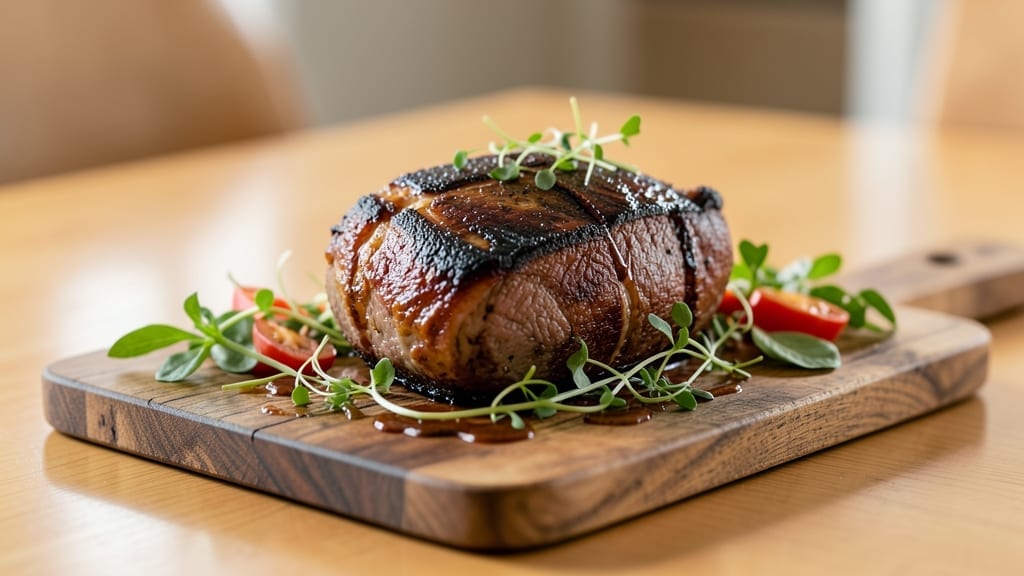
Mastering a smoked rump roast transforms tough cuts into melt-in-your-mouth perfection—this is the recipe I’ve perfected after years of low-and-slow experiments. The key lies in patience: letting the smoke work its magic while the meat develops that signature caramelized bark and deep, smoky flavor.
I remember the first time I achieved that perfect smoke ring, knowing the roast was ready without guessing.
This method delivers restaurant-quality results at home with just a few essential tools: a quality smoker, a reliable thermometer, and a simple dry rub. The beauty of smoking rump roast is its versatility—whether you’re feeding a crowd or treating yourself to a Sunday dinner, the technique remains the same.
The secret? Maintaining a steady 225°F temperature for hours while letting the meat rest before slicing ensures every bite stays juicy.
By the time you’re done, you’ll have a roast with a deep mahogany crust, a pink center that nearly falls apart, and a flavor so rich it lingers on your palate. The aroma alone will have everyone gathered around the table, and the first slice will silence any doubters.
This isn’t just a roast—it’s a centerpiece that turns a simple meal into an event.
Pair it with roasted potatoes and green beans for a complete feast, or serve it as the star of a holiday spread. The best part? Leftovers reheat beautifully, making this a meal that keeps giving. Let’s get smoking—your taste buds will thank you.
Ingredients for smoked rump roast
Just a few essentials for restaurant-quality smoked rump roast—smoke, patience, and this simple rub.
| Ingredient | Amount | Notes |
|---|---|---|
| Rump Roast 🥩 | 4 lb | Bone-in preferred for flavor |
| Yellow Onion 🧅 | 1 whole | Yellow or red, sliced |
| Garlic Cloves 🧄 | 6 cloves | Peeled, smashed lightly |
| Kosher Salt 🧂 | 2 tbsp | Diamond Crystal preferred |
| Freshly Ground Black Pepper 🌶️ | 1 ½ tbsp | Freshly cracked for best flavor |
| Smoked Paprika 🌶️ | 1 tbsp | For deep smoky flavor |
| Ground Cumin 🌿 | 1 tsp | Toasted for richer taste |
| Wood Chips 🌳 | 1 cup | Hickory or oak preferred |
| Apple Cider Vinegar 🍎 | 2 tbsp | For bark development |
| Beef Tallow or Shortening 🧈 | 2 tbsp | For extra fat render |
| Butcher's String 🧵 | 1 piece | For tying roast |
| Wooden Skewers 🪵 | 2 whole | For securing garlic/onion |
| Yellow Mustard 🍯 | 1 tbsp | For tying garlic/onion |
[recipe_ingredient_scaler]
The rump roast is your star, so look for bone-in cuts—they hold moisture better and add flavor. Costco or local butchers usually have great options, often labeled as ‘rump roast’ or ‘top round roast’. If you can’t find bone-in, a well-marbled boneless cut works too. The 4 lb size is perfect for a crowd, but you can scale up or down. For extra insurance, ask the butcher to trim any large fat caps—you want even cooking. And trust me, room-temperature meat smokes better, so take it out of the fridge 1-2 hours before smoking.
No smoked paprika? Regular paprika plus a pinch of liquid smoke works in a pinch. Running short on wood chips? Chop up oak or hickory logs instead—just soak them in water for 30 minutes first. The apple cider vinegar might seem odd, but it’s essential for that caramelized bark. No beef tallow? Butter or lard works just as well. For the garlic-onion skewers, use whatever onions you have—red, yellow, or sweet all work. And if you’re tying the roast, butcher’s twine or even heavy-duty dental floss will do the trick. Just make sure to tie it snug but not too tight—you want even cooking.
This roast is a reheating machine—actually tastes better the next day once all the flavors meld. Wrap tightly in foil or butcher paper and it’ll keep 3-4 days in the fridge. For longer storage, freeze for up to 3 months. I like to slice it thin against the grain and portion into containers for easy lunches. The leftovers? Sandwiches, tacos, or hash—endless possibilities. And if you’re planning ahead, make the rub a day early so you can just toss it on the meat when you’re ready to smoke.
Why You’ll Love This Recipe
- No-Fuss Smoking: I take the roast straight from the fridge to the smoker—no fancy prep day. Just pat it dry, slather on that spice mix of smoked paprika and cumin, and let it sit while I slice the onion and smash garlic. The real magic? The smoker does all the heavy lifting—you just monitor the temp and resist the urge to open the lid. Honestly, this is the kind of recipe where you can set it and forget it for hours.
- Chef’s Kiss Crust: That deep mahogany bark? Achieved with just 2 tbsp apple cider vinegar brushed on before smoking. The acidity caramelizes into a crispy, smoky crust while keeping the inside so tender it falls apart. And the garlic-onion packet? It infuses the meat like a flavor bomb without any extra effort. Between the smoked paprika and the beef tallow rendering, every bite is rich but not greasy—dangerously good.
- Leftovers That Win: This roast doesn’t just feed dinner—it feeds your future. Slice the leftovers into sandwiches the next day, or chop them into hash for breakfast. My kids even ask for “smoked roast nachos” (yes, really). The flavors deepen overnight, so you’re not stuck with dry meat. Plus, wrapping it in butcher paper keeps it fresh for 3-4 days in the fridge, so you’re not left with sad, forgotten leftovers.
- Budget-Friendly Crowd-Pleaser: A 4 lb rump roast is cheaper than you’d think, especially when you’re feeding a crowd. The ingredients? Basic pantry staples—kosher salt, black pepper, garlic—nothing fancy. And because it’s smoked low and slow, you’re not paying for expensive cuts. Serve it at a potluck, a family dinner, or even a cozy Tuesday night, and no one will complain. It’s the kind of dish that makes people say, “You didn’t have to go through all that work.” (Yes, you did—but it’s worth it.)
Step-by-step instructions for smoked rump roast
Here’s how to transform a simple rump roast into melt-in-your-mouth perfection with a deep, smoky crust.
Prepare the Roast with a Flavor-Packed Rub
Start by patting the 4 lb rump roast dry with paper towels—this step is non-negotiable for crispy bark. In a small bowl, mix together the 2 tbsp kosher salt, 1½ tbsp freshly ground black pepper, 1 tbsp smoked paprika, and 1 tsp ground cumin. Rub this mixture all over the roast, pressing firmly so the spices adhere. Let it sit at room temperature for 30 minutes while you prep the rest.
Here’s the thing—don’t skip the room-temperature step. Cold meat cooks unevenly, and the rub won’t cling as well. While the roast rests, slice the 1 yellow onion into ¼-inch thick rounds and peel the 6 garlic cloves, smashing them lightly with the flat side of a knife to release their aroma.
Build the Smoker and Create a Flavor Packet
Soak the 1 cup wood chips in water for 30 minutes to prevent burning, then drain. Set up your smoker to maintain a steady 225°F. I like to use hickory or oak wood chips for a classic, balanced smoke flavor. While the smoker heats up, create a flavor packet by tying the sliced onion and garlic together with the 1 butcher’s string, then securing them to the roast using the 2 wooden skewers. This ensures the aromatics infuse the meat as it smokes.
Here’s a pro tip: Brush the roast lightly with 2 tbsp apple cider vinegar before placing it on the smoker. The acidity helps develop that coveted dark bark while keeping the meat tender. Once the smoker reaches temperature and you see steady, thin smoke, it’s time to load up the roast.
Smoke Low and Slow for Deep Flavor
Place the roast on the smoker grate, fat-side up, and close the lid immediately. Resist the urge to peek—every time you open it, you lose heat and moisture. Smoke the roast for 4-5 hours, or until the internal temperature reaches 160°F. This is where patience pays off; low and slow breaks down the tough fibers for fork-tender results.
About 1 hour into smoking, add the 2 tbsp beef tallow or shortening to the smoker tray. The extra fat will render and baste the roast, adding richness to the crust. You’ll know it’s working when the bark turns deep mahogany and pulls away slightly when you test it with your fingers.
Wrap and Rest for Maximum Juiciness
Once the roast hits 160°F, it’s time to wrap it in butcher paper (not foil—paper allows some steam to escape, preserving the bark). This technique, called the “Texas crutch,” helps push the roast through the stall and keeps it moist. Return it to the smoker and cook until the internal temperature reaches 195-200°F, which should take another 2-3 hours.
Real talk: The roast will feel like it’s not cooking during the stall, but don’t rush it. Let it rest for 15-20 minutes after removing it from the smoker. This step is crucial—it redistributes the juices so every slice is succulent. Tent loosely with foil to keep it warm while it rests.
Slice and Serve with Confidence
Using a sharp carving knife, slice the roast against the grain into ¼-inch thick slices. The grain runs lengthwise, so cutting perpendicular ensures each bite is tender. Serve immediately with the pan juices or a simple red wine reduction. The result? A perfectly smoked, juicy roast with a caramelized crust that’ll have everyone asking for seconds.
Pro tip: Save any leftover slices for sandwiches or hash the next day—they’ll be even more flavorful after resting. Enjoy your masterpiece!
Pro Tips For Making Smoked Rump Roast
- Test the Bark: The mahogany crust isn’t just for looks—it’s your cue that the roast is developing flavor. After about 3 hours at 225°F, gently press a finger into the bark. If it springs back slightly but leaves a faint imprint, you’re close. If it sticks or feels rubbery, give it another hour. The vinegar and tallow do the heavy lifting, but timing matters most here.
- Smash That Garlic: Lightly smashing the 6 garlic cloves with the flat of your knife releases their oils, which cling to the roast as it smokes. I used to just peel them whole, and the flavor packet tasted like it was playing second fiddle. A few sharp taps? That’s all it takes to turn your aromatics into flavor bombs.
- Don’t Fight the Stall: When the internal temp hits 160°F and the roast feels like it’s stalled, wrapping it in butcher paper isn’t cheating—it’s physics. The paper lets just enough steam escape to keep the bark intact while pushing the meat through the toughest phase. Foil traps too much moisture, and you’ll end up with soggy slices. Trust the process, even if it feels like nothing’s happening.
- Vinegar First, Tallow Later: Brush the roast with the 2 tbsp apple cider vinegar before it hits the smoker—this kickstarts the bark formation. Save the 2 tbsp beef tallow for about an hour in, when the roast is already halfway cooked. Adding it too early just makes a greasy mess on the smoker tray. Timing these two steps keeps the crust crispy without overwhelming the meat.
Essential equipment for this dish
The Smoker That Changed Everything
I’ll never forget the day I upgraded from my old Weber kettle grill to a Traeger Pro 575 pellet smoker. That was the moment my rump roasts went from “good” to “mind-blowing.” The Traeger’s digital temperature probe and consistent 225°F control made all the difference.
If you’re serious about smoking, this is the kind of smoker that’ll make you fall in love with the process all over again. 🔥
Thermometers: Your Secret Weapon
You absolutely need a dual-probe thermometer—one for the smoker and one for the meat. I swear by the Meater+ because it tracks internal temps in real time and alerts you when the roast hits 160°F.
No more guessing! A cheap probe can give you false readings, and that’s how you end up with dry meat. Trust me, this is a $30 investment that pays for itself on the first roast.
Butcher Paper Over Foil
This might seem like a small detail, but wrapping in butcher paper instead of foil during the stall phase is a game-changer. It allows some steam to escape while still keeping the roast moist.
I keep a roll of Texas Butcher Paper on hand—it’s the only kind I trust for that perfect balance of moisture and bark. Foil will make your roast soggy, and nobody wants that.
Wood Chips and Pellets
Not all wood is created equal! For this recipe, I use Traeger hickory pellets because they give a clean, balanced smoke without overpowering the meat. If you’re using a traditional smoker, hickory or oak wood chips are your best bet.
Avoid fruitwoods like cherry or apple—they’ll make your roast taste more like a dessert than a hearty meal. Soak those chips for 30 minutes to prevent flare-ups.
The Fat Rendering Hack
The 2 tbsp beef tallow I add during smoking isn’t just for flavor—it’s a fat basting system. As it renders, it coats the roast in its own juices, creating that beautiful mahogany crust.
If you don’t have beef tallow, duck fat or even butter will work in a pinch. Just don’t use vegetable oil—it’ll make the bark greasy and unappetizing. Trust the fat!
Nutrition facts
Frequently asked questions
Why does the recipe call for room-temperature meat?
Room-temperature meat cooks more evenly and develops that perfect bark better than cold meat. When you bring cold meat straight from the fridge to the smoker, the outer edges cook faster while the center stays cold, leading to uneven doneness. Letting it sit for 1-2 hours ensures the rub clings well and the smoke penetrates evenly for that juicy, flavorful result.
What if I don’t have butcher’s string or wooden skewers? No problem! Use heavy-duty dental floss or even kitchen twine to tie your onion-garlic packet, and regular wooden toothpicks (soaked in water to prevent burning) can work for securing it to the roast. The key is keeping the aromatics close to the meat for maximum flavor infusion.
How do I know when the roast has reached the “stall” phase? The stall happens when the internal temperature hits 160°F and plateaus for 1-2 hours, as the meat releases moisture. You’ll notice the temperature probe stops rising despite continued smoking. This is normal—just wrap it in butcher paper and let it cook through to 195-200°F for that perfect tenderness.
Can I use a different type of wood for smoking? Hickory and oak are classic choices for beef, but mesquite adds bold flavor while fruitwoods (like cherry) can make the roast taste more dessert-like. Stick with hardwoods for a balanced, meaty smoke profile. Always soak wood chips for 30 minutes to avoid flare-ups.
What’s the best way to reheat leftovers? Slice the roast against the grain and reheat in a skillet over medium-low heat with a splash of beef broth or apple cider vinegar to keep it moist. Alternatively, wrap slices in foil and warm in a 300°F oven for 10-15 minutes. Leftovers actually taste better the next day as flavors meld!

Trained in classic French technique but raised on slow-cooked ribs and spicy rubs, she blends culinary skill with smoke and soul.
- Chinese Braised Beef Brisket with Daikon Recipe: Silky Tender Meat and Crunchy Roots - October 18, 2026
- Oklahoma Joe’s Smoked Beans Recipe: Slow-Smoked Flavor That Rivals the Original - October 18, 2026
- Beef Brisket Chili Recipe: Slow-Simmered Richness with Deep Flavor Layers - October 18, 2026