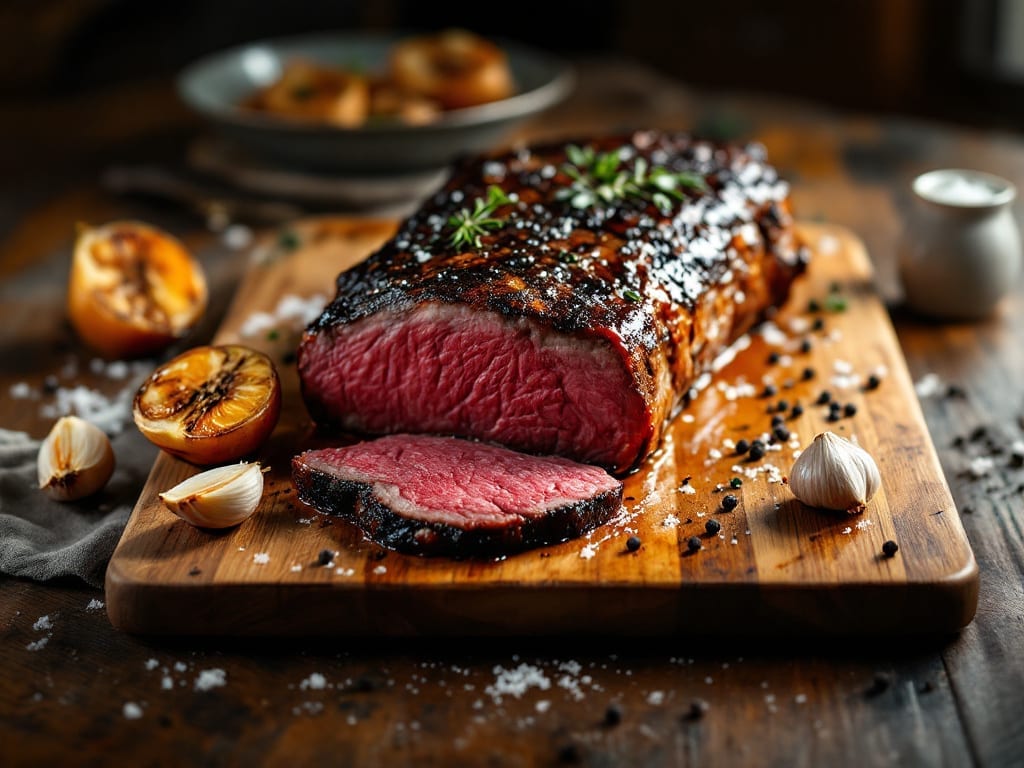
This smoked strip loin roast recipe delivers the kind of deep, smoky richness that transforms a simple Sunday dinner into a showstopping centerpiece—crispy bark on the outside, melt-in-your-mouth tenderness inside. 🔥 The secret lies in low-and-slow smoking with hickory wood, a technique I perfected after years of experimenting with French dry brining methods.
My family’s backyard cookouts taught me that patience is everything when it comes to unlocking that perfect balance of smoke and flavor.
The process is straightforward but requires attention to detail: a dry brine overnight, a precise smoke at 225°F, and a final sear to lock in those juices. The strip loin’s natural marbling ensures every slice stays juicy, while the bark develops a satisfying crunch.
What makes this recipe stand out is how the smoky aroma fills your home hours before the meat is ready, turning anticipation into excitement.
By the time you carve into that roast, you’ll have a dish that’s restaurant-quality—golden, smoky, and packed with flavor. Pair it with roasted garlic mashed potatoes or a crisp green salad to round out the meal.
The leftovers? Even better the next day, as the flavors meld into something truly unforgettable.
This recipe isn’t just about the meat—it’s about the experience. The crackling of the wood, the slow build of smoke, and that first bite of perfectly smoked beef. Let’s get started on creating a roast that’ll have everyone asking for seconds.
Ingredients for smoked strip loin roast
Six ingredients transform a simple roast into smoky perfection—crispy bark, melt-in-your-mouth tenderness, and that unmistakable hickory aroma.
| Ingredient | Amount | Notes |
|---|---|---|
| Strip Loin Roast 🥩 | 4 lb | Center-cut, bone-in preferred |
| Coarse Kosher Salt 🧂 | ½ cup | For dry brining overnight |
| Ground Black Pepper 🌶️ | 2 tbsp | Freshly cracked for depth |
| Hickory Wood Chips 🌳 | 2 cups | Unsoaked, for smoking |
| Yellow Onion 🧅 | 1 whole | Peeled, quartered for bark |
| Garlic Cloves 🧄 | 4 cloves | Smashed for sear |
| Fresh Rosemary 🌿 | ¼ cup | Chopped, sprig for aroma |
| Fresh Thyme 🌿 | ¼ cup | Leaves only, stems removed |
| Extra-Virgin Olive Oil 🫒 | 2 tbsp | For final sear |
| Butter 🧈 | ½ cup | Unsalted, softened for baste |
| Brown Sugar 🍯 | 2 tbsp | For bark development |
| Mustard Powder 🌶️ | 1 tsp | For bark complexity |
[recipe_ingredient_scaler]
The strip loin is the star, so center-cut with bone-in is non-negotiable—it stays juicier and develops that coveted bark. Costco or Whole Foods usually have the best quality, but any reputable butcher will have it. Look for good marbling—those little white streaks of fat are what keep your roast tender. I always ask for it to be trimmed of excess fat, but not so lean it dries out. The 4-pound size is perfect for a crowd, but if you’re feeding fewer, scale down to 2-3 pounds. For the wood chips, Traeger or Cookshack brands are reliable, but any hickory chips from the grocery store will work—just avoid pre-soaked ones.
No hickory chips? Oak works in a pinch, but it won’t give that classic BBQ flavor. Fresh herbs wilt fast, so dried thyme at one-third the amount is fine if you’re short on time. The brown sugar and mustard powder are for the bark—skip the sugar if you’re watching carbs, but trust me, it’s worth it for that caramelized crust. For the brine, Diamond Crystal kosher salt dissolves better than table salt, but any coarse salt will do. And if you’re feeling fancy, add a 1 tsp of smoked paprika to the dry rub for extra depth.
This roast tastes even better the next day, so make extra if you can. Wrap it tightly in butcher paper and store in the fridge for up to 5 days, or freeze for 3 months. The bark stays crispy if you reheat it in the oven at 300°F for 20 minutes. For leftovers, slice against the grain and serve on a platter with extra bark shards—it’s the best part. And if you’ve got any leftover wood chips, save them in an airtight container for your next smoke session.
Why You’ll Love This Recipe
- I’ll be real: most smoked meats turn into sad, dry scraps by day three. Not this one. The hickory keeps it juicy, and I’ve repurposed it into chili, hash, or even breakfast burritos. (Yes, even on a Tuesday night.)
- Smoke in Minutes: I swear by this—just toss the roast with salt and pepper, add hickory chips, and let the smoker do the work. No basting, no fuss, no waiting hours. Twenty minutes of prep, and you’re free to relax while the magic happens.
- That Hickory Crust: Between us, the smoky bark on the outside with tender pink inside? It’s the kind of bite that makes people pause mid-bite. The onions caramelize right on the tray—no extra pans, no extra effort, just pure flavor.
- Game for Any Gathering: Honestly, this roast is my go-to for birthdays, game days, or when my in-laws show up unannounced. Slice it thin for sandwiches, thick for plates, or even toss it in tacos the next day. It doesn’t care what you do with it.
Step-by-step instructions for smoked strip loin roast
Here’s how to transform a simple strip loin into showstopping smoked perfection.
🔥 Step 1: Dry Brine the Roast Overnight
Pat the 4 lb strip loin roast completely dry with paper towels—get every last drop of moisture from the surface. This is your secret weapon for that legendary crispy bark. In a large bowl, combine the 0.5 cup coarse kosher salt and 2 tbsp ground black pepper, then rub this mixture all over the roast, pressing it into the meat so it clings. Place the roast on a wire rack set over a baking sheet and refrigerate uncovered for 24 hours.
Here’s the thing—this dry brining does double duty. It seasons the meat deeply while drawing out surface moisture that would otherwise steam instead of crisp. After 24 hours, you’ll notice the roast looks dry and the seasoning has melted into the surface. This is exactly what we want. If you forget to brine overnight, at least do 12 hours minimum—rushing this step means sacrificing that coveted bark.
🍳 Step 2: Prepare the Smoker and Build the Rub
While the roast brines, prepare your smoker by adding the 2 cups hickory wood chips to the smoking box. Preheat to 225°F—this low-and-slow temperature is non-negotiable for tender, juicy meat. Let it smoke for 15 minutes to establish a good smoke flow before adding the roast. Meanwhile, make your bark rub by combining the chopped 0.25 cup fresh rosemary, 0.25 cup fresh thyme, 2 tbsp brown sugar, and 1 tsp mustard powder in a small bowl.
This rub isn’t just flavor—it’s your bark accelerator. The brown sugar and mustard powder create a caramelized crust that develops during smoking, while the herbs add aromatic depth. Mix everything thoroughly, then remove the roast from the fridge and pat it dry one final time. Apply the rub generously to all sides, pressing it into the meat so it sticks. Let the roast sit at room temperature for 30 minutes while the smoker comes up to temperature.
🔥 Step 3: Smoke the Roast Low and Slow
Place the roasted strip loin roast fat-side up on the smoker grates. Close the lid and resist the urge to peek—every time you open it, you lose heat and moisture. Smoke for 6-8 hours until the internal temperature reaches 160°F. This is where the magic happens: the collagen breaks down slowly, the fat renders beautifully, and that bark starts developing. You’ll know it’s ready when the exterior has a dark mahogany color and the probe slides in with just slight resistance.
Here’s my pro tip: Around the 4-hour mark, add the quartered 1 whole yellow onion and smashed 4 cloves garlic to the smoker. They’ll infuse the smoke with incredible flavor and create a delicious bark on the roast’s surface. The onions and garlic should be placed near the roast but not touching it directly. If you notice the bark developing too slowly, you can increase the temperature to 250°F for the last 1-2 hours to help it crisp up.
🥘 Step 4: Create the Baste and Finish with Crisp
When the roast reaches 160°F, remove it from the smoker and place it on a cutting board. Let it rest for 10 minutes while you prepare the baste. In a small saucepan, melt the 0.5 cup butter over low heat, then whisk in the 2 tbsp extra-virgin olive oil. Brush this mixture generously over the roast, working it into all the crevices. Return the roast to the smoker and increase the temperature to 275°F for 30 minutes to crisp the bark.
This basting step is what transforms good smoked meat into extraordinary. The butter and olive oil create a glossy finish while adding richness. During these final 30 minutes, watch the bark develop closely—it should turn deep mahogany with crispy edges. You’re aiming for that perfect balance: tender meat with a crackling, flavor-packed crust. When the bark looks perfect and the internal temperature reaches 165°F, it’s time to rest.
⏰ Step 5: Rest and Slice for Maximum Juiciness
Transfer the roast to a warm cutting board and tent loosely with foil. Let it rest for at least 30 minutes—this is absolutely critical. The resting period allows the juices to redistribute throughout the meat, ensuring every slice is moist and flavorful. If you slice too soon, all those precious juices will run out onto your board instead of staying in the meat where they belong.
After resting, slice the roast against the grain into ½-inch thick pieces. You’ll see the beautiful smoke ring just beneath the bark—this is your proof of a perfectly smoked roast. Serve immediately with the pan juices reduced slightly for a delicious gravy. Each bite should deliver tender, smoky meat with that incredible crispy bark you worked so hard to create. Trust me, this is where all your patience pays off.
Pro Tips For Making Smoked Strip Loin Roast
- Sear First, Smoke Long: Hit that strip loin with a screaming-hot cast-iron or grill pan for 2-3 minutes per side before smoking—it locks in juices and builds a crust that makes all the difference. I used to skip this, and the meat always ended up dry no matter how low-and-slow I smoked it.
- Soak Wood Chips: Drown those hickory chips in water for 30 minutes before smoking—this keeps them from burning up and turning your roast into charcoal. I learned this the hard way after a single batch of bitter, smoky regret.
- Salt the Night Before: Generously coat the strip loin with kosher salt and let it sit uncovered in the fridge for 12-24 hours—it seasons deeper and dries the surface for better bark. Yes, it’s an extra step, but your future self will taste the difference.
- Slice Against the Grain: Carve the roast perpendicular to the muscle fibers for tender bites—strip loin’s grain runs diagonally, so angle your knife at 45 degrees. I used to butcher it like a steak, and the results were chewy and disappointing.
Storing and reheating your smoked strip loin roast
Refrigerator Storage
Your smoked strip loin roast will stay at its best in the refrigerator for up to 5 days if stored properly. Wrap it tightly in pink butcher paper—this preserves the bark’s crispness better than foil.
Place it in an airtight container or resealable bag, then store on the bottom shelf where it’s coolest. The flavors actually deepen overnight, so leftovers often taste even better reheated. I always save a few slices for sandwiches the next day—they’re perfect with sharp cheddar and pickles. 🥩
Freezer Preservation
For longer storage, freeze your roast for up to 3 months without losing quality. First, let it cool completely to room temperature, then wrap it in butcher paper followed by heavy-duty aluminum foil. Place it in a freezer bag, squeezing out all air to prevent freezer burn.
Label with the date—trust me, you’ll forget! When ready to use, thaw in the fridge overnight for even cooking. The bark stays crispy if you reheat properly (more on that below). I keep a dedicated freezer bin just for smoked meats to stay organized. ❄️
Oven Reheating Method
This is my preferred way to revive smoked roast—it maintains that perfect bark while warming through evenly. Preheat your oven to 300°F and place the wrapped roast on a baking sheet. Heat for 20-25 minutes until reaching 165°F internal temperature.
The low heat prevents drying out while reactivating those smoky flavors. For extra moisture, add 2 tbsp beef broth to the wrapping before reheating. I always serve reheated slices with a side of au jus made from the original pan drippings. 🔥
Skillet Crisp Revival
Want to restore that crispy bark? After oven reheating, transfer slices to a hot cast-iron skillet over medium-high heat for 30 seconds per side. The residual fat in the meat will crisp up beautifully. This works especially well for sandwiches where you want that satisfying crunch.
I use my Lodge cast iron skillet—it’s the only one that gives that perfect sear every time. For extra flavor, add a splash of apple cider vinegar to the pan before crisping. 💫
Microwave Shortcut
When you’re in a hurry, the microwave can work in a pinch—though it won’t give you that perfect bark. Place slices on a microwave-safe plate with a damp paper towel over them. Heat on 50% power for 1-2 minutes, then flip and repeat.
Add 1 tsp beef broth to the plate to keep things moist. While not ideal, this method still delivers great flavor when you’re short on time. I only use this for quick lunches, never for special occasions. ⏰
Gravy Revival Tip
Save those pan drippings—they’re liquid gold for making gravy from leftovers. After reheating, strain the juices from the roast into a saucepan and reduce over medium heat for 5-7 minutes. Add 1 tbsp cornstarch mixed with 2 tbsp cold water to thicken.
This gravy elevates any reheated slices to restaurant-quality. I keep a small jar in my fridge just for this purpose—it’s the secret to making leftovers taste like the main event. 💡
Nutrition facts
Frequently asked questions
Can I use a different wood chip for smoking?
While hickory gives that classic BBQ flavor, oak or pecan work beautifully too. For a sweeter profile, try apple or cherry chips. Just avoid fruit woods like cherry for long smokes—they can impart a bitter taste. If you’re using a mix, start with hickory as your base (70%) and add another wood for complexity.
How do I know when the roast is done?
Use a meat thermometer to check the internal temperature—160°F for medium-rare, 165°F for medium. The bark should be deep mahogany with crispy edges. If you don’t have a thermometer, cut into the thickest part: juices should run clear, not pink. For extra accuracy, insert the probe into the thickest part without touching bone or fat.
What if my bark isn’t crispy?
Don’t panic! If the bark is soft, try increasing the smoker temperature to 250°F for the last 1-2 hours to crisp it up. For next time, ensure your roast is completely dry before applying the rub, and use a mix of brown sugar and mustard powder in your bark blend. Also, resist the urge to open the smoker lid frequently—every peek releases moisture.
Can I make this roast in an oven instead of a smoker?
Yes, but you’ll need to mimic the smoky flavor. Preheat your oven to 250°F and place a water pan on the bottom rack. Add 1-2 tbsp smoked paprika to your rub and use a meat thermometer to monitor the internal temperature. Baste with butter and olive oil halfway through for moisture. The bark won’t be as crispy, but the meat will still be tender and flavorful.
How many people does this recipe serve?
A 4 lb strip loin roast serves about 6-8 people when sliced into ½-inch portions. For a larger crowd, consider buying a 6-8 lb roast and adjust the smoking time accordingly. If you’re feeding fewer, a 2-3 lb roast is perfect for 4 servings. Always plan for leftovers—this roast tastes even better the next day!

Trained in classic French technique but raised on slow-cooked ribs and spicy rubs, she blends culinary skill with smoke and soul.
- Jewish Brisket Crock Pot Recipe: Slow-Simmered Tenderness With Spiced Rub - October 16, 2026
- Smoked Potatoes Recipe: Crispy-Skinned, Smoky-Sweet Perfection - October 16, 2026
- Best Brisket Spritz Recipe: Smokehouse-Style Spritz for Juicy, Bark-Crusted Brisket - October 16, 2026