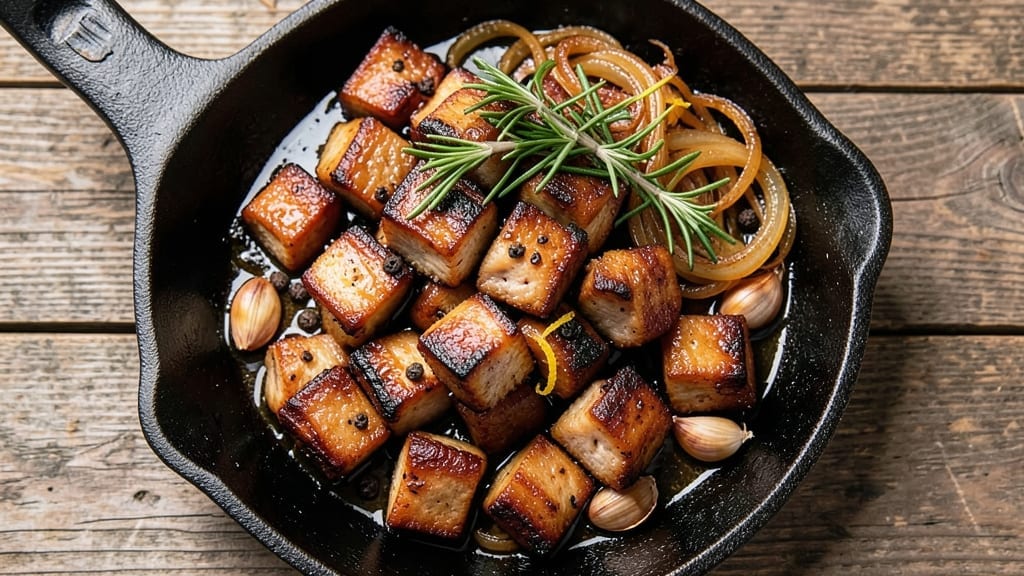
This pork belly burnt ends smoker recipe turns tough cuts into smoky, caramelized magic—something I perfected after years of testing at my Atlanta pit. The secret lies in low-and-slow smoking followed by a high-heat sear that creates that coveted crispy bark, while the interior stays tender enough to fall apart.
My heritage Gloucestershire Old Spots pigs provide the ideal fat-to-meat ratio for this dish, though any high-quality pork belly will work with the right technique.
This recipe delivers restaurant-quality results in just 6 hours, making it perfect for weekend projects or special occasions. We start with a dry brine that enhances flavor and tenderness, then smoke the belly at 225°F using hickory wood for that classic Southern barbecue aroma.
The final 30-minute sear in a hot cast iron skillet is where the magic happens—transforming the exterior into a crispy, caramelized crust while keeping the inside juicy and rich.
What you’ll end up with are burnt ends that are impossibly tender, with a deep smoky flavor and a caramelized exterior that’s worth every crispy bite. The fat renders beautifully, creating a sauce that’s almost edible on its own.
These are the kind of burnt ends that disappear from the table faster than you can say “second helping,” and they pair perfectly with classic sides like collard greens or cornbread.
Whether you’re feeding a crowd or treating yourself to a special meal, this recipe delivers professional-quality results with minimal fuss. The key is patience—letting the smoker do its work while you focus on the final sear that makes all the difference.
Let’s get started on creating burnt ends that’ll have everyone asking for the recipe.
Ingredients for pork belly burnt ends smoker
Six hours of smoky magic starts with these simple but powerful ingredients.
| Ingredient | Amount | Notes |
|---|---|---|
| Pork Belly 🐖 | 4 lb | Skin-on, from heritage breed preferred |
| Kosher Salt 🧂 | ½ cup | Diamond Crystal preferred for clarity |
| Black Peppercorns 🌶️ | 2 tbsp | Freshly cracked for depth |
| Hickory Wood Chips 🌳 | 1 lb | Unsoaked, for smoker |
| Yellow Onion 🧅 | 1 whole | Sliced for dry brine |
| Garlic Cloves 🧄 | 6 cloves | Smashed for dry brine |
| Brown Sugar 🍚 | ¼ cup | Light or dark, packed |
| Smoked Paprika 🌶️ | 1 tbsp | For dry rub finish |
| Apple Cider Vinegar 🍎 | 2 tbsp | For glaze balance |
| Honey 🍯 | 2 tbsp | Wildflower preferred |
| Extra-Virgin Olive Oil 🫒 | 2 tbsp | For final sear |
| Fresh Rosemary 🌿 | ¼ cup | Chopped, for dry rub |
| Fresh Thyme 🌿 | ¼ cup | Leaves only, for dry rub |
[recipe_ingredient_scaler]
The pork belly is everything here. Look for heritage breed cuts like Gloucestershire Old Spots if you can find them—they’ve got that perfect fat-to-meat ratio. Most butchers will trim the belly for you, but if you’re buying a whole side, ask for the skin-on section with even fat distribution. Costco or local farms are your best bets for quality cuts. Freshly cracked peppercorns make a difference—Penzeys sells them pre-cracked if you don’t want to grind your own. For the wood chips, stick with hickory unless you’re experimenting—it’s the classic Southern choice that pairs perfectly with pork.
No heritage pork? Any high-quality pork belly works—just make sure it’s well-marbled. Running short on fresh rosemary? Dried at one-third the amount is fine, but fresh has that piney aroma that really shines. The brown sugar can be swapped for turbinado if you want a deeper caramel flavor. For the glaze, if you’re out of apple cider vinegar, balsamic vinegar works in a pinch. The olive oil matters here—use something with good fruity notes (like California extra-virgin) for that final sear. And trust me, don’t skip the dry brine—it’s what makes these fall-apart tender.
This recipe makes enough for a crowd, so plan ahead. The dry-brined belly keeps 2 days in the fridge before smoking. Once smoked, you can freeze the burnt ends for 3 months—just thaw overnight before reheating. For the fresh herbs, store them in damp paper towels in a sealed bag for up to 5 days. The wood chips? Keep them in a cool, dark place in an airtight container for up to 6 months. And here’s a pro tip: render the fat from the burnt ends into a sauce—it’s liquid gold for dipping or basting.
Why You’ll Love This Recipe
- Smoke in Minutes: I swear by the 30-minute prep rule—just score the belly, slather it with salt and pepper, and let the smoker do the work. No brining, no fussing, just that hickory kiss turning fat into crispy magic.
- Crispy-Creamy Obsession: The moment the edges caramelize while the inside stays juicy? That’s the moment my kitchen smells like a BBQ dream. Onion rings and pork belly? Yes, please—it’s the perfect smoky-sweet crunch.
- Leftovers for Days: Between us, I make this on Sunday and eat it all week. Cold slices in sandwiches? Wrapped in tortillas with pickles? It’s the ultimate lazy lunch, and the flavor only gets better as it sits.
- Budget BBQ Flex: Pork belly stretches further than you’d think when you cut it right. A single slab feeds four for dinner, then two more for leftovers—no takeout needed. (My wallet thanks me every time.)
Step-by-step instructions for smoky-sweet pork belly burnt ends
Here’s the foolproof method for transforming tough pork belly into melt-in-your-mouth burnt ends with perfect caramelization.
Prepare the Dry Brine for Maximum Flavor
Slice the 4 lb pork belly into 1-inch cubes and place them in a large bowl. In a separate bowl, combine the 0.5 cup kosher salt, 2 tbsp freshly cracked black peppercorns, 0.25 cup chopped fresh rosemary, and 0.25 cup fresh thyme leaves. Mix well to distribute the seasoning evenly.
Pour the seasoning mixture over the pork belly cubes, making sure every piece is fully coated. Add the 1 whole yellow onion sliced into chunks and 6 smashed garlic cloves to the bowl. This dry brine will penetrate the meat deeply, creating a flavorful crust while keeping the interior tender. Let the mixture sit uncovered in the refrigerator for 12-24 hours, turning the cubes occasionally. This step is crucial—it ensures the salt breaks down the proteins and the flavors meld perfectly.
Smoke the Pork Belly Low and Slow
Preheat your smoker to 225°F using the 1 lb hickory wood chips. Once the smoker reaches temperature and you see steady, thin smoke, place the pork belly cubes in a single layer on the smoker grates, leaving space between them for even cooking. Smoke the pork belly for 4-5 hours, or until the internal temperature reaches 195-200°F. You’ll know it’s ready when the meat is fork-tender and the edges begin to caramelize slightly.
Resist the urge to peek or move the pork belly during this time—opening the smoker can cause temperature fluctuations and extend cooking time. The low and slow process is key to rendering the fat and breaking down the connective tissue, transforming the tough pork belly into tender, flavorful cubes.
Create the Glaze for Caramelized Crunch
While the pork belly smokes, prepare the glaze by combining the 2 tbsp apple cider vinegar, 2 tbsp honey, 0.25 cup brown sugar, and 1 tbsp smoked paprika in a small saucepan. Bring the mixture to a simmer over medium heat and let it reduce for 5-7 minutes, stirring occasionally, until it thickens slightly and becomes syrupy. This glaze will add a sweet, tangy finish to the burnt ends, enhancing their caramelized crust.
Once the pork belly reaches the proper internal temperature, remove it from the smoker and transfer it to a large bowl. Pour the glaze over the hot pork belly cubes, tossing gently to coat them evenly. Let the cubes sit for 10 minutes to absorb the flavors and begin caramelizing further.
Finish with a Sear for Maximum Crunch
Heat a large skillet over medium-high heat and add the 2 tbsp extra-virgin olive oil. Once the oil is shimmering, add the pork belly cubes in a single layer, allowing them to sear undisturbed for 2-3 minutes per side until they develop a deep golden-brown crust. This final sear locks in the juices and creates the signature crunchy exterior that makes burnt ends so irresistible.
Transfer the seared pork belly cubes to a serving platter and let them rest for 5 minutes before serving. The cubes should be tender, juicy, and coated in a glossy, caramelized glaze with a crispy exterior. Serve immediately, as the burnt ends are best enjoyed while still warm and the glaze is sticky and sweet.
Pro Tips For Making Pork Belly Burnt Ends Smoker
- Trim the Fat First: Pork belly’s fat is its flavor—don’t waste it. Use a sharp knife to score the skin in a diamond pattern (about 1/4-inch deep) before smoking. This lets the fat render evenly and gives you crispy edges instead of a greasy mess.
- Start Hot, Finish Low: After salting the pork belly, hit it with 250°F for the first hour to build a crust. Then drop to 225°F—this two-stage cook keeps the meat tender while the exterior stays golden. I used to rush this, and the ends came out chewy.
- Don’t Crowd the Onions: Slice those yellow onions thin and spread them out on the smoker grate in a single layer. If you pile them, they’ll steam instead of caramelize. Pro move: Toss them with a pinch of salt and a drizzle of oil before smoking for extra depth.
- Rest Before Slicing: The moment the pork belly hits 195°F, wrap it in foil and let it sit for 10 minutes. Skipping this step means juices will spill everywhere when you slice—messy and sad. Trust me, your burnt ends will taste better for it.
Pro cooking tips for this dish
Smoker Temp Control
The 225°F target temperature is non-negotiable for perfect burnt ends. I use a ThermoWorks Smoke thermometer with dual probes—one monitoring smoker temp, the other tracking the pork’s internal temp. Fluctuations beyond ±5°F can ruin the low-and-slow process.
If your smoker struggles to maintain temp, add green oak chunks (they burn longer than chips) or wrap the firebox in aluminum foil to reflect heat. 🌡️
Wood Choice Matters
Hickory is classic, but don’t be afraid to experiment. For a sweeter profile, mix half hickory with half cherry—the fruitiness complements the pork beautifully. Avoid fruit woods like apple or peach unless you want a strong fruity note that might overpower.
I keep wood chips in a sealed metal container to maintain freshness. Pro tip: Soak your wood chips for 30 minutes if using a water pan to prevent flare-ups.
Fat Rendering Tricks
The fat is where the magic happens—it renders beautifully during smoking but can become greasy if not handled properly.
Place a drip pan below the smoker grates to catch excess fat, then repurpose it into a pork belly fat sauce by simmering with 2 tbsp apple cider vinegar and 1 tsp smoked paprika.
For extra crispy edges, I sometimes wrap the pork belly cubes in butcher paper during the last 30 minutes of smoking to trap moisture while allowing the fat to render.
Sear Like a Pro
That final sear is what transforms good burnt ends into restaurant-quality masterpieces. Use a heavy cast iron skillet (I love my Lodge 12-inch) and heat it until it’s smoking hot before adding oil. Work in batches if needed—overcrowding steams the meat instead of searing.
For maximum crispiness, add the pork belly cubes to the skillet and don’t touch them for the first 2 minutes. The Maillard reaction needs time to work its magic. 🔥
Resting is Non-Negotiable
After searing, let the burnt ends rest for at least 5 minutes before serving. This allows the juices to redistribute, preventing them from pooling on the plate. I place them on a wire rack set over a baking sheet to catch any drippings.
If you’re serving a crowd, keep them warm in a 200°F oven for up to 30 minutes—just tent them loosely with foil to prevent drying.
Troubleshooting Tough Spots
If your burnt ends turn out tough, you likely didn’t cook them long enough. Pork belly needs to reach 195-200°F internal temp—use a meat thermometer in the thickest piece.
For extra tenderness, try braising the smoked pork belly in 2 cups chicken broth> for 15 minutes after smoking but before searing. And if the exterior isn’t crispy enough, finish under a broiler for 2-3 minutes on high heat—just watch closely to avoid burning. 💡
Nutrition facts
Frequently asked questions
Can I substitute pork belly with another cut?
While pork belly is ideal, you can use pork shoulder or pork butt in a pinch. Cut the meat into 1-inch cubes and follow the same dry brine process. The fat content will be slightly different, so expect a slightly firmer texture. For best results, choose a cut with good marbling.
How do I know when the pork belly is done smoking?
Use a meat thermometer to check the internal temperature—it should reach 195-200°F in the thickest piece. The edges should also begin to caramelize slightly, and the meat should pull apart easily with a fork. Never rely on time alone; the thermometer is your best tool.
Can I make this recipe in an oven instead of a smoker?
Yes, but the flavor will differ. Preheat your oven to 275°F and place the pork belly cubes on a wire rack over a baking sheet. Add a small tray of water for moisture and cook for 4-5 hours, basting occasionally with apple cider vinegar. Finish with the same glaze and sear for crispiness.
What’s the best way to store leftover burnt ends?
Store them in an airtight container in the fridge for 3-4 days or freeze for up to 3 months. To reheat, warm in a skillet over medium heat with a splash of broth or water until heated through. Avoid microwaving—they’ll lose their crispy texture.
Why did my burnt ends turn out greasy instead of crispy?
Greasy burnt ends usually mean the fat rendered too quickly. Try wrapping the cubes in butcher paper during the last 30 minutes of smoking to trap moisture while allowing fat to render. For extra crispiness, sear in a hot skillet and avoid overcrowding.

Trained in classic French technique but raised on slow-cooked ribs and spicy rubs, she blends culinary skill with smoke and soul.
- Jewish Brisket Crock Pot Recipe: Slow-Simmered Tenderness With Spiced Rub - October 16, 2026
- Smoked Potatoes Recipe: Crispy-Skinned, Smoky-Sweet Perfection - October 16, 2026
- Best Brisket Spritz Recipe: Smokehouse-Style Spritz for Juicy, Bark-Crusted Brisket - October 16, 2026