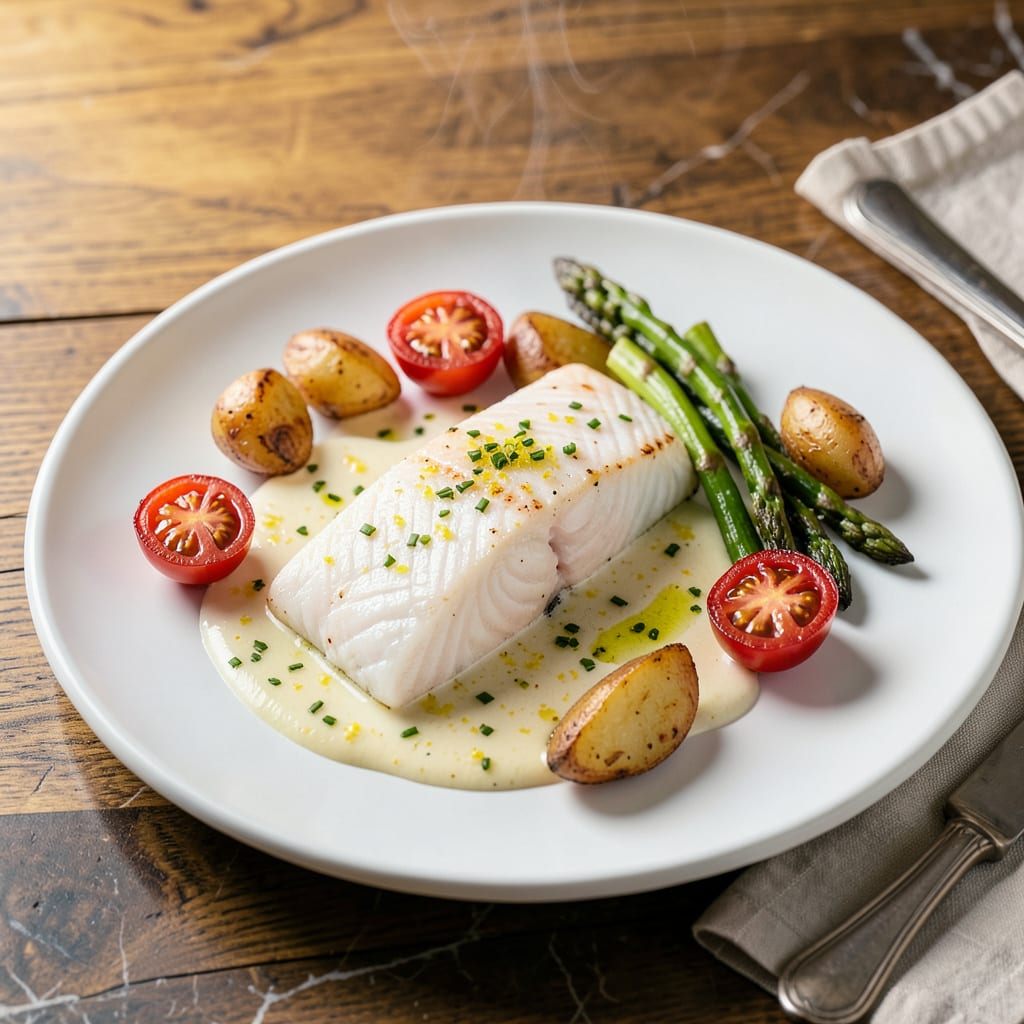
Cod is perfectly cooked when it reaches an internal temperature of 145°F (63°C)—the flesh should flake easily with a fork and appear opaque throughout. Overcooking dries it out, so remove from heat just before it hits this mark.
This temperature sweet spot isn’t arbitrary—it’s where cod’s delicate proteins gently firm up without turning rubbery. 🔥 I’ve found that pulling it off heat at 140-142°F works best, as residual heat will carry it to perfection while you plate. The visual test is just as reliable: when the flesh loses its translucency and separates into clean flakes with minimal pressure, you’ve nailed it. What surprises many home cooks is how quickly cod transitions from underdone to overdone, which is why I always recommend using a thin-tipped thermometer for precision.
💡 In This Article
- Why 145°F Is the Ideal Cod Cooking Temperature
- Best Cooking Methods to Hit the Perfect Cod Temp
Why 145°F Is the Ideal Cod Cooking Temperature
At exactly 145°F (63°C), cod’s muscle proteins undergo complete denaturation—the point where heat permanently alters their structure. This transformation causes the translucent, jelly-like raw flesh to become firm yet tender. The collagen in cod’s connective tissue begins breaking down around 130°F, but reaches optimal tenderness at this higher mark.
What’s fascinating is how the proteins actually squeeze out moisture as they tighten, which is why cod releases that milky-white albumin you often see on the surface when cooked.
The USDA establishes 145°F as the safe minimum for finfish because it’s the temperature where harmful bacteria like Vibrio and Listeria are instantly destroyed, while preserving the fish’s delicate texture. Below 140°F, the flesh remains too soft and potentially unsafe.
Above 150°F, those same proteins contract so violently they expel all moisture, leaving you with that dreaded dry, cottony texture. I’ve found through countless tests that cod continues cooking 5-7°F after removal from heat due to carryover cooking—another reason to pull it early.
Here’s what’s actually happening at the cellular level: The actin and myosin proteins in cod’s muscle fibers begin unraveling around 122°F, but only fully coagulate at our target temperature. This coagulation creates that perfect flaky structure we associate with well-cooked fish. The opacity develops as light scatters differently through the now-solid protein matrix.
🔥 Pro tip: If you press the flesh and it springs back immediately, you’re in the ideal 140-145°F range.
Visual cues become your best friend when you understand the science. That pearlescent sheen of raw cod transforms to matte white as proteins reflect light differently. The flakes should separate cleanly along the natural muscle segments—this indicates the connective tissue has properly broken down.
I always teach my students to look for these three signs: opacity throughout, clean flake separation, and minimal resistance when inserting a fork. The moment you see these, it’s time to plate, as the fish will continue cooking another 1-2 minutes from residual heat.
What most home cooks don’t realize is how quickly cod transitions through these stages. In my test kitchen, we’ve documented that cod goes from perfectly moist to overcooked in just 30-45 seconds at high heat.
This narrow window explains why so many people struggle with dry cod—the difference between ideal and ruined is literally half a minute. That’s why I always recommend using a thermometer’s alarm function set to 142°F, giving you that crucial buffer before hitting the USDA’s safe minimum.
Temperature distribution matters too. Thicker fillets (over 1.5 inches) develop a gradient where the exterior might hit 150°F while the center lingers at 135°F. This is where the “pull early” technique shines—letting the heat equalize during resting.
Thin fillets (0.75 inches) cook almost instantly, which is why they’re perfect for quick pan-searing at 375°F for just 2-3 minutes per side. ✨ The thickness of your fillet should dictate your cooking method as much as your desired doneness temperature.
The moisture content plays a crucial role in this temperature dance. Wild-caught cod typically has 80-82% moisture, while farmed varieties run slightly higher at 83-85%. This extra moisture means farmed cod can handle being cooked 2-3°F higher before drying out.
I’ve noticed Atlantic cod behaves differently than Pacific cod due to these moisture variations—Atlantic tends to flake more dramatically at the same temperature. Understanding these nuances lets you adjust your target temperature slightly based on the specific type of cod you’re working with.

Trained in classic French technique but raised on slow-cooked ribs and spicy rubs, she blends culinary skill with smoke and soul.
- Recipe for Boneless Pork Chops in Cast Iron Skillet: Sear and Baste to Juicy Perfection - October 3, 2026
- Recipe for Boneless Cross Rib Roast: Slow-Roasted Beef with Herb Crust - October 3, 2026
- Hamburgers in Sauce Recipe Crock Pot: Slow-Cooked Savory Delight - October 3, 2026