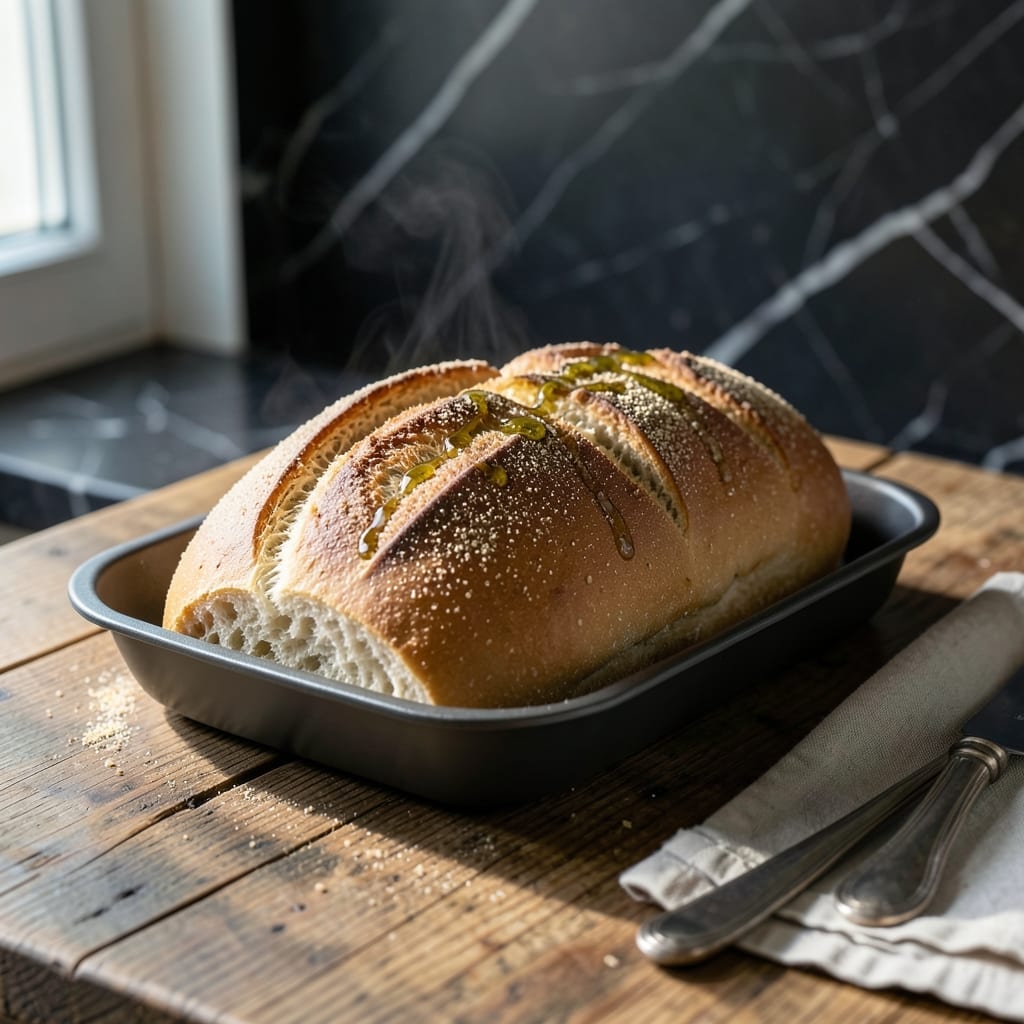
Achieving artisan-quality gluten-free bread at home doesn’t require expert skills or constant attention. This recipe leverages your bread machine to deliver a hands-off loaf with a crisp crust and airy interior.
I developed this method to simplify gluten-free baking without sacrificing texture or flavor. The machine handles the mixing, kneading, and proofing, while a few key ingredients ensure the right rise and structure.
What you’ll get is a beautiful, golden-brown loaf that rivals traditional French bread—perfect for sandwiches, toast, or serving alongside soups and stews.
With minimal effort and precise timing, this recipe makes gluten-free baking accessible to anyone. Let’s get started.
Ingredients for Gluten Free French Bread Recipe for Bread Machine
Precisely measured dry and wet ingredients combine for artisanal gluten-free bread with minimal effort.
| Ingredient | Amount | Notes |
|---|---|---|
| Gluten-Free Bread Flour Blend 🌾 | 3 ½ cups | Includes xanthan gum for structure |
| Tapioca Starch 🌾 | ½ cup | For chewy texture |
| Nonfat Dry Milk Powder 🥛 | ¼ cup | Enhances browning and softness |
| Sugar 🍚 | 2 tbsp | Feeds the yeast for rise |
| Active Dry Yeast 🍞 | 2 ¼ tsp | Ensure it's fresh and active |
| Salt 🧂 | 1 ½ tsp | Fine sea salt preferred |
| Large Eggs 🥚 | 2 whole | Room temperature for best results |
| Unsalted Butter 🧈 | 2 tbsp | Melted and cooled slightly |
| Water 💧 | 1 ¼ cups | Warm, about 110°F |
| Apple Cider Vinegar 🍏 | 1 tbsp | Balances flavors and aids rise |
| Olive Oil 🫒 | 1 tbsp | For greasing the pan |
| Cornmeal 🌽 | 2 tbsp | For dusting the pan |
[recipe_ingredient_scaler]
The gluten-free flour blend is critical here. King Arthur or Bob’s Red Mill 1:1 are reliable choices—both include xanthan gum, which is non-negotiable for structure. Tapioca starch adds that signature chew; Whole Foods bulk section often has it. Dry milk powder enhances browning and softness—Organic Valley is a trusted brand. Ensure your yeast is fresh; expired yeast is the most common reason for dense loaves.
No dry milk powder? Coconut milk powder at equal volume works, though the flavor profile shifts slightly. Eggs can be replaced with flax eggs at a 1:1 ratio (1 tbsp ground flaxseed + 3 tbsp water per egg), but texture may be denser. Butter substitutes like Earth Balance are fine, but avoid margarine with high water content. Sugar can be swapped for honey at equal volume, though it may darken the crust more.
Store the flour blend and starches in airtight containers in a cool, dark place for up to 6 months. The baked loaf stays fresh wrapped in foil at room temperature for 2 days, or freeze for 1 month for longer storage. Slice before freezing for easy toast portions.
Why You’ll Love This Recipe
- Set It & Forget: I toss the gluten-free flour blend, tapioca starch, and yeast into the machine before bed and wake up to fresh-baked bread.
- That Crust Though: The tapioca starch gives it a crispy golden crust with a soft, airy center—just like the bakery version I used to miss.
- Sandwich Savior: Honestly, it’s my weekly meal prep hero—great for lunches, toast, or even garlic bread when I’m feeling fancy.
- No Waste Here: Leftovers? Freeze a loaf and it toasts up just as good weeks later. My wallet thanks me every time.
Step-by-Step Instructions for Gluten Free French Bread
This hands-off method delivers artisan results with precise timing and technique.
Step 1: Prepare the Bread Machine Pan and Activate the Yeast
Begin by greasing the bread machine pan with the 1 tablespoon Olive Oil, ensuring complete coverage. Dust the bottom and sides with the 2 tablespoons Cornmeal—this prevents sticking and adds a subtle crunch to the finished loaf.
In a small bowl, combine the 1.25 cups Water (warmed to 110°F) with the 2 tablespoons Sugar and 2.25 teaspoons Active Dry Yeast. Let it sit for 5-7 minutes until the mixture becomes frothy and the yeast is fully activated. This step ensures your loaf will rise properly.
Step 2: Combine Dry Ingredients and Wet Mixture
In the prepared bread machine pan, whisk together the 3.5 cups Gluten-Free Bread Flour Blend, 0.5 cup Tapioca Starch, 0.25 cup Nonfat Dry Milk Powder, and 1.5 teaspoons Salt until fully combined. The dry milk powder enhances browning and softness, while the tapioca starch contributes to a chewy texture.
Create a well in the center of the dry ingredients. Pour in the yeast mixture, 2 whole Large Eggs, 2 tablespoons Unsalted Butter (melted and cooled slightly), and 1 tablespoon Apple Cider Vinegar. The vinegar balances flavors and aids in the rise, so don’t skip it.
Step 3: Select the Bread Machine Settings
Secure the pan in the bread machine and select the “Gluten-Free” setting if available. If your machine lacks this option, use the “Basic” or “White Bread” cycle with a 2-pound loaf size and medium crust. The gluten-free blend requires a slightly longer rise time, so avoid interrupting the process.
Press start and allow the machine to knead the dough for 10-12 minutes. Check the consistency after the initial mixing—if the dough appears too dry, add 1-2 teaspoons of water; if it’s too sticky, sprinkle in 1 tablespoon of Gluten-Free Bread Flour Blend. The dough should be smooth and slightly tacky but not wet.
Step 4: Monitor the Rise and Bake
Let the bread machine complete the full cycle, which typically takes 3-4 hours depending on the model. During the final rise, observe the loaf through the machine’s window—it should dome slightly above the pan but not overflow. The Active Dry Yeast and warm environment will create a light, airy texture.
Once the baking cycle begins, resist the urge to open the lid. The loaf is done when the internal temperature reaches 200-205°F and the top is golden brown. The bread machine will automatically transition to a keep-warm phase, but for best results, remove the pan promptly after baking completes.
Step 5: Cool and Serve
Transfer the pan to a wire rack and let the loaf cool in the pan for 5 minutes. This prevents sagging. Then, remove the bread from the pan and return it to the rack to cool completely for at least 1 hour. Cooling is critical—slicing too soon can result in a gummy texture.
The finished loaf should have a crisp, golden crust and a soft, open crumb. Serve warm or at room temperature, sliced with a serrated knife for clean cuts. Store any leftovers in an airtight container for up to 3 days.
Pro Tips For Making Gluten Free French Bread Recipe For Bread Machine
- Warm Your Liquids: Use liquids at 110°F when activating the yeast—any hotter kills it, any cooler slows the rise. I learned this the hard way after a few flat loaves.
- Weigh Your Flour: Gluten-free blends vary wildly in density. Weighing your flour (instead of scooping) guarantees consistent texture every time.
- Skip the Overmixing: Once the dough comes together in the bread machine, resist the urge to let it knead longer. Overmixing makes gummy bread.
- Add an Egg: Sounds weird, but it works: one egg replaces 2 tablespoons of water for a better crumb and richer flavor.
Perfect Pairings for gluten free french bread recipe for bread machine
Soup Pairings
This loaf shines alongside French onion soup—dip slices in the rich broth and melted cheese for a cozy meal. I also love it with tomato bisque; the bread’s crisp crust holds up perfectly to soaking. 🥗
Salad Combinations
For a lighter meal, pair with a Nicoise salad. The bread’s mild flavor complements the bold olives, tuna, and hard-boiled eggs. A simple mixed greens salad with balsamic vinaigrette works beautifully too.
Sandwich Ideas
Use this bread for grilled cheese with sharp cheddar and tomato slices. It also makes excellent Panini—press with turkey, avocado, and Swiss for a warm, melty lunch. I love how the crust crisps up perfectly.
Cheese and Charcuterie
Create a gluten-free charcuterie board with this bread as the star. Add Brie, prosciutto, and cornichons for a French-inspired spread. The bread’s texture holds up to all the toppings. 💫
Breakfast Options
Toast slices and top with avocado and a poached egg for a hearty breakfast. It also makes fantastic French toast—dip in a mix of eggs, cinnamon, and vanilla for a weekend treat.
Dessert Twist
Transform leftovers into bread pudding. Cube the bread, soak in a custard of eggs, milk, and sugar, then bake until golden. Serve warm with a drizzle of caramel sauce.
Nutrition Facts
Frequently Asked Questions
Can I use a different gluten-free flour blend?
Yes, but ensure it contains xanthan gum for proper structure. Brands like Bob’s Red Mill 1:1 or King Arthur work well. Avoid almond or coconut flour as they behave differently.
Why does my loaf collapse after baking?
This usually means the bread didn’t bake long enough. Check the internal temperature reaches 200-205°F before removing. Also, let it cool completely to set the structure.
Can I make this without a bread machine?
Yes! Mix and knead by hand, place in a greased loaf pan, and bake at 375°F for 35-40 minutes. The texture may vary slightly.
How do I store the bread to keep it fresh?
Wrap cooled loaves in foil and store at room temperature for up to 2 days. For longer storage, slice and freeze for up to 1 month.

Trained in classic French technique but raised on slow-cooked ribs and spicy rubs, she blends culinary skill with smoke and soul.
- Recipe for Boneless Pork Chops in Cast Iron Skillet: Sear and Baste to Juicy Perfection - October 3, 2026
- Recipe for Boneless Cross Rib Roast: Slow-Roasted Beef with Herb Crust - October 3, 2026
- Hamburgers in Sauce Recipe Crock Pot: Slow-Cooked Savory Delight - October 3, 2026