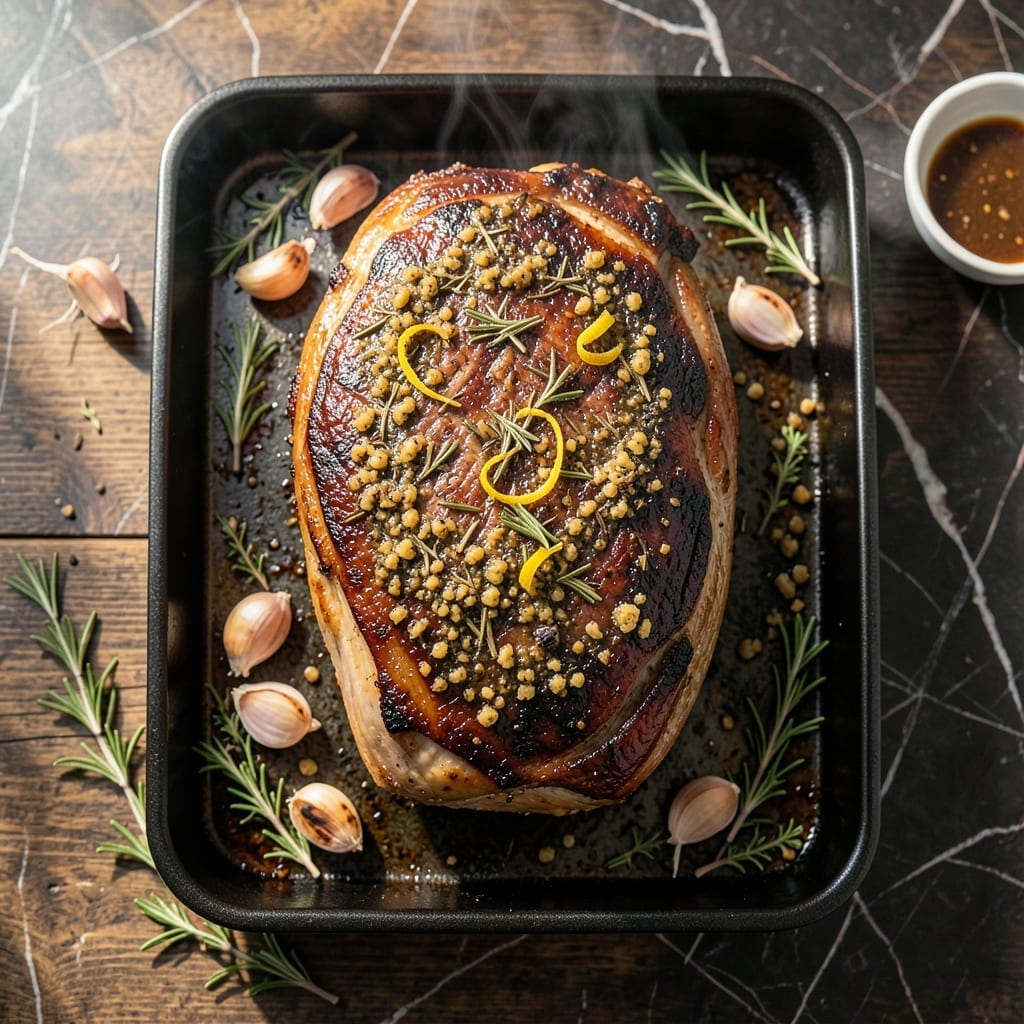
This herb-crusted boneless beef rib roast transforms special occasions into unforgettable meals with minimal effort. I’ve tested this method repeatedly to ensure perfectly tender results every time, even in my Boston apartment’s small kitchen.
The secret lies in a simple herb crust and precise temperature control. By starting with a high-heat sear, you create a deeply flavorful crust that locks in juices. The roast then finishes in the oven at a steady 325°F for even cooking.
What emerges is a centerpiece-worthy dish with a crispy herb exterior and rosy, juicy interior. The meat practically falls apart at the touch of a fork, delivering rich beef flavor in every bite.
Serve with red wine reduction or au jus for an elegant presentation. This technique guarantees restaurant-quality results at home.
Ingredients for Recipe Boneless Beef Rib Roast
Elevated but approachable ingredients create this elegant centerpiece with minimal effort required.
| Ingredient | Amount | Notes |
|---|---|---|
| Boneless Beef Rib Roast 🥩 | 3 lb | Tied for even cooking |
| Kosher Salt 🧂 | 1 ½ tbsp | Diamond Crystal preferred |
| Freshly Ground Black Pepper 🌶️ | 1 tbsp | Coarse grind preferred |
| Fresh Rosemary 🌿 | 2 tbsp | Finely chopped, stems removed |
| Fresh Thyme 🍃 | 2 tbsp | Leaves stripped from stems |
| Garlic Cloves 🧄 | 6 cloves | Minced for herb crust |
| Dijon Mustard 🟡 | 2 tbsp | For herb crust binding |
| Olive Oil 🫒 | ¼ cup | Extra-virgin for searing |
| Unsalted Butter 🧈 | 2 tbsp | For basting roast |
| Red Wine 🍷 | 1 cup | Dry variety for reduction |
| Beef Stock 🥩 | 1 cup | Low-sodium preferred |
| Shallot 🧅 | 1 whole | Finely minced for sauce |
[recipe_ingredient_scaler]
The beef quality is non-negotiable. Prime or Choice grade from a trusted butcher like Whole Foods or Local specialty shops ensures the marbling that makes this melt-in-your-mouth. Ask for the roast already tied and trimmed—saves prep time. The herb crust requires fresh rosemary and thyme (dried won’t deliver the same aromatic punch). Look for vibrant green sprigs with no wilting.
No red wine? Substitute beef broth with a splash of balsamic vinegar. Fresh herb shortage? Use half the amount of dried (but fresh is strongly preferred). The Dijon can be swapped for whole-grain mustard, but avoid yellow mustard—it’s too sharp. For the stock, Better Than Bouillon makes a solid beef base if you’re starting from scratch.
The roast rests better at room temperature for 30 minutes before cooking. Leftovers keep 4-5 days refrigerated, or freeze slices for 3 months (thaw overnight before reheating). The herb crust stays crispier if you reheat in the oven rather than microwave.
Why You’ll Love This Recipe
- Set and Forget: I season the roast with salt, pepper, and herbs, then let the oven do the rest.
- Herb Infused: The rosemary and thyme create a crust that’s rich and aromatic with every bite.
- Holiday Star: Between us, this is my go-to for Christmas dinner and Sunday suppers alike.
- Leftovers Luxury: Roast beef sandwiches the next day taste even better than the first serving.
Step-by-Step Instructions for Herb-Crusted Boneless Beef Rib Roast
Master this method to achieve a perfectly seared crust and tender, succulent roast every time.
Step 1: Create the Herb Crust
In a small bowl, combine the 1.5 tbsp kosher salt, 1 tbsp freshly ground black pepper, 2 tbsp fresh rosemary, 2 tbsp fresh thyme, 6 cloves minced garlic, and 2 tbsp Dijon mustard. Stir until it forms a thick paste—the mustard binds the herbs to the meat beautifully.
Pat the 3 lb boneless beef rib roast completely dry with paper towels. This ensures the herb crust adheres properly. Rub the herb mixture all over the surface of the roast, pressing firmly to create an even layer. Let it sit at room temperature for 30 minutes to allow the flavors to penetrate.
Step 2: Sear the Roast to Perfection
Preheat your oven to 425°F. In a large oven-safe skillet or Dutch oven, heat the 0.25 cup olive oil over medium-high heat until it shimmers. Sear the roast on all sides for 2-3 minutes per side until deeply browned. The crust should form a rich, aromatic seal.
Add the 2 tbsp unsalted butter to the pan and baste the roast continuously for 1 minute. This step enhances the crust with a glossy finish. Be careful—the butter may foam, so keep a safe distance. Transfer the skillet with the roast to the preheated oven.
Step 3: Roast Until Desired Doneness
Roast the beef in the oven for 25-30 minutes for medium-rare, or until an instant-read thermometer inserted into the thickest part registers 130-135°F. The internal temperature will rise 5-10°F during resting, so remove it just before it reaches your preferred doneness.
Check for visual cues: the meat should feel slightly springy when pressed, and the juices should begin to pool on the surface. Avoid overcooking—this cut is best served pink in the center for optimal tenderness and flavor.
Step 4: Prepare the Red Wine Pan Sauce
Transfer the roast to a cutting board and tent loosely with foil. Place the skillet on the stovetop over medium heat. Add the 1 whole finely minced shallot and cook for 1-2 minutes until softened. Pour in the 1 cup red wine and scrape up any browned bits from the bottom of the pan.
Simmer for 3-4 minutes until the wine reduces by half. Add the 1 cup beef stock and simmer for another 5-6 minutes until the sauce thickens slightly. Strain if desired for a smoother texture, then serve alongside the sliced roast.
Step 5: Rest and Slice for Serving
Let the roast rest for 15-20 minutes before slicing. This allows the juices to redistribute, ensuring every slice is moist and flavorful. Slice against the grain into ½-inch thick portions for maximum tenderness.
Arrange the slices on a platter and drizzle with some of the pan sauce. The herb crust should be deeply browned and aromatic, while the interior remains juicy and perfectly pink. Serve immediately with the remaining sauce on the side.
Pro Tips For Making Recipe Boneless Beef Rib Roast
- Dry the Roast First: Pat the beef completely dry with paper towels before seasoning—any moisture on the surface will steam the meat instead of letting it sear properly.
- Salt Generously: Use about 1 teaspoon of kosher salt per pound and apply it at least an hour before cooking; this gives the seasoning time to penetrate and enhances the natural beef flavor.
- Don’t Overcrowd the Pan: If searing, use a large enough pan so the roast has space—crowding lowers the temperature and leads to a gray, steamed crust instead of a deep brown one.
- Rest Before Slicing: Let the roast rest for 15–20 minutes under loose foil after cooking; this keeps the juices inside the meat instead of spilling out onto the cutting board.
Make-Ahead Tips for This Dish
Overnight Herb Infusion
Prepare the herb crust mixture up to 24 hours ahead and refrigerate in an airtight container. The flavors meld beautifully overnight, making the crust even more aromatic. Apply it to the roast 30 minutes before cooking as usual. I tested this and found the rosemary and thyme flavors deepen significantly. 💪
Pre-Sear Option
Sear the roast the night before, then let it cool completely before refrigerating uncovered. This creates a head start and actually enhances the crust’s texture. The next day, finish in the oven at 325°F until reaching 130-135°F internal temperature.
Sauce Prep
Make the red wine reduction up to 2 days ahead and reheat gently before serving. The flavors concentrate as it sits, so you may need to thin it slightly with ¼ cup beef stock when reheating. Store in an airtight container in the refrigerator.
Room Temperature Start
Take the roast out of the refrigerator 2-3 hours before cooking to ensure even cooking. This is especially important for larger roasts. I learned this the hard way in my Boston kitchen when the center was still cool while the ends were overdone.
Slice and Store
After cooking, slice the roast and store portions in airtight containers with some pan sauce. Refrigerate for up to 5 days or freeze for 3 months. Reheat slices in the oven at 350°F for 10-15 minutes to maintain moisture. 🔥
Herb Storage Tip
If prepping herbs ahead, store chopped rosemary and thyme in damp paper towels in a sealed container in the fridge. This keeps them fresh for up to 3 days. Avoid chopping garlic until ready to use, as it oxidizes quickly.
Nutrition Facts
Frequently Asked Questions
What internal temperature should I aim for?
For perfect medium-rare, remove the roast at 130-135°F. The temperature will rise 5-10°F during resting, reaching an ideal 140°F serving temperature. Use a meat thermometer for accuracy.
Can I use dried herbs instead of fresh?
Yes, but use half the amount. Dried herbs are more concentrated than fresh. The flavor will be slightly different, but still delicious. Fresh is preferred for the best aromatic crust.
How long should the roast rest before slicing?
Let it rest for 15-20 minutes after cooking. This allows juices to redistribute for moist, flavorful slices. Skipping this step can result in dry meat.
What if my roast is larger than 3 pounds?
Increase cooking time by 15 minutes per additional pound. Always use a thermometer to check doneness rather than relying solely on time. The herb crust works well regardless of size.

Trained in classic French technique but raised on slow-cooked ribs and spicy rubs, she blends culinary skill with smoke and soul.
- Beef Brisket Rolls Recipe: Flaky Layers and Smoky Sweet Filling - October 15, 2026
- Masterbuilt Smoker Beef Brisket Recipe: Bark-To-Meat Ratio Hack for Unmatched Flavor - October 15, 2026
- Costco Beef Brisket Recipe: Low-and-Slow Masterpiece With Molasses-Kissed Crust - October 15, 2026