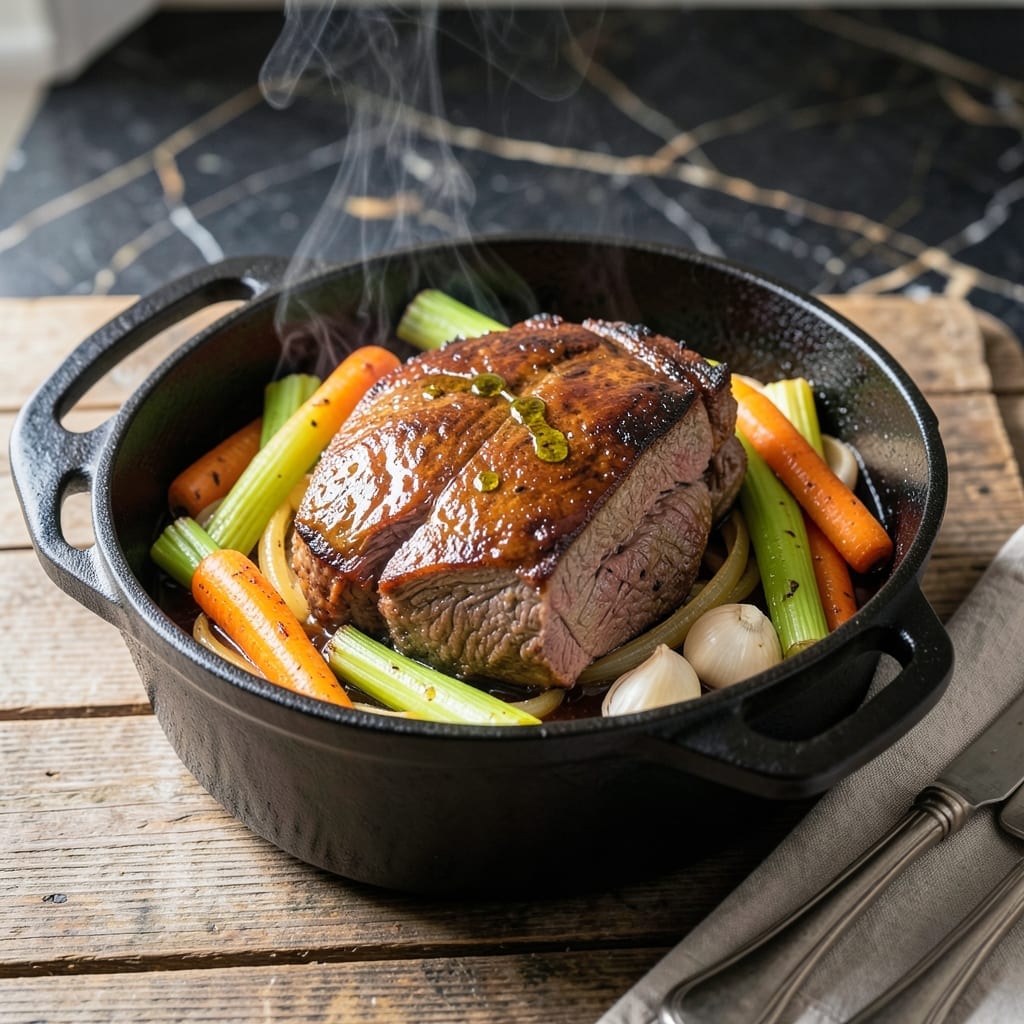
This slow-braised beef brisket pot roast delivers melting tenderness that falls apart at the touch of a fork. I developed this method to transform a tough cut into a succulent centerpiece worthy of any dinner table.
The secret lies in the low and slow cooking process. By searing the meat first, then simmering it for hours in a rich broth with aromatic vegetables, the collagen breaks down into gelatin, creating that signature unctuous texture.
What emerges from the oven is a dish with incredible depth of flavor, where the beef absorbs the savory braising liquid while maintaining its structure. The result is meat so tender it practically dissolves in your mouth.
Perfect for Sunday suppers or special occasions, this pot roast proves that patience and proper technique can turn an affordable cut into something extraordinary.
Ingredients for Recipe Beef Brisket Pot Roast
Slow-braised perfection starts with well-marbled beef and aromatic vegetables for depth.
| Ingredient | Amount | Notes |
|---|---|---|
| Beef Brisket 🥩 | 3 lb | Flat cut, well-marbled |
| Olive Oil 🫒 | 2 tbsp | Divided for searing and braising |
| Yellow Onion 🧅 | 2 whole | Large, quartered |
| Carrots 🥕 | 3 whole | Cut into 2-inch pieces |
| Celery Stalks 🌿 | 3 whole | Cut into 2-inch pieces |
| Garlic Cloves 🧄 | 6 cloves | Smashed, peeled |
| Red Wine 🍷 | 2 cups | Dry variety like Cabernet |
| Beef Broth 💧 | 3 cups | Low-sodium preferred |
| Tomato Paste 🍅 | 3 tbsp | For depth of flavor |
| Dried Thyme 🌿 | 1 tsp | Crushed between fingers |
| Dried Rosemary 🌿 | 1 tsp | Crushed between fingers |
| Bay Leaves 🍃 | 2 pieces | For aromatic infusion |
| Kosher Salt 🧂 | 2 tsp | Diamond Crystal preferred |
| Black Pepper 🌶️ | 1 tsp | Freshly ground |
[recipe_ingredient_scaler]
The beef brisket quality is paramount. Flat cut with visible marbling yields the most tender result. Source from a trusted butcher or Whole Foods for superior texture. The cut should be bright red with white fat streaks throughout. Avoid pre-cut chunks—buy whole and trim excess fat yourself for better control over the final dish.
No red wine? Substitute with 1 cup beef broth plus 1 cup water with 1 tbsp balsamic vinegar. Fresh herbs can replace dried at a 3:1 ratio. If tomato paste isn’t available, 1/4 cup crushed tomatoes works in a pinch. For gluten-free needs, ensure all broth and wine are certified. The vegetables can be swapped for parsnips or turnips if preferred.
Pot roast tastes even better the next day as flavors meld. Store in an airtight container in the fridge for up to 4 days, or freeze for 3 months. Reheat gently on the stove with a splash of water to prevent drying out.
Why You’ll Love This Recipe
- One Pot Magic: I just dump the brisket, onions, carrots, and celery in one pot and let the oven do the rest—no babysitting required.
- Rich and Hearty: Honestly, the brisket soaks up the veggie flavors and olive oil until every bite is fall-apart tender and packed with savory depth.
- Feeds a Hungry Table: I serve this for Sunday dinner, then send leftovers to work with my spouse all week—it stretches beautifully.
- Budget Winner: A single brisket and pantry staples feed six for less than takeout, and the leftovers taste even better the next day.
Step-by-Step Instructions for Beef Brisket Pot Roast
Master the slow-braising technique that transforms tough cuts into fork-tender perfection every time.
Step 1: Sear the Beef Brisket for Deep Flavor
Pat the 3 lb beef brisket dry with paper towels and season generously with 2 tsp kosher salt and 1 tsp black pepper on all sides. Heat 1 tbsp olive oil in a large Dutch oven over medium-high heat until shimmering.
Sear the brisket for 4-5 minutes per side until deeply browned. This creates a flavorful crust that will dissolve into the braising liquid. Don’t rush this step—the fond (browned bits) at the bottom of the pot is essential for building rich flavor in the finished dish.
Step 2: Build the Aromatic Base
Remove the brisket and set aside. Add the remaining 1 tbsp olive oil to the pot, then add 2 quartered yellow onions, 3 carrots, and 3 celery stalks. Cook for 5 minutes until the vegetables begin to soften and develop color.
Stir in the 6 smashed garlic cloves, 3 tbsp tomato paste, 1 tsp dried thyme, and 1 tsp dried rosemary. Cook for 2 minutes until the tomato paste darkens slightly. This step develops the deep, complex flavor base that defines this dish.
Step 3: Deglaze and Begin Braising
Pour in 2 cups red wine, stirring to release all the browned bits from the bottom of the pot. Let it simmer for 3-4 minutes until reduced by about half. This deglazing step captures all the concentrated flavors from searing.
Add the 3 cups beef broth and 2 bay leaves, then return the brisket to the pot. The liquid should come about halfway up the meat. Bring to a gentle simmer.
Step 4: Slow-Braise to Tenderness
Cover the pot and transfer to a 325°F oven. Braise for 3-4 hours, turning the brisket once halfway through cooking. The meat is done when it yields easily to a fork and the internal temperature reaches 195-200°F.
This low-and-slow method breaks down the connective tissue in the brisket, transforming it into melt-in-your-mouth tenderness. Check occasionally and add a splash of broth if the liquid level gets too low.
Step 5: Rest and Serve
Carefully remove the brisket from the pot and transfer to a cutting board. Tent loosely with foil and let it rest for 15-20 minutes. This allows the juices to redistribute throughout the meat.
Meanwhile, skim any excess fat from the braising liquid and reduce it on the stovetop for 5-10 minutes until it thickens slightly into a rich sauce. Slice the brisket against the grain and serve with the vegetables and sauce spooned over the top.
Pro Tips For Making Recipe Beef Brisket Pot Roast
- Sear the Brisket: Use high heat and about 2 tablespoons of olive oil to get a deep brown crust on all sides of the brisket—this builds the flavor base that makes the pot roast rich and satisfying.
- Cut Veggies Evenly: Chop the onion, carrots, and celery into uniform, 1-inch pieces so they cook at the same rate and don’t turn to mush before the brisket is tender.
- Don’t Rush the Braise: I learned this the hard way—keep the liquid at a gentle simmer, not a rolling boil, or the brisket will toughen up instead of becoming fork-tender.
- Use a Dutch Oven: A heavy Dutch oven distributes heat evenly and holds moisture better than a thin pot, so the brisket cooks through without drying out.
Wine and Beer Pairings for This Recipe
Bold Red Wines
A full-bodied Cabernet Sauvignon from Napa Valley stands up beautifully to the rich, meaty flavors. The bold tannins and dark fruit notes complement the brisket’s depth. I recommend Caymus or Robert Mondavi for consistently excellent quality. 🍷
Smooth Malbec
An Argentine Malbec offers a slightly fruitier profile with softer tannins that pair wonderfully with the slow-braised beef. The plum and blackberry notes enhance the dish’s savory character. Look for Catena Zapata or Alamos at your local wine shop.
Earthy Syrah
A Syrah from the Rhône Valley brings peppery, smoky notes that mirror the caramelized flavors from searing. The wine’s acidity cuts through the richness, making each bite taste fresh. Penfolds from Australia offers a great New World alternative.
Dark Beer Options
For beer lovers, a robust stout or porter like Guinness or Founders Porter works perfectly. The roasted malt flavors echo the braising liquid’s depth. Serve slightly chilled to enhance the contrast with the warm pot roast.
Crisp Lager
A clean, crisp pilsner like Pilsner Urquell provides a refreshing palate cleanser between bites. The light body and subtle bitterness balance the dish’s richness without overwhelming it. 💫
Rosés for Contrast
A dry Provence rosé with its crisp acidity and red fruit notes offers a surprisingly good contrast. The wine’s lightness cuts through the beef’s richness while complementing the aromatic vegetables. Try Whispering Angel for a reliable choice.
Nutrition Facts
Frequently Asked Questions
What cut works best if brisket isn’t available?
Chuck roast is the ideal substitute. It has similar marbling and connective tissue that breaks down beautifully during slow cooking. Avoid lean cuts like sirloin as they’ll dry out.
Can I make this in a slow cooker instead?
Yes! Sear the meat first, then transfer everything to the slow cooker. Cook on low for 8-10 hours or high for 5-6 hours. The texture will be slightly different but still tender.
Why did my pot roast turn out dry?
This usually happens if the cooking temperature was too high or there wasn’t enough liquid. Ensure the oven stays at 325°F and check the liquid level halfway through cooking.

Trained in classic French technique but raised on slow-cooked ribs and spicy rubs, she blends culinary skill with smoke and soul.
- Stewed Beef Brisket Recipe: Deep-Rich Flavor After 8 Hours of Slow Simmering - October 15, 2026
- Beef Brisket Rolls Recipe: Flaky Layers and Smoky Sweet Filling - October 15, 2026
- Masterbuilt Smoker Beef Brisket Recipe: Bark-To-Meat Ratio Hack for Unmatched Flavor - October 15, 2026