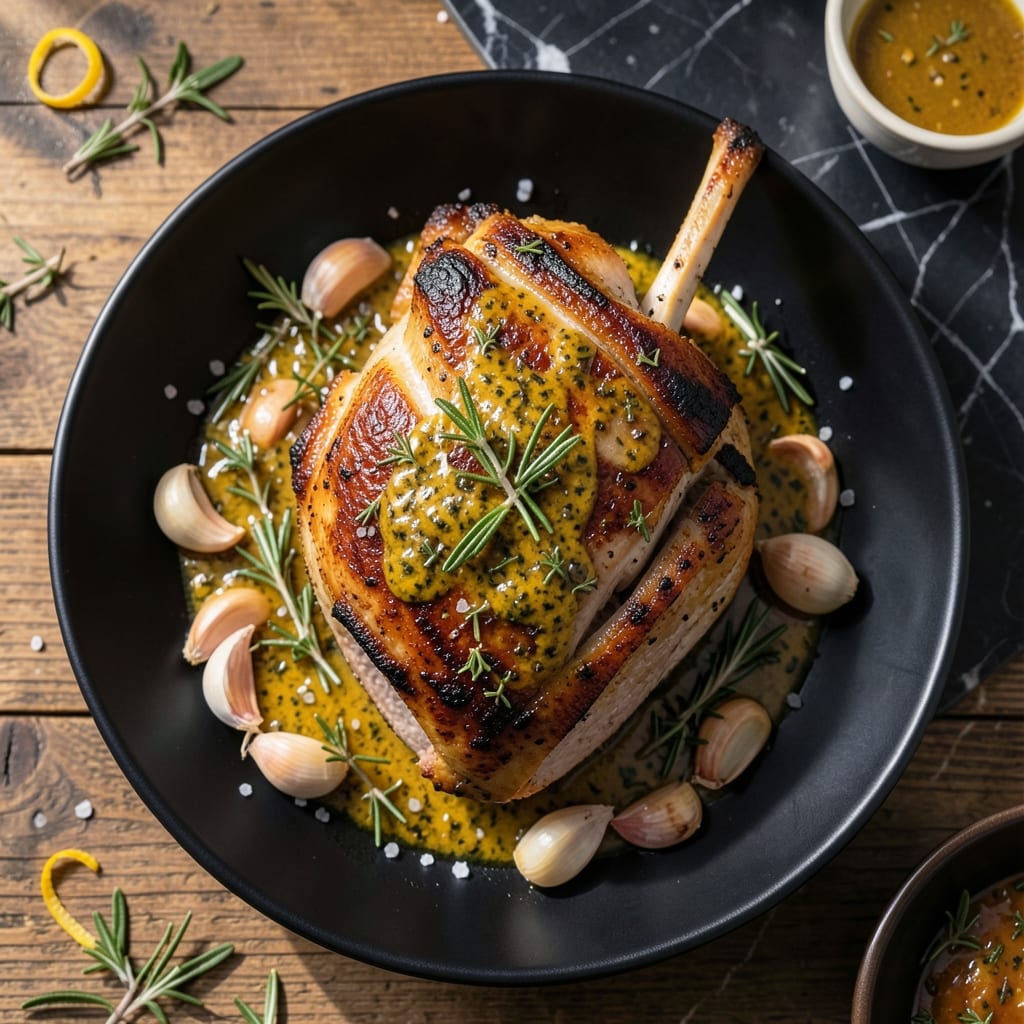
Elevate your next dinner with this show-stopping herb-crusted centerpiece that feels restaurant-worthy yet remains approachable.
I developed this method after years of testing in my tiny Boston kitchen, refining the technique to ensure tender meat with a golden crust every time.
The secret lies in a simple mustard and herb coating that seals in juices while creating a crisp exterior. It’s the kind of dish that turns a regular evening into something memorable.
Perfect for holidays or intimate gatherings, this preparation delivers impressive results without complicated steps. Let’s create something extraordinary together.
Ingredients for Recipe for French Rack of Pork
French-cut pork rib roast stars with fresh herbs, mustard, and crunchy breadcrumbs for restaurant-quality results.
| Ingredient | Amount | Notes |
|---|---|---|
| Pork Rib Roast 🥩 | 2 lb | French-cut, bone-in, frenched by butcher |
| Dijon Mustard 🟡 | 3 tbsp | Whole grain preferred for texture |
| Fresh Rosemary 🌿 | 2 tbsp | Finely chopped, stems discarded |
| Fresh Thyme Leaves 🍃 | 2 tbsp | Stripped from stems |
| Garlic Cloves 🧄 | 4 cloves | Minced to fine paste |
| Kosher Salt 🧂 | 1 ½ tbsp | Diamond Crystal preferred |
| Black Pepper 🌶️ | 1 tsp | Freshly cracked for optimal flavor |
| Breadcrumbs 🍞 | ¾ cup | Panko for superior crunch |
| Olive Oil 🫒 | 2 tbsp | Extra-virgin for richness |
| Shallots 🧅 | 2 whole | Finely minced for even distribution |
| Dry White Wine 🍷 | ½ cup | Sauvignon Blanc recommended |
| Chicken Stock 🥣 | ½ cup | Low-sodium for controlled seasoning |
| Unsalted Butter 🧈 | 2 tbsp | Cold, cubed for crust topping |
[recipe_ingredient_scaler]
The pork rib roast is non-negotiable here—ask your butcher for a French-cut, bone-in roast with the chine bone removed. Whole Foods or a quality butcher shop will have this, often labeled as a ‘rack of pork.’ Look for even marbling and a pinkish-red hue. The bones should be exposed (frenched) for that elegant presentation. For the herbs, fresh rosemary and thyme are essential; dried won’t deliver the same aromatic impact.
No white wine? Substitute dry vermouth or apple cider vinegar with a splash of water. Dijon mustard can be swapped for whole grain mustard at a 1:1 ratio. If you can’t find panko, crustless bread pulsed in a food processor works well. For the stock, vegetable broth can replace chicken stock, but reduce the salt by half as it can be saltier. Always check your butcher’s work—sometimes the fat cap needs trimming.
Store the raw pork in its packaging on a tray in the fridge for up to 3 days. The herb mixture can be prepped 1 day ahead and refrigerated. Once cooked, leftovers keep for 4 days wrapped tightly. Reheat gently to preserve the crust’s integrity and moisture.
Why You’ll Love This Recipe
- Five Ingredients Only: I love how this comes together with just pork, mustard, rosemary, thyme, and garlic—no grocery store marathon required.
- Herb Crust Magic: That Dijon and fresh herb crust forms this ridiculous golden-brown layer that crackles with every bite.
- Sunday or Tuesday: Between us, I’ve served this for fancy dinners and random weeknights—it fits both without skipping a beat.
- Leftovers for Days: Honestly, the slices reheat beautifully, so I always make extra for sandwiches the next day.
Step-by-Step Instructions for French Rack of Pork
Master the technique for a perfectly seared, herb-crusted rack with a moist, tender interior.
Step 1: Prepare the Herb Crust
In a small bowl, combine the 3 tbsp Dijon Mustard, 2 tbsp Fresh Rosemary, 2 tbsp Fresh Thyme Leaves, 4 cloves Garlic Cloves, 1.5 tbsp Kosher Salt, and 1 tsp Black Pepper. Mix until the herbs and garlic are evenly distributed throughout the mustard, creating a thick, fragrant paste.
This paste will form the flavor base for your crust. The mustard not only adds tang but helps the herb mixture adhere to the pork. Set this aside while you prepare the roast—this brief rest allows the flavors to meld together.
Step 2: Sear the Pork Rib Roast
Pat the 2 lb Pork Rib Roast dry with paper towels to ensure a proper sear. Heat the 2 tbsp Olive Oil in a large oven-safe skillet over medium-high heat until it shimmers. Place the roast in the skillet, bone-side down, and sear for 3-4 minutes until the surface is deep golden brown.
Turn the roast and sear the remaining sides for 2 minutes each, ensuring an even crust forms all over. The searing step creates a flavorful fond in the pan, which will later enhance your pan sauce. Transfer the roast to a plate temporarily.
Step 3: Apply the Herb Crust and Breadcrumbs
Brush the herb-mustard paste evenly over the entire surface of the seared roast, ensuring all sides are well coated. Press the 0.75 cup Breadcrumbs firmly onto the paste, creating a thick, even layer. The breadcrumbs will form a crispy, golden crust as the roast cooks.
This crust not only adds texture but locks in moisture. For extra richness, dot the top of the breadcrumb layer with the 2 tbsp Unsalted Butter, allowing it to melt and soak into the crust as it bakes.
Step 4: Roast to Perfection
Preheat your oven to 375°F. Return the crust-coated roast to the skillet, bone-side down. Add the 2 whole Shallots to the pan, scattering them around the roast. Transfer the skillet to the preheated oven and roast for 25-30 minutes, or until the internal temperature reaches 145°F.
Baste the roast with the pan juices halfway through the cooking time to ensure the crust stays moist and the flavors remain vibrant. The shallots will caramelize slightly, adding depth to your pan sauce.
Step 5: Create the Pan Sauce and Rest
Transfer the roast to a cutting board and tent it loosely with foil. Place the skillet on the stovetop over medium heat. Add the 0.5 cup Dry White Wine and 0.5 cup Chicken Stock, scraping up any browned bits from the bottom of the pan with a wooden spoon.
Simmer for 5-7 minutes until the liquid reduces by half and the sauce coats the back of a spoon. Strain the sauce if desired, then serve it alongside the sliced roast after it has rested for 10-15 minutes. This resting period ensures the juices redistribute, keeping the meat tender and flavorful.
Pro Tips For Making Recipe For French Rack Of Pork
- Sear the Fat Cap: I learned this the hard way—always start with the fat cap down in a screaming hot pan for 3-4 minutes until golden. It renders the fat and guarantees a crispy exterior on your pork rib roast.
- Score the Skin: Sounds weird, but it works: shallow crosshatches in the fat (about 1/4-inch deep) help the Dijon mustard and herbs penetrate while preventing the skin from curling during cooking.
- Rest Before Carving: After burning one too many roasts by slicing too soon, I now let it rest for 15 minutes under foil—this keeps all those juices inside the meat where they belong.
- Use Room-Temp Pork: My grandmother swore by this, and she was right: take the pork out of the fridge for 1 hour before cooking. It cooks more evenly and actually changes the outcome of the crust.
Essential Equipment for recipe for french rack of pork
Oven-Safe Skillet
An oven-safe skillet is non-negotiable here—I swear by my 12-inch Lodge cast iron for even heat distribution and retention. It goes from stovetop searing to oven roasting seamlessly, and the cast iron adds a beautiful crust to the herb coating. 🔥
Instant-Read Thermometer
Precision matters with pork, so a quality instant-read thermometer is essential. I use the ThermoWorks ThermoPop—it gives accurate readings in 3-4 seconds and has a thin probe that doesn’t leave large holes in the meat.
Check the thickest part of the roast, avoiding bones, and remove from oven at 145°F for perfect medium doneness.
Mixing Bowls
A medium stainless steel mixing bowl works perfectly for combining your herb-mustard paste. I prefer Cuisinox bowls—they’re lightweight, nest for storage, and won’t absorb odors. The 3-quart size gives plenty of room for mixing without spills.
Wooden Spoon
For deglazing and sauce-making, a flat-edge wooden spoon is ideal. It scrapes up all those flavorful browned bits from the pan bottom without scratching your skillet. I keep a 12-inch olive wood spoon dedicated to my cast iron.
Cutting Board
A large, sturdy cutting board is crucial for resting and carving. My 18×12-inch Teakhaus board has a juice groove that catches all the precious drippings. The size gives you room to work with the bones.
Kitchen Twine
If your butcher hasn’t already frenched the bones, use food-safe kitchen twine to secure the herb crust. I like Cottonelle unbleached twine—it’s strong, doesn’t slip, and won’t burn in the oven. Just
Nutrition Facts
Frequently Asked Questions
Do I need to ask the butcher for anything special?
Yes! Request a French-cut, bone-in pork rib roast with the chine bone removed. The bones should be exposed (frenched) for presentation. Most butchers will prepare this if asked.
Can I use dried herbs instead of fresh?
Fresh herbs are strongly recommended for best flavor, but in a pinch use 1/3 the amount of dried. The crust won’t be as vibrant, but it’ll still taste good
How do I know when it’s done?
Use an instant-read thermometer and remove from oven at 145°F. The temperature will rise to 150-155°F while resting. This ensures juicy, tender meat every time.
What if my crust burns before the meat cooks?
If the breadcrumbs brown too quickly, tent the roast with foil and continue cooking. This prevents over-browning while allowing the interior to reach the perfect temperature

Trained in classic French technique but raised on slow-cooked ribs and spicy rubs, she blends culinary skill with smoke and soul.
- Masterbuilt Smoker Beef Brisket Recipe: Bark-To-Meat Ratio Hack for Unmatched Flavor - October 15, 2026
- Costco Beef Brisket Recipe: Low-and-Slow Masterpiece With Molasses-Kissed Crust - October 15, 2026
- Smoked Herring Recipe: Scandinavian-Style With Dill and Mustard Cream - October 15, 2026