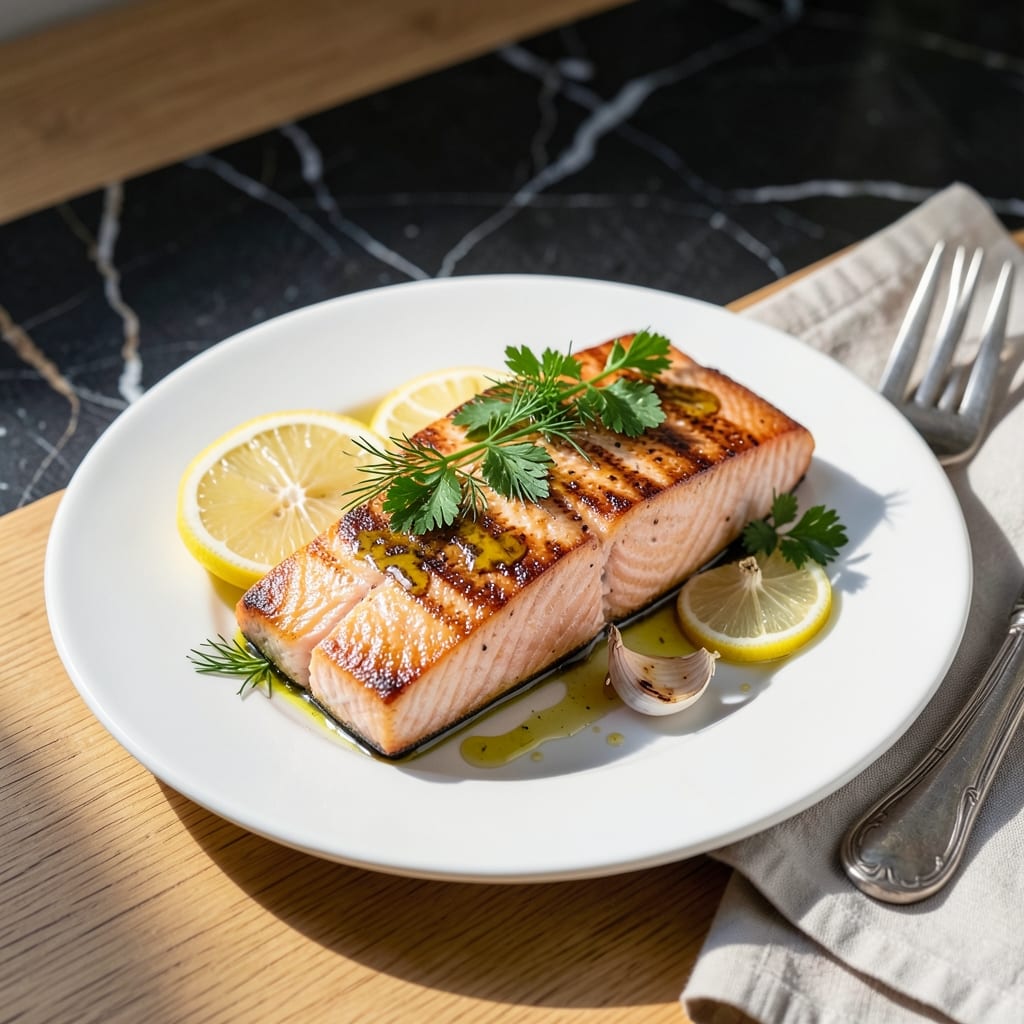
When digestion requires extra care, this carefully crafted salmon dish delivers flavor without the discomfort. The recipe focuses on gentle preparation methods that preserve the fish’s natural mildness while avoiding common triggers.
Low-fat cooking techniques and mild seasonings make this ideal for sensitive stomachs. The salmon stays moist and tender, with subtle herbal notes that enhance rather than overpower. Every element is chosen to soothe, not irritate.
You’ll find no spicy ingredients, heavy sauces, or acidic components here. Instead, simple preparations allow the salmon’s natural richness to shine through in a way that’s kind to your system.
Perfect for those seeking a nutritious main course that won’t provoke reflux symptoms. Here’s how to prepare it properly.
Ingredients for Salmon Recipe for Acid Reflux
Gentle, soothing ingredients carefully selected to ease digestion while maintaining rich flavor and tenderness.
| Ingredient | Amount | Notes |
|---|---|---|
| Salmon Fillets 🐟 | 1 ½ lb | Skin-on, wild-caught preferred |
| Extra-Virgin Olive Oil 🫒 | 2 tbsp | Mild flavor, light color |
| Fresh Dill 🌿 | 2 tbsp | Finely chopped, stems removed |
| Fresh Parsley 🍃 | 2 tbsp | Finely chopped, flat-leaf variety |
| Garlic Cloves 🧄 | 2 cloves | Minced, mild flavor essential |
| Lemon 🍋 | ½ whole | Zest only, no juice used |
| Sea Salt 🧂 | ½ tsp | Fine grain, low sodium if needed |
| Ground Black Pepper 🌶️ | ¼ tsp | Freshly ground, minimal amount |
| Unsalted Butter 🧈 | 2 tbsp | Optional for finishing, mild flavor |
| Fresh Chives 🌱 | 1 tbsp | Finely snipped for garnish |
| Dry White Wine 🍷 | ¼ cup | Low-acid variety such as Chardonnay |
| Low-Sodium Chicken Broth 🥣 | ¼ cup | Mild flavor, no added spices |
[recipe_ingredient_scaler]
The salmon quality is paramount for this dish. Wild-caught sockeye or coho from Whole Foods or Trader Joe’s offers the mildest flavor and highest omega-3 content, ideal for sensitive systems. Opt for skin-on fillets to retain moisture during cooking. The olive oil should be a light, mild variety—avoid robust or peppery oils that may trigger discomfort. Fresh herbs are non-negotiable; dried simply lack the delicate aroma needed here.
Substitutions must prioritize mildness. No dill? Fresh tarragon at half the amount provides a similar anise note. Forgo lemon zest if citrus is a concern—fennel fronds offer a gentle alternative. The wine can be replaced with additional low-sodium broth, but avoid any vinegar or acidic substitutes. Ghee instead of butter works if dairy is an issue, as it’s lower in lactose and casein.
Prepared salmon keeps well, covered, for up to 2 days in the refrigerator. Reheat gently to preserve moisture—microwave at 50% power or warm in a low oven. Do not freeze cooked salmon, as it tends to dry out. Fresh herbs can be stored wrapped in damp paper towels for 1 week.
Why You’ll Love This Recipe
- One Pan Dinner: I love that everything roasts together with just olive oil and herbs—no extra pans to wash.
- Mild & Flavorful: The dill and parsley add brightness without triggering my reflux, and the garlic mellows beautifully.
- Meal Prep Hero: It reheats gently in the microwave, so I pack leftovers for lunch all week.
- Budget Stretcher: A few fresh herbs and salmon fillets feed my family for less than takeout.
Step-by-Step Instructions for Salmon for Acid Reflux
This method ensures a gentle, flavorful dish that soothes while delivering perfect texture.
Step 1: Prepare and Season the Salmon Fillets
Pat the 1.5 lb Salmon Fillets completely dry with paper towels to ensure even cooking and proper searing. Place them skin-side down on a clean work surface. This step prevents the flesh from steaming in its own moisture, which would compromise the delicate texture.
Season both sides lightly with the 0.5 tsp Sea Salt and 0.25 tsp Ground Black Pepper. I use a light hand with the seasoning to avoid overwhelming the natural sweetness of the fish. Gently press the seasoning into the flesh so it adheres during cooking.
Step 2: Sear the Salmon Gently in Olive Oil
Heat the 2 tbsp Extra-Virgin Olive Oil in a large nonstick or cast-iron skillet over medium-low heat for 1-2 minutes. The oil should shimmer slightly but not smoke—this lower temperature prevents the formation of irritating compounds that can trigger reflux.
Place the salmon fillets skin-side up in the pan. Cook undisturbed for 4-5 minutes until the edges turn opaque and the bottom develops a light golden crust. Avoid high heat, which can toughen the protein and create harsh flavors that may aggravate digestion.
Step 3: Add Aromatics and Liquid for Gentle Poaching
Carefully flip the fillets and reduce heat to low. Add the 2 cloves Garlic Cloves, 2 tbsp Fresh Dill, and 2 tbsp Fresh Parsley to the pan. Pour in the 0.25 cup Dry White Wine and 0.25 cup Low-Sodium Chicken Broth around the edges, not directly over the fish.
Cover the skillet immediately and let it simmer gently for 6-8 minutes. The steam will finish cooking the salmon while infusing it with mild, soothing flavors from the herbs and wine. The salmon is done when it flakes easily with a fork and reaches an internal temperature of 145°F.
Step 4: Finish with Lemon Zest and Butter
Using a fine grater, zest the 0.5 whole Lemon directly over the salmon. The zest adds bright, citrusy notes without the acidity of juice, which can be problematic for sensitive digestion. Stir the zest into the poaching liquid to distribute the flavor evenly.
Remove the skillet from heat and stir in the 2 tbsp Unsalted Butter until melted. This adds a silky richness that complements the salmon without overpowering it. The butter also helps mellow any remaining sharpness from the wine or garlic.
Step 5: Garnish and Serve Immediately
Transfer the salmon to a serving platter and spoon the poaching liquid and herbs over the top. Garnish with the 1 tbsp Fresh Chives, snipped directly over the dish for a fresh, oniony finish that’s mild yet flavorful.
Serve immediately while warm. The salmon should be tender and moist, with a delicate crust on the bottom and a light, aromatic sauce that enhances without overwhelming. This preparation ensures a meal that’s both gentle on digestion and satisfying to the palate.
Pro Tips For Making Salmon Recipe For Acid Reflux
- Use Low Heat: Cook the salmon on medium-low heat to prevent overcooking and keep it gentle on digestion—I learned this the hard way after a few dry, tough fillets.
- Pat Dry First: Always blot the salmon fillets with a paper towel before cooking; it helps the olive oil and herbs actually stick instead of sliding off.
- Skip the Lemon: Even though it’s tempting, avoid adding lemon or other citrus—it can trigger reflux, and the dill and parsley give enough brightness on their own.
- Rest Before Serving: Let the salmon sit for 5 minutes after cooking; it stays juicier and the flavors meld better—my grandmother swore by this, and she was right.
Flavor Customization for These Flavors
Herb Variations
Swap the dill for 1 tbsp fresh tarragon for a milder anise flavor that’s equally gentle. I love how tarragon adds a subtle sweetness that pairs beautifully with the salmon. Use half the amount if using dried tarragon. 🌿
Citrus Alternatives
If lemon zest is too sharp, try 1 tsp fennel fronds instead. They provide a similar bright note without any acidity. This substitution works particularly well when paired with the parsley in the recipe.
Wine-Free Option
Replace the 0.25 cup Dry White Wine with additional low-sodium chicken broth. This maintains the poaching liquid volume while eliminating any potential alcohol-related triggers. The flavor remains rich and savory.
Dairy-Free Finish
For a butter alternative, use 2 tbsp ghee instead of regular butter. Ghee has a higher smoke point and is lower in lactose, making it gentler on digestion. Stir it in just as you would with the butter.
Extra Mild Version
Omit the garlic entirely and increase the parsley to 3 tbsp. This creates an ultra-gentle version that still delivers on flavor. I find this works well for particularly sensitive days.
Herb Garnish Swap
Replace the chives with 1 tbsp finely chopped basil for a sweeter, more aromatic finish. Basil’s mild flavor complements the salmon beautifully without overpowering it. 💛
Nutrition Facts
Frequently Asked Questions
Why cook salmon at low temperature?
Low heat prevents toughening the protein and forming harsh compounds that may trigger reflux. It also preserves the fish’s natural moisture and mild flavor.
Can I use frozen salmon for this?
Yes, thaw frozen salmon overnight in the refrigerator before cooking. Pat it completely dry to ensure proper searing and even cooking.
What if I don’t have fresh herbs?
Use 1/3 the amount of dried herbs, but fresh is preferred for their gentle, aromatic qualities. Avoid any spicy or pungent dried herbs.
How do I know when the salmon is done?
It’s ready when it flakes easily with a fork and reaches an internal temperature of 145°F. Avoid overcooking, as it can make the fish dry.

Trained in classic French technique but raised on slow-cooked ribs and spicy rubs, she blends culinary skill with smoke and soul.
- Smoked Teriyaki Beef Jerky Recipe: Umami-Deep Flavor in Every Chewy Bite - October 15, 2026
- Stewed Beef Brisket Recipe: Deep-Rich Flavor After 8 Hours of Slow Simmering - October 15, 2026
- Beef Brisket Rolls Recipe: Flaky Layers and Smoky Sweet Filling - October 15, 2026